
⚠️ Affiliate disclosure: This article contains affiliate links. If you purchase through our links, we may earn a small commission at no extra cost to you.
What Is the FIFA World Cup?
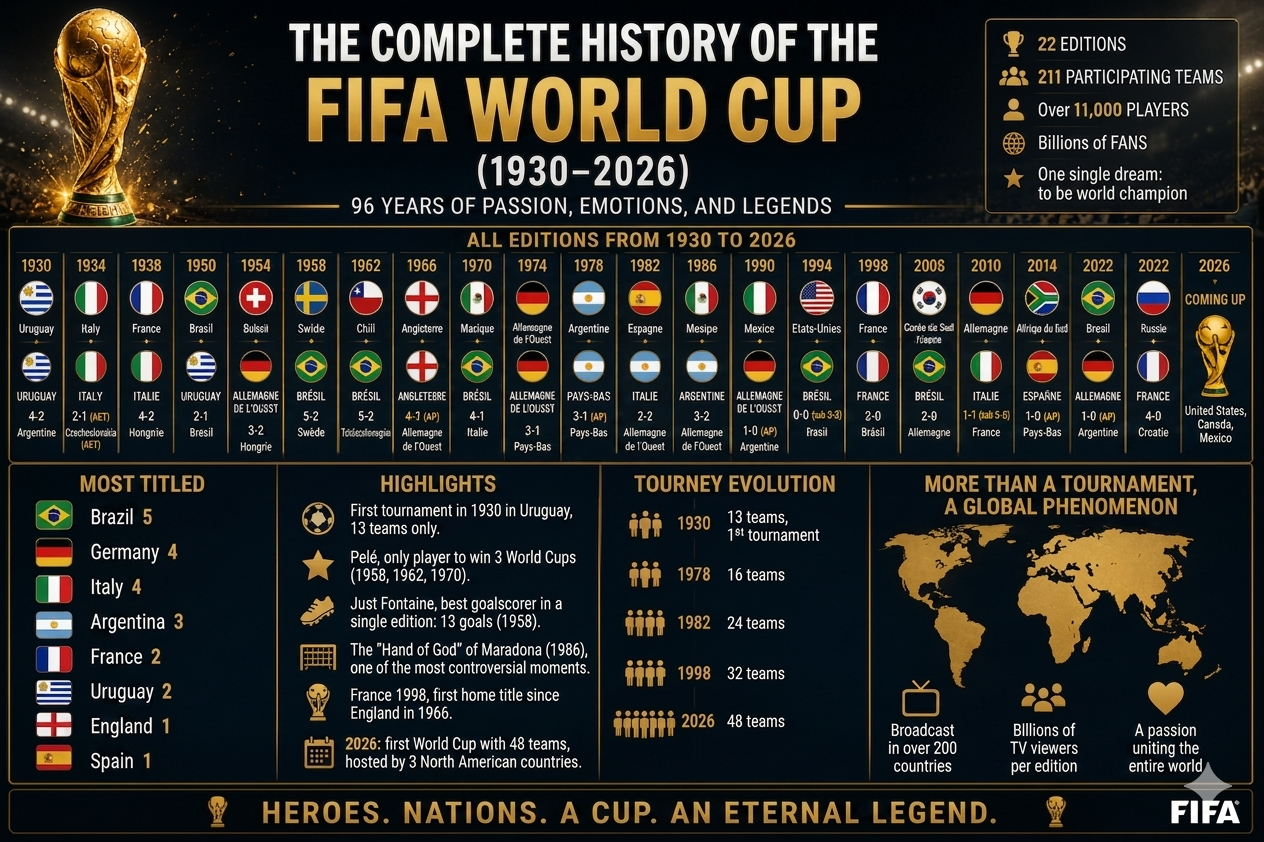
The FIFA World Cup is the premier international football tournament, organized by the Fédération Internationale de Football Association (FIFA) every four years. It brings together the national teams of FIFA’s 211 member associations through a two-year qualifying competition, culminating in a final tournament hosted by a single nation. Since its inaugural edition in 1930, the World Cup has been held 22 times. Eight nations have won the title: Brazil (5), Germany (4), Italy (4), Argentina (3), France (2), Uruguay (2), England (1), and Spain (1).
The tournament is the most-watched sporting event in human history. The 2022 Qatar final alone drew an estimated 1.5 billion viewers worldwide.
The Origins: Why Was the World Cup Created?
Before 1930, international football existed — but only in fragments. The man who made it happen was Jules Rimet, FIFA’s president from 1921 to 1954. In 1930, Uruguay volunteered to host and finance the entire tournament.
Era 1: The Founding Years (1930–1938)
Uruguay 1930 — The First World Cup
Thirteen nations made the voyage to South America. In the final on July 30, 1930, Uruguay defeated Argentina 4–2, becoming the first ever World Cup champions. The first-ever World Cup goal was scored by Lucien Laurent of France.
Italy 1934 & 1938 — The Azzurri’s Back-to-Back
Italy won back-to-back titles under Mussolini’s shadow. The defining player was Giuseppe Meazza, Italy’s brilliant captain.
Era 2: Post-War Football (1950–1958)
Brazil 1950 — The Maracanazo
Uruguay defeated Brazil 2–1 in front of nearly 200,000 spectators at the Maracanã. The Maracanazo scarred Brazilian football for generations.
“I have seen men die, I have seen wars. But I have never seen anything sadder than that day at the Maracanã.” — Obdulio Varela, Uruguay captain
Switzerland 1954 — The Miracle of Bern
Hungary’s unbeaten Magical Magyars fell to West Germany 3–2 in the final — the Miracle of Bern.
Sweden 1958 — The Birth of a Legend
A 17-year-old Pelé scored six goals as Brazil defeated Sweden 5–2. The greatest player in World Cup history had arrived.
Era 3: Brazil’s Golden Age (1962–1970)
Mexico 1970 — The Greatest Team Ever?
The 1970 Brazil squad is routinely voted the greatest international team in football history. Brazil’s 1970 triumph is widely considered the pinnacle of football artistry — with Carlos Alberto’s closing goal frequently cited as the greatest in World Cup history. Brazil won the Jules Rimet Trophy permanently.
Era 4: European Dominance (1974–1982)
West Germany 1974 — Total Football vs. German Efficiency
Johan Cruyff’s Netherlands dazzled but lost to West Germany 2–1 in the final.
Spain 1982 — Italy’s Masterclass
Paolo Rossi scored a hat-trick against Brazil and finished with six goals and the Golden Boot. Italy defeated West Germany 3–1.
Era 5: The Maradona Era (1986–1990)
Mexico 1986 — The Hand of God and the Goal of the Century
Diego Maradona scored two immortal goals against England — the Hand of God and the Goal of the Century. Argentina defeated West Germany 3–2 in the final.
Era 6: The Modern Game (1994–2006)
South Korea/Japan 2002 — The Shock Tournament
Ronaldo R9 scored twice in the final as Brazil beat Germany. His redemption story remains one of football’s greatest.
Germany 2006 — Zidane’s Final Act
Zinedine Zidane scored a penalty, then was sent off for headbutting Materazzi. He collected the Golden Ball on his way out of football.
Era 7: Spain and Germany’s Decade (2010–2014)
Brazil 2014 — The Mineirazo
Germany won 7–1 against Brazil in the semi-final — the Mineirazo. Germany defeated Argentina 1–0 in the final.
Era 8: Messi’s Redemption (2018–2022)
Qatar 2022 — Messi’s Crowning Glory
The 2022 final is widely considered the greatest World Cup final ever played. Argentina defeated France 4–2 on penalties after a 3–3 draw. Lionel Messi scored twice; Kylian Mbappé scored a hat-trick. Messi won his only World Cup title.
World Cup 2026 — The Biggest Tournament in History
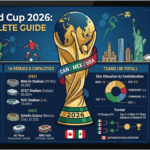
The 2026 World Cup, hosted by the United States, Canada, and Mexico, features 48 teams across 16 stadiums from June 11 to July 19, 2026. If you’re planning to attend, Booking.com is the best place to find accommodation in host cities.
World Cup Records
| Record | Holder | Year |
|---|---|---|
| Most World Cup wins (player) | Pelé | 3 (1958, 1962, 1970) |
| Most goals in one tournament | Just Fontaine (France) | 13 goals — 1958 |
| Most matches played | Lionel Messi | 26 matches |
| Most goals all-time | Miroslav Klose (Germany) | 16 goals |
| Most World Cup titles (nation) | Brazil | 5 titles |
The 8 World Cup Champions
| Nation | Titles | Years |
|---|---|---|
| Brazil | 5 | 1958, 1962, 1970, 1994, 2002 |
| Germany | 4 | 1954, 1974, 1990, 2014 |
| Italy | 4 | 1934, 1938, 1982, 2006 |
| Argentina | 3 | 1978, 1986, 2022 |
| France | 2 | 1998, 2018 |
| Uruguay | 2 | 1930, 1950 |
| England | 1 | 1966 |
| Spain | 1 | 2010 |
The Legends
Pelé — Three titles, 12 goals, 1958–1970. The standard by which all others are measured.
Diego Maradona — One title, the Goal of the Century, an influence no trophy count can capture.
Miroslav Klose — 16 goals across four World Cups. The tournament’s all-time leading scorer.
Lionel Messi — One title (2022), two Golden Balls, 26 matches, 13 goals. The GOAT debate was answered in Lusail.
FAQ: World Cup History
When was the first FIFA World Cup held? Uruguay in 1930. Thirteen nations participated; Uruguay won 4–2 against Argentina.
How many countries have won the World Cup? Eight: Brazil (5), Germany (4), Italy (4), Argentina (3), France (2), Uruguay (2), England (1), Spain (1).
Who has scored the most goals in World Cup history? Miroslav Klose (Germany) with 16 goals across four World Cups.
When is the 2026 World Cup? June 11 to July 19, 2026, across the United States, Canada, and Mexico.
Explore More
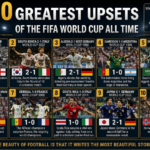
- The Greatest World Cup Upsets of All Time
- Complete World Cup Winners List (1930–2026)
- Maradona vs. Messi: The World Cup Legacy Debate
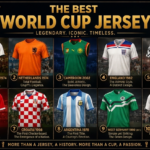
- Best World Cup Kits of All Time
- Best Books About the World Cup
- The 1970 FIFA World Cup: Brazil’s Greatest Team in History
- Maradona 1986: The Hand of God and the Goal of the Century
- Best World Cup Books of All Time
Last updated: May 2026 | World Cup Tribune | Sources: FIFA official records, Britannica, Wikipedia