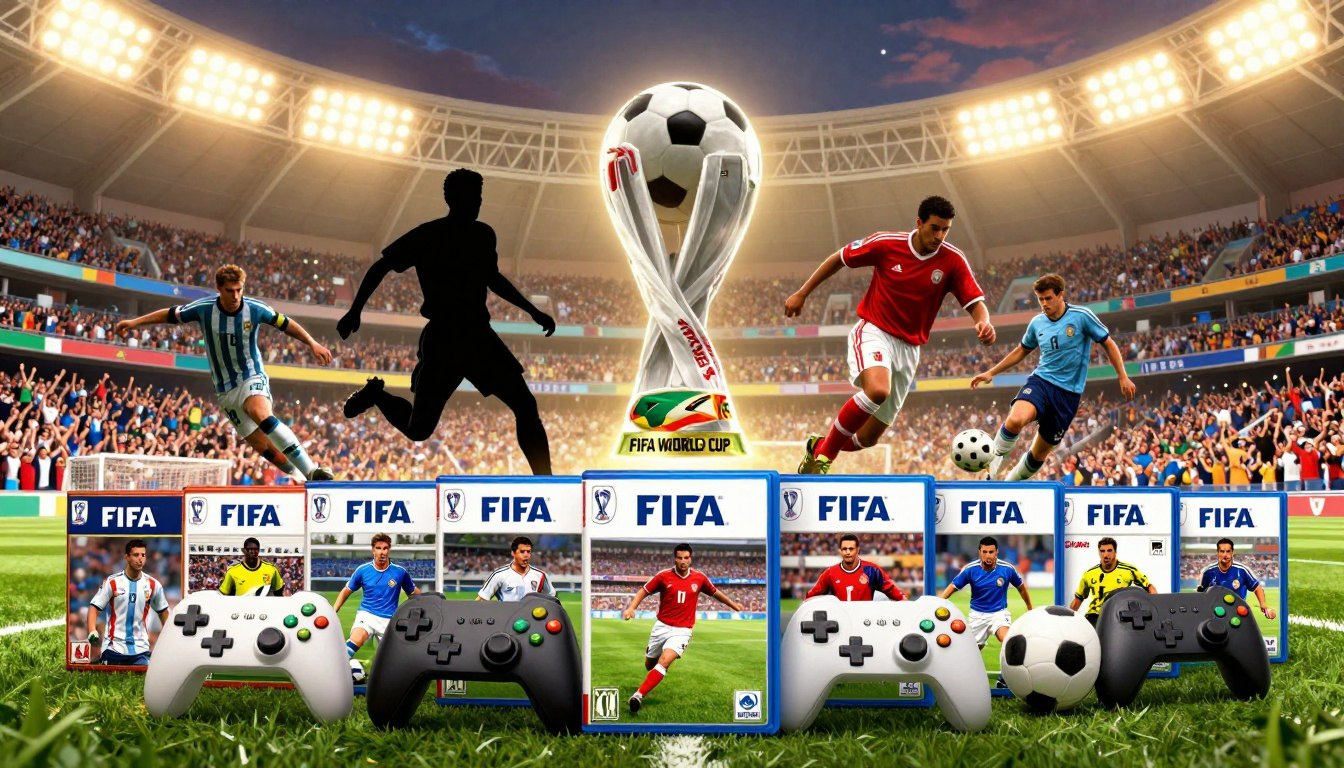

The journey of FIFA World Cup video games began in 1986 with the release of World Cup Carnival by U.S. Gold. This marked the first time fans could experience the excitement of the tournament through their home consoles. Since then, the franchise has evolved significantly.
In 1997, Electronic Arts acquired the official FIFA World Cup license. This acquisition transformed the landscape of football games, making them a staple for sports enthusiasts everywhere. Each title aimed to capture the thrill of the international competition, immersing players in the spirit of the tournament.
Over the years, these games have pushed the limits of realism and excitement. Players have enjoyed the chance to lead their national teams to glory. The evolution of technology has greatly enhanced how we engage with these football experiences.
As we reflect on the history of these titles, we see a clear progression in design and technology that defines modern gaming.
Key Takeaways
- The first FIFA World Cup video game was released in 1986.
- Electronic Arts has held the FIFA World Cup license since 1997.
- Each game captures the unique spirit of the tournament.
- Realism and excitement are key elements in these games.
- Technology has transformed how players experience the tournament.
A Brief History of FIFA World Cup Video Games
1986 marked a pivotal year as the FIFA World Cup made its debut in the gaming world. The first title, World Cup Carnival, was developed by U.S. Gold. Unfortunately, it faced criticism for being a rushed adaptation rather than a fully original game.
During this time, developers were under immense pressure to release a football game aligned with the actual tournament held every four years. This led to a pattern where many early titles felt like simple re-skins of existing games.
The licensing impact on the FIFA world was significant. Companies like Electronic Arts recognized the potential and invested heavily to secure rights for their series. As the popularity of the tournament grew, so did the demand for high-quality titles.
- U.S. Gold struggled to produce quality titles for the 1986 competition.
- Developers faced pressure to release games coinciding with the World Cup.
- Licensing deals shaped the trajectory of the FIFA video game industry.
- Many early titles were criticized for lacking originality.
- Competition led to improvements in gameplay and graphics by the late 1990s.
World Cup Carnival and Early Licensed Titles
In 1986, U.S. Gold launched the first FIFA World Cup title, World Cup Carnival. This game was released for platforms like the Commodore 64, ZX Spectrum, and Amstrad CPC. Unfortunately, it became infamous as a rushed adaptation of an older title, World Cup Football by Artic. Many gamers were left disappointed, hoping for a fresh experience that never came.
Despite its flaws, the competition for the FIFA World Cup license was fierce. Companies recognized the immense potential of the tournament brand. The early football game lacked the depth and quality that players expect today. However, it set a precedent for future licensed soccer titles.
The way U.S. Gold managed the development of this cup video title serves as a cautionary tale for the industry. Many gamers recall their frustration with these early attempts, which often failed to capture the true essence of the tournament. By analyzing these initial football games, we can appreciate the significant technological advancements that have occurred since the mid-1980s.
Evolution Through the 90s: Italia ’90 and USA ’94
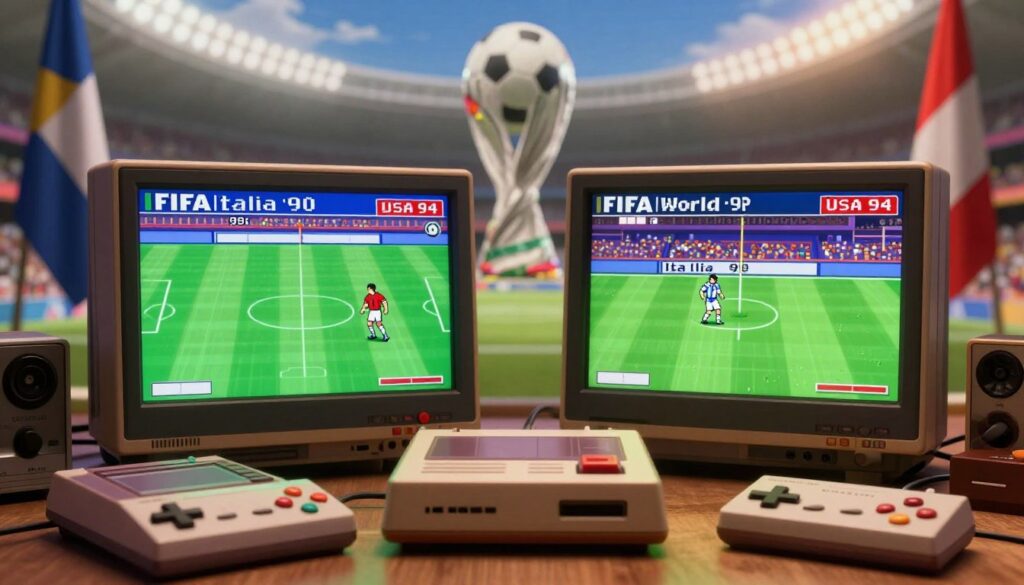
The evolution of FIFA World Cup titles gained momentum in the 1990s, with notable releases like Italia ’90 and USA ’94. These games reflected the growing excitement surrounding the tournament.
Italia ’90, released by Virgin Mastertronic, is remembered for its unique top-down view and challenging gameplay. Many gamers appreciated the way it captured the essence of football, despite its limitations.
On the other hand, USA ’94 marked a significant improvement. U.S. Gold returned with a game that featured a CD soundtrack, including songs by the Scorpions, and FMV renders of stadiums. This title attempted to enhance the gaming experience by offering more content and better visuals.
Each football game released during this decade had to compete with the FIFA World Cup’s rising popularity. The inclusion of a specific tournament mode allowed players to guide their favorite national teams through the world cup bracket. As one gamer put it,
“The thrill of scoring a goal in these titles was unforgettable!”
Despite hardware limitations, these early titles made strides in how the ball moved across the screen. By the time USA ’94 was released, developers were utilizing more advanced consoles to deliver a more immersive experience.
Embracing Technological Advancements: FIFA 98 and the Emergence of Digital Gameplay
The release of FIFA 98 marked a transformative era in the realm of football gaming. This title introduced accurate national team kits, manufacturer logos, and official merchandise for the first time. Players could now experience the World Cup with stunning detail, including realistic player likenesses and strategic gameplay.
By including all national teams in the qualifying process, developers ensured that every fan could engage with the tournament. The features introduced in this title, such as in-game strategy changes, became standard for future entries in the series.
- FIFA 98 represented a massive leap forward for the FIFA World Cup series.
- This version set a new benchmark for how sports titles should represent the beautiful game.
- The inclusion of classic modes allowed players to relive the history of the World Cup.
- As technology improved, developers created a more authentic experience.
- This era marked the beginning of modern World Cup video games, focusing on realism and immersion.
“The thrill of scoring a goal in these titles was unforgettable!”
Unpacking the 2002 and 2006 FIFA World Cup Editions
The FIFA World Cup series saw remarkable innovations with the 2002 and 2006 editions. These titles not only enhanced gameplay but also transformed player experiences.
In 2002, the game featured an original soundtrack performed by the Vancouver Symphony Orchestra, adding a unique touch. The advancements in game engine technology allowed players to interact with the ball in new ways.
By 2006, the series included 127 national teams and introduced a Global Challenge Mode. This mode offered 40 scenarios based on classic matches, enriching the gameplay.
- Engine improvements changed how players interacted with the ball.
- Gamers could navigate the entire qualifying process, enhancing the journey to the finals.
- A dedicated tournament mode made every match feel like a high-stakes encounter.
- Enhanced player dynamics provided a more realistic movement experience.
- Newer consoles allowed for incredible stadium renderings.
- The handling of team tactics and player positioning saw major improvements.
- These editions are remembered for their ambitious scope and challenges.
Reliving the Magic of 2010 FIFA World Cup South Africa
With the 2010 FIFA World Cup in South Africa, gamers experienced a remarkable evolution in football simulation. This edition included 199 of the 204 national teams that participated in the qualification process, allowing players to engage deeply with the tournament.
The game featured all 10 official venues used during the 2010 tournament, enhancing the authenticity of each match. Players could guide their national teams through the entire qualifying campaign, truly capturing the spirit of the world cup.
The atmosphere was perfectly recreated, with crowd celebrations and dynamic camera angles that made every goal feel monumental. Additionally, this cup game introduced an online mode, allowing players to compete in a virtual world cup environment.
The way the game captured the unique energy of the 2010 tournament remains a high point for the franchise. Every match felt like a genuine world cup experience, thanks to the inclusion of all official stadiums and teams.
By focusing on the emotion of the finals, developers created a world cup experience that resonated deeply with football fans everywhere. The success of this title proved that a dedicated world cup game could offer more depth and immersion than a standard annual release.
Modern Innovations: 2014 FIFA World Cup Brazil & FIFA World Cup DLCs
The 2014 FIFA World Cup Brazil brought exciting innovations to football gaming. This title was a definitive experience for seventh-generation consoles, offering players a deep dive into the tournament. It included all 12 venues used in the tournament and featured 203 national teams, enhancing the overall experience.
EA Sports expanded the World Cup experience by releasing free updates for FIFA 14 on PlayStation 4 and Xbox One. These updates allowed players to engage with the tournament through various modes, including challenges and online tournaments. By integrating the World Cup into the main game, EA Sports ensured that players on Xbox One could enjoy the tournament seamlessly.
The game required a high level of skill, with refined crossing and through-ball mechanics for every player. This level of detail made each match feel authentic and competitive. The 2014 FIFA World Cup Brazil release remains a highlight for how developers can adapt the tournament to different console generations.
- The game featured all national teams that participated in the qualifying process.
- Players could engage with various modes, including challenges and online tournaments.
- Refined mechanics required players to demonstrate skill in gameplay.
- Updates were essential for keeping the tournament relevant on Xbox One.
- Overall, it showcased the evolution of World Cup adaptations in gaming.
Exploring the best World Cup video games
When diving into the realm of FIFA titles, it’s fascinating to see how they encapsulate the spirit of the tournament. Each game, whether a standalone title or a DLC add-on, brings its unique flavor to the gaming experience. Notable entries like World Cup 98 and the FIFA 23 World Cup mode highlight this evolution.
Many gamers cherish the depth of standalone titles, which often include more qualifying teams and immersive tournament features. In contrast, modern DLC updates offer a different approach, integrating World Cup excitement into existing football games. This shift reflects a broader trend in the series, moving from dedicated games to integrated modes.
- Ranking these titles often depends on how well they capture the tournament’s magic.
- Standalone games provide a complete experience, while DLC updates allow for flexibility.
- Nostalgia plays a significant role in how players view each title from specific World Cup years.
- Progress in the genre is evident, evolving from simple top-down views to realistic 3D simulations.
- Each entry has contributed to the tournament’s legacy, allowing fans to relive cherished moments.
Contemporary Trends and the Rise of Women’s World Cup Games
As the popularity of women’s soccer rises, so too does the representation in video games. This trend has been significantly marked by titles like Mia Hamm Soccer 64, which was the first major standalone women’s soccer title. Such games paved the way for greater inclusivity in the genre.
Recent news highlights a monumental step forward with the inclusion of the Women’s World Cup in FIFA 23. This update allows every player to experience the tournament with the same level of detail and skill as the men’s world cup. The expansion of the world cup video game genre to include women’s teams is a welcome innovation for fans of the sport.
By providing a dedicated mode for the Women’s World Cup, developers ensure that the world cup remains a truly global event. These soccer video games are instrumental in growing the popularity of the women’s game, giving stars a platform to shine.
The latest news in the industry suggests that future world cup titles will continue to prioritize diversity and representation. As the world cup continues to evolve, the inclusion of women’s teams will remain a key feature of the overall experience.

Conclusion
The evolution of cup video games showcases a rich history that captivates fans. From the early days of U.S. Gold to the modern era of downloadable modes, these titles have provided an engaging way for fans to connect with the tournament.
Whether through a standalone title or a downloadable mode, the world cup video experience remains a highlight for football enthusiasts. Over the years, we have witnessed significant advancements in graphics, team representation, and inclusivity.
As we look to the future, the legacy of the cup game will inspire new generations of players and developers. Reflecting on these titles reminds us of the joy and excitement that the tournament brings to millions worldwide.
FAQ
What are the most popular titles in FIFA World Cup gaming history?
How have FIFA World Cup games evolved over the years?
Are there specific modes that focus on tournament play?
How do licensing agreements affect the gameplay experience?
What innovations were introduced in the 2010 FIFA World Cup game?
Are there any notable differences between standalone titles and DLC add-ons?
How has the rise of women’s soccer influenced gaming?
What platforms can I play FIFA World Cup games on?
Related Articles
Best World Cup Books | Best Gifts for World Cup Fans | Panini Sticker Albums | Complete World Cup History | 2026 World Cup Guide