
Affiliate disclosure: World Cup Tribune participates in the Amazon Associates Programme and other affiliate programmes. We may earn a commission on qualifying purchases at no extra cost to you.
Best Books About the World Cup: The Definitive Reading List (2026 Edition)
With the 2026 FIFA World Cup approaching — 48 teams, 16 cities, three nations, and the most ambitious tournament in football history — there has never been a better moment to understand what the World Cup actually is: where it came from, how it grew, and why it matters in ways that go far beyond the sport itself.
These are the best books about the World Cup ever written, organised by category so you can find exactly what you’re looking for. Whether you want the complete historical sweep, the inside story of a single tournament, or the biography of the player who defined an era, this list has it.
Every title here is available on Amazon — links are included throughout.
The Best Single-Volume World Cup History
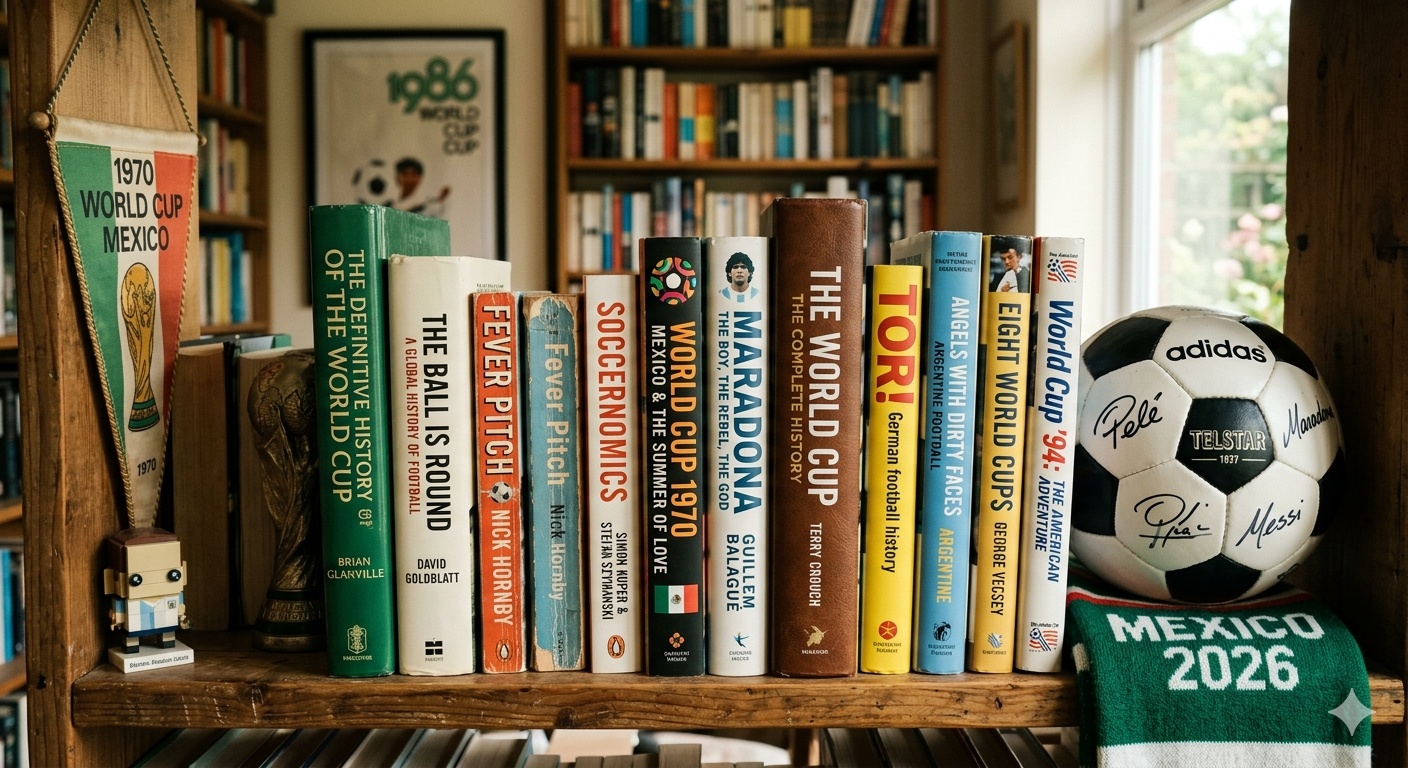
“The Ball is Round” by David Goldblatt
This is the book. If you read nothing else about the history of football and the World Cup, read this. Goldblatt’s 900-page history traces the global spread of football from its Victorian origins through every World Cup to the modern era — covering not just the matches but the politics, economics, and social forces that shaped each tournament.
It is the most authoritative football history book ever written in English, and it remains the essential reference for understanding why the World Cup is more than a sporting event.
Available on Amazon — hardback and Kindle editions available.
“The World Cup: The Complete History” by Terry Crouch
If Goldblatt is the intellectual history, Crouch is the essential reference. This comprehensive tournament-by-tournament account covers every World Cup from Uruguay 1930 to the modern era, with match reports, squad lists, statistics, and the key stories from each edition.
It is the book football supporters reach for when they want to settle an argument about the 1966 final, recall who scored the winner in the 1994 penalty shootout, or understand what made the 1970 Brazil squad so extraordinary.
The Best Books on Individual Tournaments
“Brilliant Orange: The Neurotic Genius of Dutch Football” by David Winner
Technically a book about Dutch football rather than the World Cup specifically, Brilliant Orange is nonetheless the finest account ever written of the 1974 World Cup and the Total Football philosophy that made Johan Cruyff’s Netherlands the most influential team in tournament history — despite never winning the trophy.
Winner’s central thesis — that Dutch football reflects Dutch culture, architecture, and national psychology — is one of the most original ideas in football literature. Read it before watching any tournament footage from 1974.
“Futebol: The Brazilian Way of Life” by Alex Bellos
The definitive account of Brazilian football culture, with the 1970 World Cup and the Maracanã at its heart. Bellos spent two years in Brazil researching this book, and the result is part football history, part cultural anthropology, and entirely essential for understanding why the Seleção and the World Cup are inseparable in the Brazilian national consciousness.
The chapters on the 1950 Maracanazo — the shock defeat to Uruguay that still haunts Brazilian football — are among the finest pieces of sports writing published in the last 30 years.
“How Soccer Explains the World” by Franklin Foer
Foer’s 2004 book — written for an American audience unfamiliar with football’s global reach — remains one of the most readable accounts of how football reflects political and cultural realities around the world. Each chapter uses a club or national team as a lens for examining broader themes: nationalism, globalization, identity.
It has aged remarkably well, and for anyone following the 2026 World Cup from North America, it provides essential context for why the rest of the world cares so intensely about a game.
The Best Player Biographies
“Maradona: The Hand of God” by Jimmy Burns
The definitive English-language biography of Diego Maradona — covering his childhood in Villa Fiorito, his rise through Argentine football, the 1986 World Cup in full, his time at Napoli, and the turbulent later years. Burns had extraordinary access and produced a portrait that does not shy away from the contradictions at the heart of its subject.
If you want to understand what Maradona actually did in Mexico in 1986 — the Hand of God, the Goal of the Century, the five assists in the final, all of it — this is the book that puts it in complete context. Read alongside our Maradona vs Messi World Cup legacy comparison for the full picture.
“Messi” by Guillem Balagué
The authorised biography of Lionel Messi, tracing his path from Rosario to five World Cups and the 2022 triumph in Qatar. Balagué, who covered Messi’s entire Barcelona career as a journalist, had unparalleled access to the player’s inner circle.
The chapters on Messi’s relationship with Argentina — the expectations, the near-misses, and finally the 2021 Copa América and 2022 World Cup victories — are the most revealing account available of football’s most scrutinised career.
“Pelé: The Autobiography”
Pelé won three World Cups. He scored in every one of them. He was 17 when he won his first, in Sweden in 1958, and 29 when he played in what many consider the greatest tournament performance of any team in history — Brazil 1970. His autobiography covers all of it, in his own words.
It is less analytical than the Burns and Balagué biographies but more intimate, and no serious World Cup library is complete without it.
The Best Tactical and Analytical Books
“Inverting the Pyramid” by Jonathan Wilson
The history of football tactics told through the evolution of formation and playing style — from the Victorian passing game through catenaccio, Total Football, tiki-taka, and the pressing football of the 2010s. Every major World Cup era is covered through the lens of how teams played rather than just what they won.
Wilson is the finest tactical writer in English-language football journalism, and this book — originally published in 2008 and regularly updated — remains the standard reference for understanding how the game has changed across World Cup generations.
“The Mixer: The Story of Premier League Tactics” by Michael Cox
Specifically about the Premier League rather than the World Cup, but Cox’s analytical framework — tracking how English football’s tactical evolution has affected international football — makes this essential reading for understanding why England has consistently underperformed at World Cups despite having some of the world’s best club football.
Essential Reading for 2026
“The United States of Soccer” by Phil West
With the 2026 World Cup hosted across the USA, Canada, and Mexico, understanding how football arrived and grew in North America is more relevant than ever. West’s history of US Soccer — from its amateur beginnings through the 1994 World Cup hosting and the rise of MLS — provides essential context for a tournament that is transforming the sport’s relationship with North America.
“El Tri: A History of Mexican Football” by Roger Magazine
Mexico is one of the three 2026 hosts and the Estadio Azteca will host matches in a record third World Cup. Magazine’s history of Mexican football — its culture, politics, and the extraordinary passion of its supporters — is the best preparation for understanding what Mexico City’s atmosphere will be like when the tournament arrives.
Building Your World Cup Library
For the serious football reader, the ideal World Cup library combines history, biography, and tactics. A suggested core collection:
Start here: The Ball is Round (Goldblatt) — the foundation everything else builds on.
Add the tournament history: The World Cup: The Complete History (Crouch) — the reference volume.
Add the cultural depth: Futebol (Bellos) and Brilliant Orange (Winner) — the two best accounts of how a football culture shapes and is shaped by the World Cup.
Add the biography: Maradona: The Hand of God (Burns) and Messi (Balagué) — the two greatest World Cup players, fully examined.
Add the tactics: Inverting the Pyramid (Wilson) — to understand how the game changed across the eras these books cover.
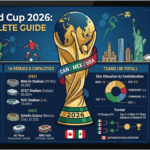
For the complete story of every World Cup champion, our own complete World Cup winners list covers every edition from 1930 to 2022. And for everything you need to know about the upcoming tournament, read our complete 2026 World Cup guide.
World Cup Tribune is the definitive English-language reference on FIFA World Cup history. Every claim in this article draws on official FIFA records, contemporaneous match reports, and verified sports journalism.