
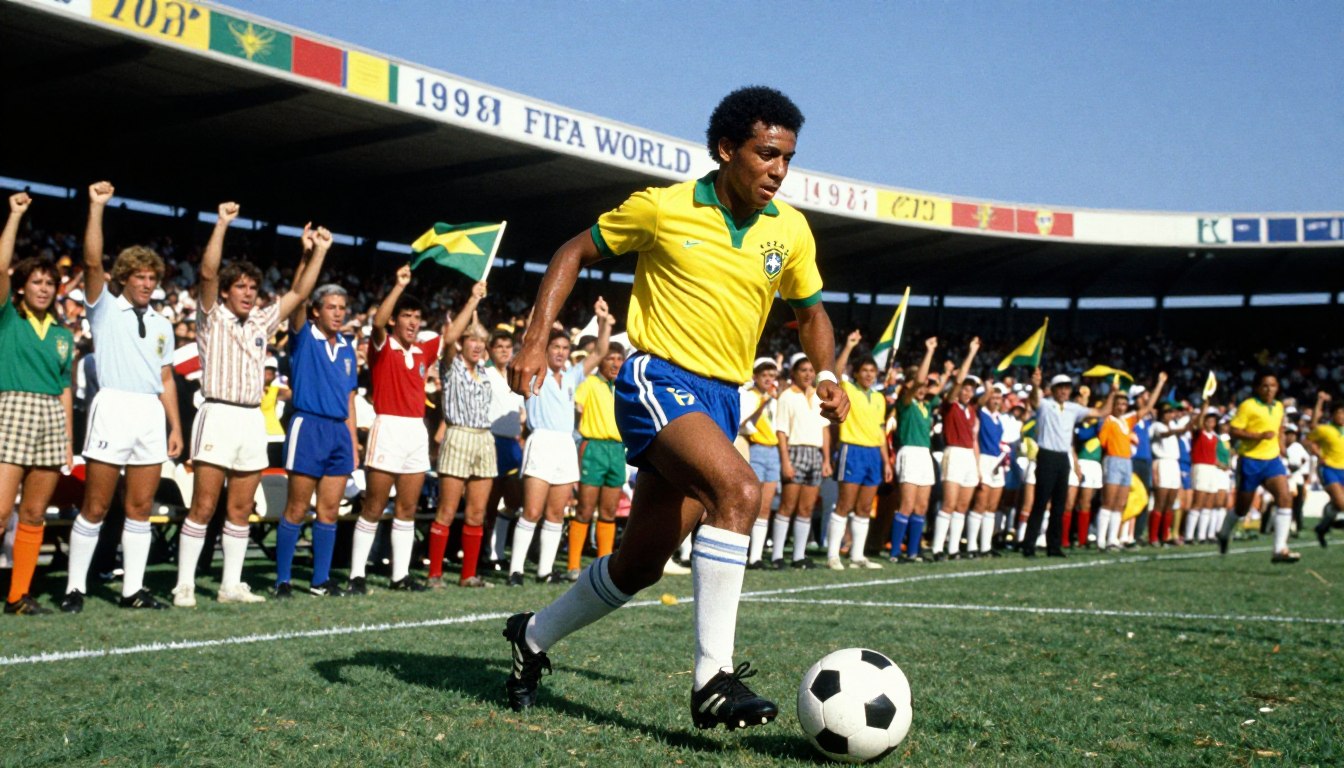

The year 1958 marked a pivotal moment in the history of football. This was the time when a young Brazilian prodigy named Pelé burst onto the global stage. At just 17 years old, he captivated audiences and changed the way the game was played forever.
Held in Sweden, this tournament showcased 16 national teams competing fiercely for glory. Fans around the world watched in awe as Pelé demonstrated his extraordinary talent, making history with every match he played. His performance not only set a new standard for future tournaments but also introduced innovative tactical approaches that influenced the sport for generations.
This edition of the tournament was particularly significant, as it was the first time a South American team triumphed on European soil. The Brazilian squad’s dominant run to the title left an indelible mark on international competition. By examining this landmark event, we can appreciate how one remarkable player elevated the entire game.
Key Takeaways
- The 1958 tournament was a landmark event in football history.
- Pelé’s breakthrough at 17 years old changed the sport forever.
- Sweden hosted 16 national teams competing for glory.
- This was the first time a South American team won in Europe.
- The Brazilian squad’s talent set a high bar for future tournaments.
Overview and Historical Context
In 1958, football witnessed a transformation that would shape its future. This tournament was the sixth edition of the prestigious global competition, making it a remarkable milestone in the sport’s history. It was also significant as it marked the first time a Nordic country hosted the event.
With 16 national teams participating, the tournament provided a massive stage for players to showcase their talents. The historical context of this event reflects a shift towards more tactical and professional play, setting a new standard for international competitions.
As the competition unfolded, legends like Pelé emerged, proving that the tournament was the ultimate place for talent to shine. The global impact of the event extended far beyond Sweden, as it became a symbol of international unity and athletic excellence.
Host Selection and Tournament Format
The selection of Sweden as the host for the 1958 tournament was a groundbreaking decision in football history. This marked the first time a Nordic country welcomed such a prestigious event. The excitement in Sweden was palpable, as fans eagerly anticipated the matches.
The tournament format featured 16 teams divided into four groups of four. Each team played their group opponents, and the top teams advanced to the knockout stage. This structure ensured thrilling matches and intense competition.
FIFA introduced specific rules for the tournament, such as using goal average to break ties among teams with equal points. Notably, defending champions West Germany and host nation Sweden were placed in different pots to prevent early clashes.
This selection allowed various European countries to participate in a well-organized event. The time was ripe for a tournament that tested the resilience and skills of every participating team.
- Sweden hosted the tournament for the first time.
- 16 teams competed in four groups.
- Goal average was used to separate tied teams.
- Strategic pot placements prevented early matchups.
- The format maximized competition for knockout rounds.
Qualification Battles and Unexpected Qualifiers
The qualification process for the tournament was filled with surprises and first-time appearances. This edition of the competition saw Northern Ireland, the Soviet Union, and Wales making their debuts on the global stage. Each of these nations brought a unique story to the tournament.
Northern Ireland surprised many by advancing through their qualification group. Their success demonstrated that smaller nations could compete at the highest level. Meanwhile, the Soviet Union also made their first-time appearance, adding a new layer of competition to the group stage battles.
Wales secured their spot in the final tournament after a hard-fought qualification play-off against Israel. This marked a significant milestone for the nation in world cup history. The draw for the tournament was conducted in Solna, where the qualified teams were divided into groups based on geographical seeding rather than team strength.
This edition of the tournament was unique because it featured all four home nations of the United Kingdom, a feat never repeated. The qualification battles were intense, as teams fought to secure their place in the prestigious tournament, which was the ultimate goal for every national squad.
| Nation | Debut | Qualification Method |
|---|---|---|
| Northern Ireland | First Time | Group Stage |
| Soviet Union | First Time | Group Stage |
| Wales | First Time | Play-off against Israel |
Group Stage Dynamics and Key Matches
The group stage of the tournament brought unexpected twists and thrilling matches. Teams battled fiercely, showcasing their skills and determination to advance. One of the most notable moments was the first-ever 0-0 draw in tournament history, occurring during the match between Brazil and England.
Northern Ireland made a significant impact, advancing to the knockout stage after a dramatic play-off victory against Czechoslovakia. Meanwhile, the Soviet Union proved to be a formidable team, securing a 2-0 victory in their group and later knocking England out in a crucial play-off match.
Every match in this stage was vital, as teams like West Germany fought to maintain their status as defending champions. The dynamics were unpredictable, with many teams struggling to adapt to the intense pressure of the tournament.
This stage was defined by tactical battles, as coaches sought to outmaneuver their opponents. The performance of players was exceptional, with many rising to the occasion to help their teams advance in the tournament.
| Team | Match Result | Significance |
|---|---|---|
| Brazil vs. England | 0-0 Draw | First-ever draw in tournament history |
| Northern Ireland vs. Czechoslovakia | Victory | Advanced to knockout stage |
| Soviet Union vs. England | 1-0 Victory | Knocked England out of the tournament |
Knockout Rounds and Tactical Shifts
The knockout rounds of the tournament brought fierce competition and unforgettable moments. Each match was a test of skill, strategy, and endurance, as teams fought for glory.
Quarterfinal Brilliance
France delivered a dominant performance, defeating Northern Ireland 4-0 in the quarter-finals. This match showcased their attacking prowess and solidified their place as a top contender.
Meanwhile, West Germany continued their strong run. Helmut Rahn scored a decisive goal to lead his team past Yugoslavia, propelling them into the semi-finals. His performance highlighted the tactical shifts that defined this era.
The Soviet Union faced a tough challenge against Sweden, ultimately falling short. This match underscored the evolving strategies in the knockout stage, as teams adjusted their formations to counter their opponents.
Each match in this stage was crucial, with teams needing to score goals while maintaining a solid defense. The brilliance displayed during the quarter-finals proved that this tournament was a showcase for the most talented players and innovative strategies.
The Historic Final – Brazil vs. Sweden
In a thrilling conclusion, Brazil faced Sweden in a match that would echo through football history. This final was held at Råsunda Stadium, where the atmosphere was electric. Fans gathered to witness an unforgettable showdown.
Brazil triumphed over the host nation with a score of 5-2, claiming their first title. Pelé, at just 17 years old, became the youngest player to score in a World Cup final, netting two goals. His remarkable performance solidified his legacy in the sport.
This final was significant as it marked the first time two nations from different continents met to decide the champion. The Brazilian squad, featuring legends like Hilderaldo Bellini and Nílton Santos, displayed unmatched skill throughout the match.
Records were shattered, as this match featured the highest number of goals scored by a winning team in a World Cup final. The 50,000 fans present witnessed the birth of a new era in the tournament’s history, highlighting the incredible talent of a young Pelé.
Stellar Performances: Key Players and Their Impact
The tournament served as a platform for extraordinary players to demonstrate their skills and impact the game. Among them, a young Pelé made headlines with his stunning performances. At just 17, he scored in every knockout match, proving to be a pivotal player for Brazil.
The Rise of a 17-Year-Old
Pelé’s breakthrough was nothing short of spectacular. His ability to score crucial goals helped Brazil secure their first title. He became the youngest player to achieve this feat, forever etching his name in football history.
Just Fontaine’s Unbeatable Scoring Record
Another standout was Just Fontaine of France. He set an unbeatable record by scoring 13 goals during the tournament. This remarkable achievement remains unmatched in the annals of football.
- Pelé’s breakthrough at age 17 was the highlight of the tournament.
- Just Fontaine of France scored 13 goals, a record that still stands.
- Helmut Rahn of West Germany impressed with his tactical play.
- Other legendary figures included Hilderaldo Bellini and Nílton Santos, key players for Brazil.
- Each player’s impact elevated the status of the tournament.
| Player | Goals Scored | Country |
|---|---|---|
| Just Fontaine | 13 | France |
| Pelé | 6 | Brazil |
| Helmut Rahn | 3 | West Germany |
In-Depth Look at the 1958 FIFA World Cup
The 1958 tournament was a turning point that showcased the evolution of football strategies. Teams adapted their gameplay to meet the unique challenges presented by the group stage format.
Throughout the competition, a total of 126 goals were scored across 35 matches. This impressive number reflects the offensive-minded approach adopted by many teams. Coaches emphasized qualification and group management, ensuring their squads were prepared for the high-intensity matches of the tournament.
This event served as a laboratory for new strategies, as teams experimented with formations to gain an advantage. Every match provided fresh data for analysts, who studied how the best teams approached their defensive and offensive duties.
The tactical evolution during this stage of the competition highlighted the growing professionalism of the FIFA World Cup. By examining the strategies used by the top teams, we gain insight into the complexity of this remarkable tournament and its lasting influence on the sport.
Iconic Venues and Stadiums of the Tournament
The venues of the tournament in Sweden were more than just places to play; they were iconic landmarks that captured the spirit of the event. The Råsunda Stadium in Stockholm was the heart of the tournament, hosting 8 matches, including the historic world cup final.
Another standout was the Ullevi Stadium in Gothenburg, the largest venue used. It accommodated thousands of fans who gathered to watch the best teams compete. Many stadiums underwent significant renovations to meet the requirements of the event, showcasing the architectural ambition of the host nation.
The atmosphere at each match was electric, as fans from every participating country filled the stands to support their team. Attendance figures were a key source of pride for the organizers, who worked tirelessly to ensure the success of the tournament.
- Råsunda Stadium hosted 8 matches, including the world cup final.
- Ullevi Stadium was the largest venue, welcoming thousands of fans.
- Stadium renovations highlighted the host nation’s architectural ambition.
- The atmosphere was electric, with passionate fans supporting their teams.
- Attendance figures were a source of pride for the organizers.
- Every venue played a role in showcasing the world’s best players.
- The legacy of these stadiums continues to be felt in football history.
Record-Breaking Stats and Memorable Moments
The 1958 tournament was a remarkable showcase of football statistics and unforgettable moments. It was a statistical marvel, with 126 goals scored across 35 matches, averaging an impressive 3.6 goals per match.
Key participants like Northern Ireland and the Soviet Union made significant contributions to this tournament’s rich history. Memorable moments included Northern Ireland’s surprising performance, which showcased their ability to compete on the world stage.
The final tournament saw numerous records broken, pushing the boundaries of what was possible in the sport. Every match provided new statistics, including the 2-0 victory for the Soviet Union, which highlighted their tactical prowess during the group stage.
With squads filled with talent, the records set during this time remain a testament to the quality of the event. By analyzing these stats, we can see how the tournament evolved, with every player and team leaving their mark on football history.
The Tournament’s Lasting Legacy on Global Football
The impact of the tournament has echoed through the ages, shaping the future of football. The legacy of this event is evident in the evolving tactics of global football, as teams like West Germany and the Soviet Union set new standards for excellence.
This tournament changed the future of the FIFA World Cup, highlighting the importance of tactical preparation and team cohesion. The influence was felt by all participating nations, who returned home with fresh ideas about how to play the game.
Every match played contributed to the development of the sport, ensuring that the tournament remained the pinnacle of football. The legacy is also seen in how qualification and group stage formats have been refined for future editions.
As we look ahead, it’s clear that the lessons learned in this tournament continue to guide the development of national teams. The event remains a cornerstone of football history, showcasing the enduring power of the world’s most popular tournament.
- The legacy of the tournament is evident in evolving tactics.
- West Germany and the Soviet Union set new standards for excellence.
- Participating nations returned with innovative ideas about the game.
- Every match contributed to the sport’s development.
- Qualification formats have been refined for future editions.
- Lessons from this tournament guide national team development.
- This event is a cornerstone of football history.
Conclusion
The tournament of 1958 stands as a landmark in the annals of football history. It was defined by the emergence of Pelé and the remarkable Brazilian squad. With legends like Hilderaldo Bellini and Nílton Santos, Brazil set a new standard for excellence in the sport.
This edition marked the first time a South American team triumphed on European soil, a pivotal shift in the balance of power in global football. The 1958 world cup final remains one of the most iconic matches ever played, perfectly concluding a tournament that transformed the game.
As we reflect on this time, it’s clear that the 1958 tournament was more than just a competition; it was a celebration of the beautiful game. The legacy of this event continues to inspire players and fans alike, ensuring its place in our shared sporting culture.
FAQ
What was significant about the 1958 tournament?
Which country hosted the tournament?
How did teams qualify for the tournament?
What were some memorable matches during the group stage?
How did the knockout rounds unfold?
What happened in the final match?
Who were the standout players of the tournament?
What were some key statistics from the tournament?
How has the tournament influenced modern football?
Explore More World Cup History
← 1954 FIFA World Cup | 1966 FIFA World Cup → | Pelé’s World Cup Record | Brazil at the World Cup | Complete World Cup History