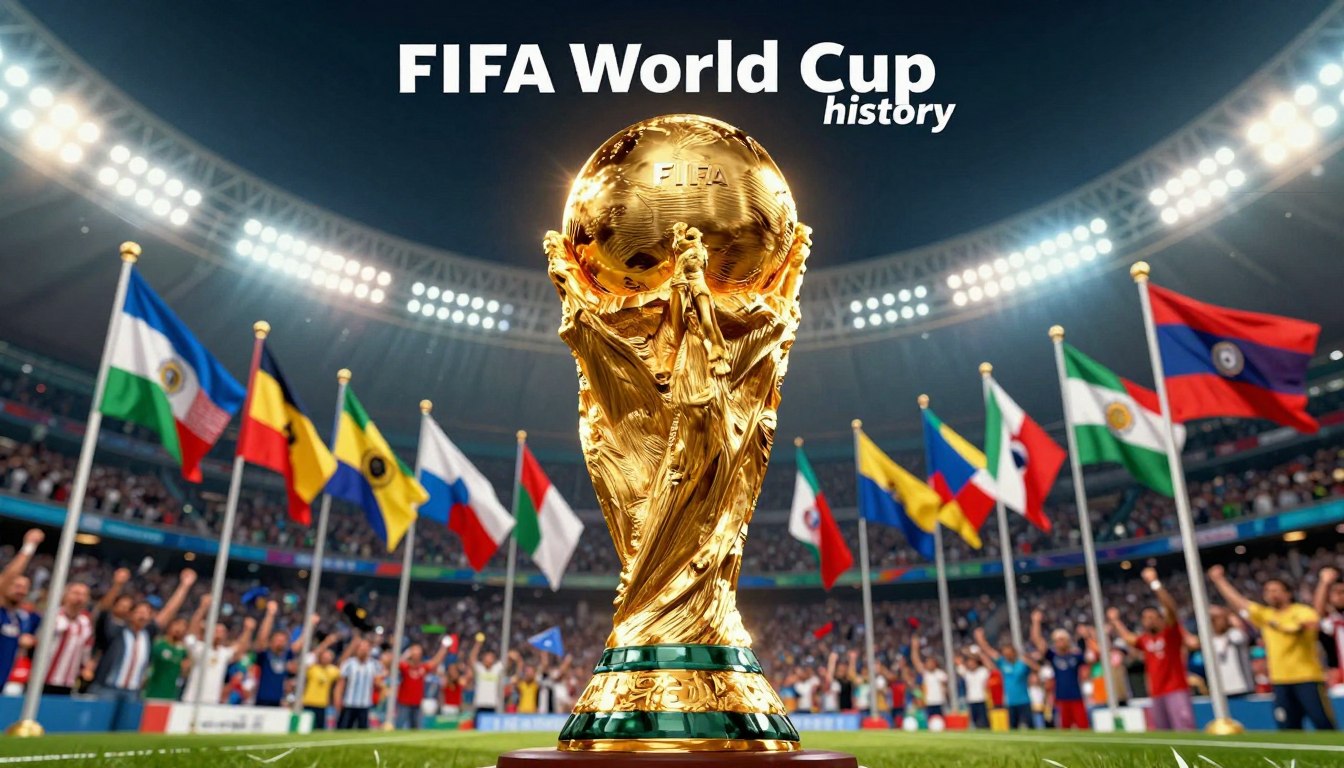

The FIFA World Cup is an exciting event that draws attention from fans around the globe. Held every four years since its inception in 1930, this tournament showcases the best of international soccer. It has become a symbol of prestige and competition.
To truly grasp the significance of the most World Cup titles, one must explore the rich history of this tournament. Each edition has produced unforgettable moments and legendary teams. This guide will take you through the nations that have celebrated the most victories since the very first event.
As we look forward to the upcoming 2026 tournament, we will analyze the legacy of iconic teams and their journeys to success. Join us as we rank these champions and delve into the historical impact of the world cups that have shaped the sport for decades.
Key Takeaways
- The FIFA World Cup is the pinnacle of international soccer.
- The tournament has been held every four years since 1930.
- Understanding the champions requires a look at their histories.
- Upcoming tournaments promise to add to the legacy of winning nations.
- Iconic teams have defined the sport through their achievements.
Introduction: The Magnitude of the FIFA World Cup
The FIFA World Cup stands as a monumental event, celebrating the spirit of soccer worldwide. This tournament captivates millions, uniting fans in a shared love for the sport every four years. The impact of the World Cup extends beyond the field, creating a cultural phenomenon that resonates globally.
In 2018, the tournament reached an astounding 3.57 billion viewers, showcasing its immense popularity. The excitement only grew during the 2022 World Cup, where global engagement soared to approximately 5 billion people. This remarkable scale highlights the tournament’s ability to transcend borders.
Fans from every corner of the globe gather to support their national teams, fostering an atmosphere of unparalleled excitement and intense rivalry. The FIFA World Cup continues to grow in influence, solidifying its status as the most widely viewed sporting event on the planet.
Historical Overview of the World Cup’s Inception and Evolution
Since its inception, the FIFA World Cup has become a pivotal event in the realm of international soccer. The official world cup history began in 1930 when Uruguay hosted the inaugural tournament to celebrate their centenary of independence from Spain. This marked the start of a new era in sports, where nations could compete on a global stage.
FIFA, founded in 1904, took the lead in organizing this first tournament. The goal was to establish a premier international championship for national teams. Over the years, the tournament has faced numerous challenges, including the impact of the Great Depression on international travel.
Early cup history was marked by a transition from amateur Olympic competitions to the professionalized structure we see today. Key milestones, such as the introduction of new formats and the expansion of participating teams, have helped shape the tournament into the global spectacle that fans recognize and celebrate in the present day.
Early Milestones and Breakthroughs in World Cup History
The journey of the FIFA World Cup began with groundbreaking matches that would forever change the landscape of the sport. The first World Cup took place in 1930, featuring 13 nations. Among these, France and the United States won their opening matches on July 13, 1930.
Lucien Laurent of France etched his name into world cup history by scoring the very first goal during this inaugural tournament. In a historic final match, Uruguay triumphed over Argentina with a score of 4-2. This thrilling game took place in front of 93,000 spectators at the Estadio Centenario in Montevideo, Uruguay.
These early tournaments laid the foundation for the competition we know today. Despite the challenges of intercontinental travel during the pre-war era, every game played contributed to the rich cup history that defines the legacy of the sport now.
Examining the most World Cup titles by country
Exploring the rich legacy of the FIFA World Cup unveils a fascinating narrative of global competition. When analyzing the most World Cup titles by country, Brazil stands alone at the top with an impressive five championship victories. This remarkable achievement highlights Brazil’s dominance in international soccer.
A total of eight national teams have managed to win the world cup trophy since the inception of the tournament in 1930. These winners represent the elite tier of football nations that have consistently performed at the highest level on the global stage.
Each of these countries has contributed unique tactical innovations and legendary players to the ongoing narrative of the world cup. Understanding the distribution of these titles provides insight into the shifting power dynamics within international football over the last century.
| Country | World Cup Titles | First Win |
|---|---|---|
| Brazil | 5 | 1958 |
| Germany | 4 | 1954 |
| Italy | 4 | 1934 |
| Argentina | 2 | 1978 |
| Uruguay | 2 | 1930 |
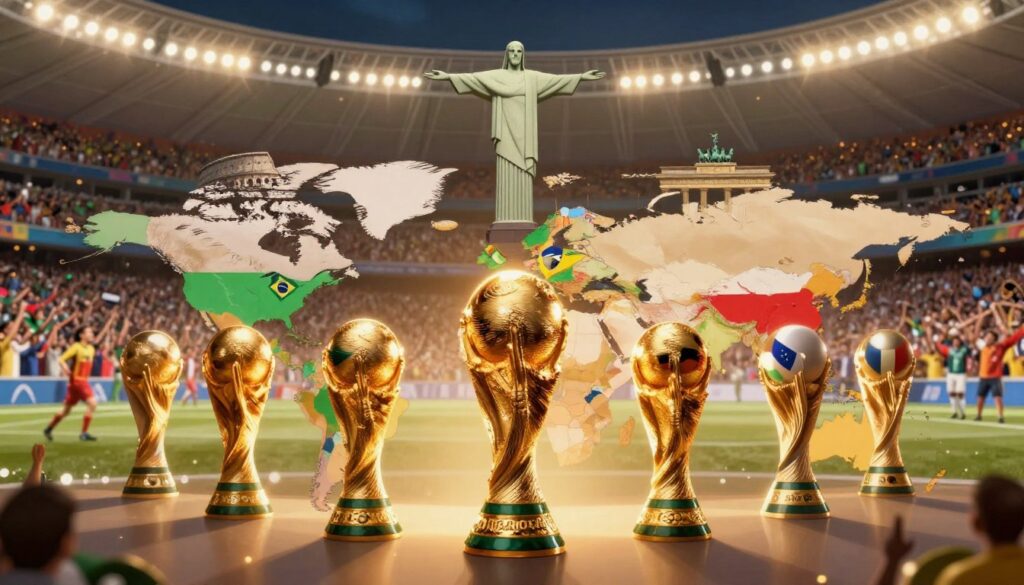
Brazil’s Reign: Five Iconic World Cup Victories
Brazil has firmly established itself as a powerhouse in international soccer through its remarkable achievements. The nation has secured five championship victories, showcasing its unmatched prowess on the global stage.
Here are highlights of Brazil’s championship years:
- 1958: Brazil’s first title, marking the beginning of a glorious era.
- 1962: A back-to-back victory that solidified their dominance.
- 1970: The team, featuring Pelé, captivated fans with its flair and skill.
- 1994: A dramatic win in the United States, showcasing resilience.
- 2002: A strong performance that crowned them champions once again.
As the only nation to have participated in every tournament, Brazil’s legacy is built on decades of consistent excellence and flair. Their unmatched history in football is defined by a style of play that has inspired millions of fans and players worldwide.
Brazil remains the benchmark for success, holding the record for the most world cup titles won by any single national team.
Germany vs. Italy: A Tale of Four Championships Each
A storied rivalry exists between Germany and Italy, showcasing their prowess on the world stage. Both nations have secured four world cup championships, making them two of the most successful countries in the tournament’s history.
Germany, including its victories as west germany, won their championships in 1954, 1974, 1990, and 2014. Each title reflects a unique evolution in their tactical approach, demonstrating adaptability and skill.
Italy, on the other hand, displayed remarkable defensive prowess and tactical discipline. Their world cup victories came in 1934, 1938, 1982, and 2006, highlighting their long-standing tradition of excellence.
The comparison between these two countries reveals distinct philosophies that have shaped the tactical evolution of the modern game. Both nations have faced periods of transition, yet their combined eight titles cement their status as giants of the world cup stage.
| Country | World Cup Titles | Years Won |
|---|---|---|
| Germany | 4 | 1954, 1974, 1990, 2014 |
| Italy | 4 | 1934, 1938, 1982, 2006 |
Argentina’s Triumphs and Global Impact
With three significant World Cup wins, Argentina has solidified its status in international soccer. The victories in Argentina 1978, 1986, and 2022 have created a deep cultural connection to the tournament. This bond continues to resonate with fans today.
The triumph in Argentina 1978 marked the nation’s first title, igniting a passion for the sport that endures. As the current champion, Argentina influences the global game with its talented roster and tactical adaptability.
Their success in the 2022 tournament showcased the resilience of the national team under immense pressure. Argentina remains one of the most successful countries in the competition’s history, consistently producing legendary talent.
Other Pioneers: Uruguay, England, and Spain in World Cup History
The rich tapestry of the FIFA World Cup includes contributions from various nations beyond the traditional powerhouses. These countries have left a lasting impact on the tournament’s legacy.
Uruguay, the inaugural winner, claimed their two world cup victories in 1930 and 1950. Their success marked a significant milestone in the early years of the sport.
England achieved their historic victory in 1966, a moment that remains a cornerstone of their national footballing identity and pride. This win not only showcased their talent but also ignited a passion for the game that persists today.
Spain joined the ranks of champions in 2010, showcasing a dominant possession-based style that revolutionized how many nations approached the game. Their victory highlighted the evolution of football tactics on the global stage.
These nations represent the diverse history of the tournament, proving that football glory is not limited to the traditional giants. Their enduring influence continues to shape the competitive landscape as new teams strive to join the ranks of world cup winners.
| Country | World Cup Wins | Years Won |
|---|---|---|
| Uruguay | 2 | 1930, 1950 |
| England | 1 | 1966 |
| Spain | 1 | 2010 |
The Tournament’s Changing Format and Global Expansion
The evolution of the FIFA World Cup reflects the changing landscape of international soccer. Since its inception in 1930, the tournament has undergone significant changes. It has expanded from the original 13 teams to the current format that has included 32 teams for many years.
In 1982, the tournament grew to 24 teams, and by 1998, it reached the 32-team format that fans have come to know. FIFA has confirmed that the 2026 World Cup will feature an exciting new era with 48 teams participating. This expansion allows for more national teams from Africa, Asia, and North America to take part in the group stage.
This growth reflects the global nature of the sport, ensuring that the tournament remains inclusive and representative of all confederations. As the tournament evolves, both the group stage and knockout stage structures will adapt to accommodate the increasing number of participating teams.
| Year | Number of Teams | Format Change |
|---|---|---|
| 1930 | 13 | Inaugural tournament |
| 1982 | 24 | First expansion |
| 1998 | 32 | Standard format |
| 2026 | 48 | Future expansion |
The Influence of Key Events: From the 2015 FIFA Corruption Case to the Modern Era
This renowned tournament not only showcases soccer talent but also shapes the future of the sport. In recent years, key events have significantly impacted the FIFA organization and the integrity of the tournament.
The 2015 FIFA corruption case brought significant scrutiny to the organization. Allegations of bribery and money laundering led to widespread investigations. These controversies forced a re-evaluation of tournament procedures, impacting how the governing body manages future bidding processes.
As a result, reforms were implemented to ensure greater transparency within the FIFA world structure. This aims to restore trust in the integrity of the sport. The legacy of these events continues to influence the direction of the FIFA World Cup, emphasizing the need for ethical governance.
Looking ahead, future directions for the FIFA World Cup focus on modernization. The goal is to ensure that the tournament remains a positive force for global unity.
| Event | Impact | Year |
|---|---|---|
| FIFA Corruption Case | Increased scrutiny and investigations | 2015 |
| Sepp Blatter Resignation | Leadership change in FIFA | 2016 |
| Reforms Implemented | Greater transparency and ethical governance | Post-2015 |
Spotlight on the United States: Host Nation and Future Prospects
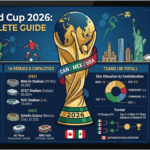
The stage is set for a monumental event as the United States gears up to co-host the 2026 World Cup. This collaboration with Canada and Mexico marks a significant milestone in the tournament’s history.
This 2026 tournament represents a major opportunity for the growth of soccer within the United States. It aims to attract new fans and investment, elevating the sport’s profile across the nation.
As a host, the United States will showcase its impressive infrastructure. The 2026 World Cup is expected to be the largest tournament in history, further enhancing the nation’s role in global soccer.
Additionally, Mexico will become the first country to host games in three separate tournaments, highlighting regional cooperation. With the 2026 World Cup on the horizon, the United States is investing heavily in soccer development to ensure a lasting legacy for the sport.
- The United States is preparing to co-host the 2026 World Cup alongside Canada and Mexico.
- This tournament offers a unique chance for soccer growth in the United States.
- The infrastructure will be on full display, showcasing the nation’s capabilities.
- Mexico will make history by hosting games in three World Cups.
- Investment in soccer development aims to create a lasting impact.
Legacy and Cultural Impact of World Cup Titles Across Nations
The legacy of the FIFA World Cup extends far beyond the pitch, influencing nations and cultures. Winning this prestigious tournament shapes national identity, as seen in the jubilant celebrations of teams from South America and West Germany. Each victory tells a story that resonates through generations.
Performances in the knockout stage and group stage often become legendary, creating narratives that are cherished in sports history. Players who score crucial goals in the final game become icons, representing their countries’ pride on the world stage.
The first World Cup trophy, the Jules Rimet, was replaced in 1974. Since then, winners have received the current gold trophy and the right to wear the FIFA Champions Badge. This accolade symbolizes their triumph and the honor of their national teams.
South Korea’s historic fourth-place finish in 2002 demonstrates how the tournament inspires national teams beyond the traditional winners. The legacy of the World Cup is defined by the passion of the players and the enduring impact of these titles on their countries.
Conclusion
The FIFA World Cup serves as a global celebration of soccer, bringing together fans from every corner of the planet. From the inaugural tournament in 1930 to the upcoming expansion, the history of this tournament is filled with legendary moments and champions.
Brazil, Germany, Italy, and Argentina have set the standard for excellence, each contributing unique chapters to the story of the World Cup. As we look toward the future, the tournament continues to evolve, promising new opportunities for national teams to achieve glory.
We hope this ranking has provided a clear understanding of the successful nations and the rich legacy of the World Cup.
FAQ
Which country has won the most World Cups?
When was the first World Cup held?
How often is the FIFA World Cup held?
What is the format of the World Cup?
How many teams participate in the World Cup?
What impact does winning the World Cup have on a nation?
Who are some notable players in World Cup history?
What controversies have affected the World Cup?
How is the 2026 World Cup different from previous tournaments?
What are some key milestones in World Cup history?
Related Articles
All World Cup Winners | Complete World Cup History | Every World Cup Final | FIFA World Cup Records | All-Time Top Scorers