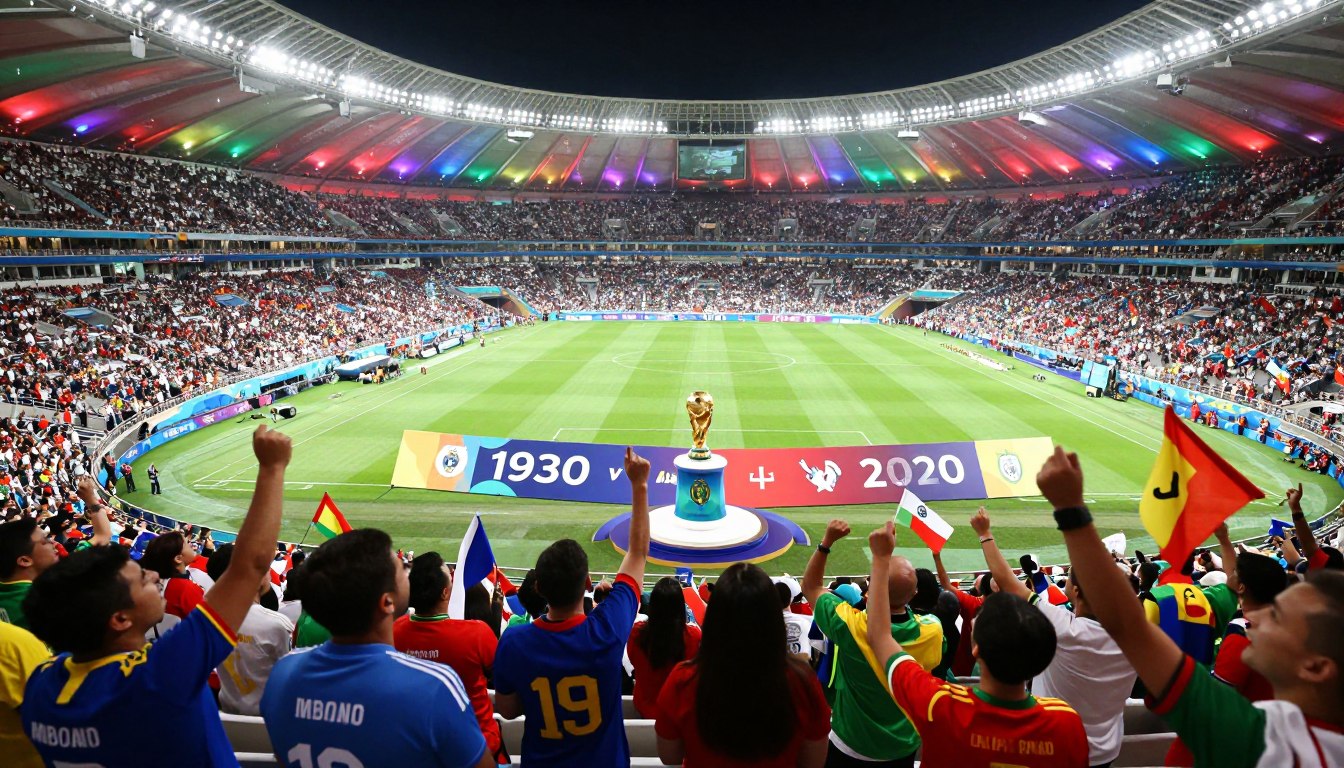

The FIFA tournament has captured the hearts of millions since its inception in 1930. The first event, held in Uruguay, marked the beginning of a journey that would evolve into the most prestigious soccer competition globally. Every four years, nations compete for glory, showcasing talent and passion on the world stage.
This comprehensive guide explores every match outcome from the inaugural tournament to the thrilling 2022 showdown in Qatar. Each championship has its own story, revealing how the competition has transformed over the decades.
Readers will discover how the first tournament laid the groundwork for a global phenomenon, captivating billions of fans. Our analysis covers each match, detailing the final scores and host countries, ensuring that you have the most accurate data available.
From legendary teams to unforgettable moments, this resource serves as a gateway to understanding the legacy of the tournament and its impact on the sport.
Key Takeaways
- This guide covers every match outcome from 1930 to 2022.
- It details the evolution of the competition into a global event.
- Readers will learn about the first tournament’s significance.
- Each match entry includes the venue and participating teams.
- Discover the legendary players who shaped the finals.
Introduction
The inception of the FIFA tournament in 1930 marked the start of an extraordinary sporting saga. This event has become a beacon of excitement for fans worldwide, showcasing the best in international football. Every four years, nations gather to compete for the ultimate title, uniting millions in their passion for the game.
In this listicle, we provide a complete history of the tournament. Fans can expect a detailed exploration of every final match, including the winning team and scoreline. Here’s what you can look forward to:
- A deep dive into the finals: Discover how the competition has evolved over the years.
- Memorable matches: We highlight iconic games, including those decided by penalties.
- Legendary players: Learn about the stars who scored winning goals and shaped the tournament.
- Host countries: Understand how different nations have influenced the legacy of the FIFA tournament.
The Evolution of the FIFA World Cup
Since its humble beginnings in 1930, the FIFA tournament has evolved into a global spectacle. Initially, only 13 teams were invited to participate in the inaugural event held in Uruguay. This small start paved the way for what would become a grand competition.
Over the decades, the tournament has expanded significantly. It now includes 32 teams, with plans for 48 teams by 2026. This evolution reflects football’s rise as the world’s most beloved sport, uniting diverse nations through the beautiful game.
As the structure of the tournament changed, so did the excitement. The shift from simple group stages to the complex knockout format has made each match more thrilling. Each host country has played a vital role, offering unique venues and cultural experiences for players and fans alike.
“The transition from an invitation-only event to a global qualification process has made the FIFA tournament the most watched sporting competition.”
Understanding this history helps fans appreciate the magnitude of winning the trophy and the effort required to reach the final. The journey from 13 teams to a worldwide celebration showcases the passion and dedication of players and nations.
World Cup Final Results: A Historical Overview
From its inception, the FIFA tournament has transformed into a symbol of international sporting rivalry. Since 1930, only 13 nations have reached the final match, showcasing the exclusivity of this elite tier.
Uruguay claimed victory in the first tournament, setting a high standard for future winners. Each championship has seen fierce competition, with teams striving for the coveted trophy.
We provide a chronological list of every final, documenting the winners and the runners-up who fought hard for the championship title. The history of the tournament is marked by legendary matches where the final score determined national pride.
- Each final match highlights the skill of players and the tactical brilliance of coaches.
- The trophy has been contested by teams from different confederations, primarily UEFA and CONMEBOL.
- Top teams like Brazil and Germany consistently reach the final stage of the competition.
- Reviewing these results reveals patterns that have defined the tournament over the last century.
Legendary Final Matches
Each championship match in the FIFA tournament brings a unique blend of drama and excitement. Legendary final matches often feature iconic performances that become etched in the memories of fans. For instance, Pelé scored in the 1958 final at just 17 years old, showcasing his incredible talent on the world stage.
The 2006 final remains unforgettable due to the dramatic incident involving Zinedine Zidane and Marco Materazzi during extra time. Such moments profoundly impact the global football landscape, inspiring millions of young players to pursue their dreams.
These high-stakes matches influence the popularity of soccer in the host country and around the world. Iconic performances often lead to players becoming legends, cementing their status in the history of the sport. The intensity of these matches is unmatched, as two teams compete for the most prestigious trophy in sports.
Fans continue to debate the greatest final matches, reflecting on the skill, drama, and passion displayed on the biggest stage.
Detailed Analysis of Final Scores by Year
The journey of the FIFA tournament reveals a fascinating story of competition and triumph. Each match in the finals has contributed to the rich tapestry of football history, showcasing the skills and determination of nations.
In the early tournaments, the competitive spirit was evident. For instance, the 1930 final saw Uruguay defeat Argentina 4-2, establishing the fierce rivalry that would characterize future matches. Similarly, in 1950, Uruguay shocked the world by overcoming Brazil 2-1 at the Maracanã Stadium, a match often regarded as a de facto final.
Early Tournaments: 1930 to 1950
During this period, the matches set the stage for the drama that followed. England secured their only title in 1966 by defeating West Germany 4-2 after an exhilarating extra-time period. Brazil showcased their attacking prowess in 1970, winning 4-1 against Italy, which highlighted their legendary team.
Modern Era Highlights: 1954 to 2022
Fast forward to 1998, where France claimed their first title with a commanding 3-0 victory over Brazil. The 2022 final was a classic, featuring Argentina and France in a thrilling 3-3 draw, with Argentina ultimately winning 4-2 on penalties.
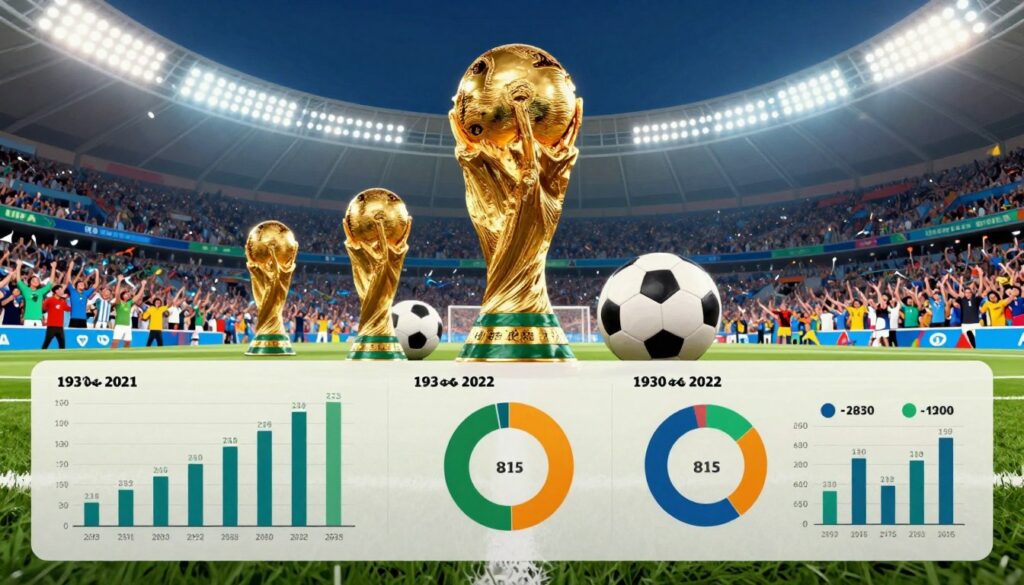
These scores reflect the changing dynamics of the sport, from high-scoring early matches to the tactical battles of the modern era. We provide a detailed breakdown of scores for every final, allowing fans to compare results across different eras of the game.
Top World Cup Champions and Their Triumphs
Throughout the history of the FIFA tournament, certain teams have established themselves as dominant forces. Among these, Brazil, Germany, and Italy stand out as the giants of international football.
Brazil is the most successful nation, boasting five championship titles. Their victories came in the years 1958, 1962, 1970, 1994, and 2002. This remarkable achievement showcases their enduring talent and skill on the global stage.
Germany follows closely with four titles, won in 1954, 1974, 1990, and 2014. Their consistent performance has seen them reach the final match on eight occasions, a testament to their strength in the tournament.
Italy also holds four titles, including back-to-back victories in 1934 and 1938. This rare feat highlights their historical significance in the competition.
These three nations have not only shaped the tournament but have also produced legendary players and memorable matches. Understanding their triumphs provides insight into the challenges faced by other teams striving for the coveted trophy.
| Country | Titles Won | Winning Years |
|---|---|---|
| Brazil | 5 | 1958, 1962, 1970, 1994, 2002 |
| Germany | 4 | 1954, 1974, 1990, 2014 |
| Italy | 4 | 1934, 1938, 1982, 2006 |
Standout Final Matches: Upsets and Thrillers
Few moments in sports evoke as much emotion as penalty shoot-outs in the FIFA tournament, where glory and heartbreak collide. These dramatic moments have often decided the fate of teams, creating intense drama that leaves fans breathless until the final kick.
In 1994, Brazil triumphed over Italy in a tense penalty shoot-out after the match ended in a scoreless draw following extra time. The 2006 final saw Italy overcome France on penalties, a match remembered for its tactical discipline and the dramatic conclusion.
Argentina’s thrilling victory over France in 2022 was also decided by penalties after both teams scored three goals during the match. These standout matches highlight the pressure players face when representing their country on the biggest stage in the world.
Upsets and thrillers are part of the tournament’s charm, proving that any team can win if they perform on the day. The emotional toll of these matches is significant, as players and fans experience the highest highs and lowest lows of the game.
The Role of Host Countries in Shaping Final Battles
The atmosphere of the FIFA tournament is heavily influenced by the host country. Each nation provides a unique backdrop that enhances the experience for players and fans alike. This impact can often be seen in the performance of the teams during the finals.
In 1950, Brazil hosted the tournament but faced heartbreak when Uruguay defeated them at the Maracanã Stadium. This loss left a lasting mark on Brazilian football history. Conversely, France successfully hosted the event in 1998, using their home advantage to secure their first title.
The 2022 tournament in Qatar was historic, bringing the competition to the Middle East. The local support and infrastructure played a crucial role in the event’s success. Host countries not only create a vibrant atmosphere but also leave a legacy through their stadiums and cultural contributions.
Examining these factors reveals how local fans can influence the performance of competing teams. The selection of host nations is strategic, affecting the global reach and popularity of the tournament.
| Year | Host Country | Winning Team |
|---|---|---|
| 1950 | Brazil | Uruguay |
| 1998 | France | France |
| 2022 | Qatar | Argentina |
Key Moments and Controversies in World Cup Finals
Controversies and unforgettable moments have shaped the narrative of the FIFA tournament over the years. These incidents not only spark debate but also highlight the immense pressure players face during the biggest matches of their careers.
Two notable examples stand out:
- The “ghost goal” in 1966: This incident during the final between England and West Germany is one of the most debated moments in football history. The goal scored by Geoff Hurst remains controversial, with many questioning whether the ball crossed the line.
- The Zidane headbutt in 2006: Zinedine Zidane’s infamous headbutt on Marco Materazzi shocked fans worldwide. This moment not only altered the course of the match but also left a lasting impact on Zidane’s legacy.
These unforgettable incidents have influenced the rules of the tournament and the implementation of technology in modern soccer. Controversies often become part of the rich history of the FIFA tournament, serving as talking points for generations of football fans.
Moreover, the media’s portrayal of these moments shapes public perception, further complicating the narrative surrounding these high-stakes matches. Despite the controversies, the FIFA tournament remains the most celebrated competition, with these moments adding to its complex history.
Tactical Shifts in World Cup Final Strategies
Throughout the years, the tactical landscape of the tournament has undergone remarkable changes. The evolution of strategies in the FIFA tournament illustrates how football adapts over time. Early formations, such as the rigid 2-3-5, have given way to more fluid systems like the modern 4-3-3.
Legendary coaches, such as Mário Zagallo, have played a pivotal role in this transformation. They introduced innovative tactics that helped their teams secure victories. This shift in style reflects the changing nature of football as a global sport.
Changing Styles and Formations Over the Decades
The tactical innovations have emphasized defense and transition play. Coaches analyze their opponents’ strengths and weaknesses, preparing their teams meticulously for the final. These strategic shifts have made the tournament more competitive and unpredictable.
Influence of Legendary Coaches and Tactical Innovations
Understanding these tactical changes helps fans appreciate the complexity of the final match. The evolution of formations shows how the game has become more athletic and demanding for players on the field.
| Era | Formation | Key Coach |
|---|---|---|
| 1930s | 2-3-5 | Giovanni Trapattoni |
| 1960s | 4-2-4 | Mário Zagallo |
| 2000s | 4-3-3 | Jürgen Klinsmann |
Stats and Records That Define the Finals
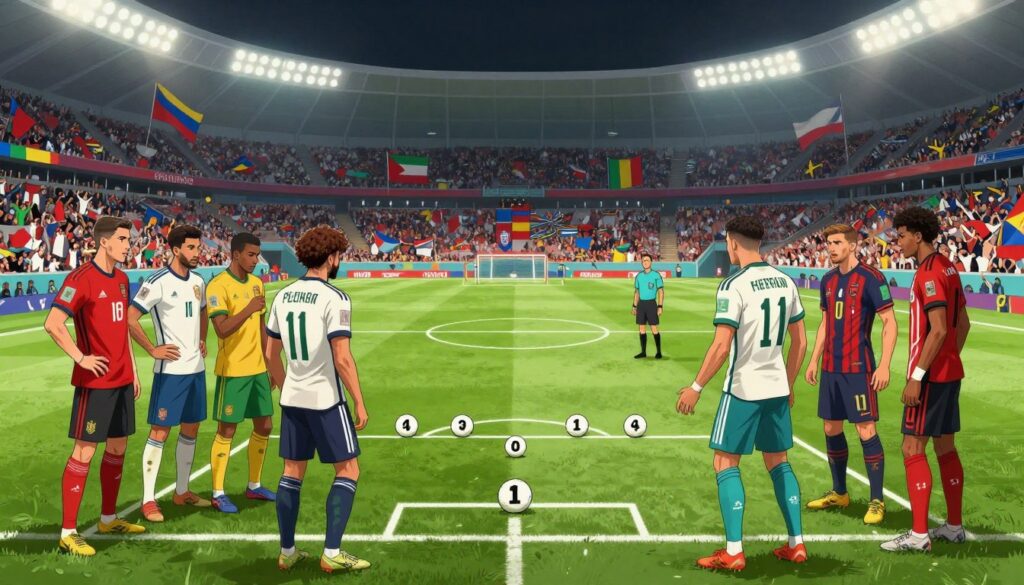
Statistical insights reveal fascinating patterns in the history of the FIFA tournament. The 1-0 scoreline is the most common result in the history of the finals, reflecting the tight nature of these matches. Additionally, the 1950 final at the Maracanã Stadium holds the record for the highest attendance, with a staggering 173,850 fans watching the game.
We analyze statistical oddities, such as the number of goals scored in different finals and the frequency of penalty shoot-outs. Records regarding the most successful teams and players provide a clear picture of who has dominated the tournament over time. These statistics are essential for understanding the legacy of the tournament and the achievements of the participating nations.
Furthermore, we look at the top-scoring matches, where teams displayed incredible attacking prowess in the final stage of the competition. Statistical analysis helps fans compare different eras of the tournament, highlighting the consistency of top-performing teams. The data reveals the evolution of the game, showing how scoring patterns and match dynamics have changed over the decades.
Legacy of World Cup Finals on Global Soccer Culture
The impact of the FIFA tournament extends far beyond the pitch, shaping the culture of soccer globally. The legacy of these finals inspires future generations of players to strive for greatness in the sport.
Young stars like Kylian Mbappé, who scored in the 2018 final as a teenager, demonstrate how the tournament serves as a platform for emerging talent. These moments not only ignite passion in young players but also foster a love for the game.
The stories of triumph and defeat in the finals are passed down through generations, becoming an integral part of global football heritage. Players often cite the FIFA tournament as their ultimate motivation, driving them to work harder and achieve their professional goals.
Moreover, the tournament’s impact extends beyond the pitch, affecting the social and economic landscape of participating nations. The final match creates a sense of unity and pride, bringing people together to celebrate the sport.
The enduring legacy of the FIFA tournament ensures that it remains the most important competition in the world of soccer.
Comparisons Between Different Eras of Finals
The evolution of the FIFA tournament reflects significant changes in how the game is played and perceived. Over the years, technological advancements and improved player fitness have transformed the finals into thrilling spectacles.
Technological advancements, such as the introduction of VAR, have significantly impacted the fairness and accuracy of the match. This technology allows referees to review crucial decisions, enhancing the overall integrity of the game.
Player fitness levels have increased dramatically since 1930. This evolution has led to a faster and more physically demanding game in the modern era. Teams now adapt their strategies to maximize performance, showcasing incredible skill and speed.
Comparing different eras allows fans to appreciate the challenges faced by players in the past versus the modern professional. The impact of technology on the game is a subject of ongoing debate, with fans weighing its benefits and drawbacks.
Understanding these changes provides a deeper insight into the history of the tournament and its continuous development.
| Era | Key Changes | Impact on Game |
|---|---|---|
| 1930s | Basic rules, no technology | Less accurate officiating |
| 1990s | Introduction of instant replay | Improved decision-making |
| 2020s | VAR technology | Enhanced fairness and accuracy |
Preparing for Future Finals – Looking Ahead to 2026
As we look ahead to the next chapter of the FIFA tournament, excitement is building for the upcoming 2026 event. This tournament will be historic, hosted across the United States, Canada, and Mexico, with an expanded 48-team format.
This expansion means more teams will have the opportunity to compete, potentially leading to new surprises and upsets in the matches. Fans are eager to see how this larger tournament will impact the journey to the final.
With the promise of more diversity and talent on the world stage, the host countries are preparing to provide a world-class experience. They aim to ensure that the final match is a memorable occasion for everyone involved.
Expectations are high for the next tournament, including discussions about which teams are likely to be the favorites to win the title. The expansion to 48 teams is a significant change that will reshape the history of the FIFA tournament for years to come.
Preparing for the future involves analyzing the current state of international football and the potential for new champions to emerge.
Conclusion
The journey of the FIFA tournament has been a thrilling saga since it began in 1930. The FIFA World Cup final remains the most prestigious match in international football, capturing the hearts of fans across the globe. From the first tournament in 1930 to the latest showdown in 2022, the competition has provided countless moments of joy and drama.
We have explored the history of the tournament, the legendary teams, and the tactical shifts that have defined the final match. As we look forward to the 2026 tournament, the legacy of the FIFA World Cup continues to grow, inspiring new generations of players.
This guide has provided a comprehensive overview of the results and scores that have shaped the history of the tournament. We hope this resource has deepened your appreciation for the competition and the incredible effort required to win the trophy.
FAQ
What is the FIFA World Cup?
How many times has Brazil won the tournament?
Who are some of the most famous players in World Cup history?
When was the first World Cup held?
What happens if a match ends in a tie during the knockout stage?
How are host countries selected for the tournament?
What are some notable controversies in World Cup history?
How has the tournament evolved over the years?
Related Articles
All World Cup Winners | Complete World Cup History | 5 Greatest World Cup Finals | FIFA World Cup Records | Most Dramatic Penalty Shootouts