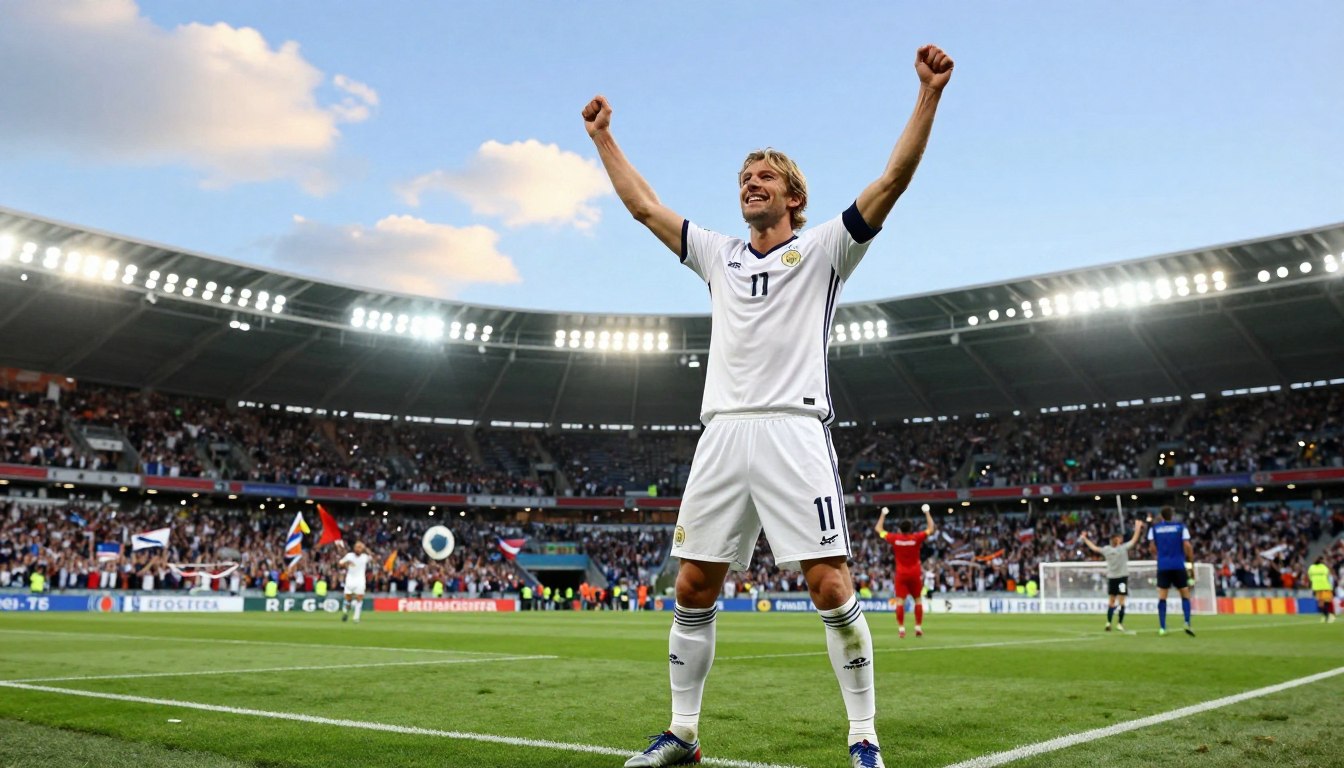

Miroslav Klose stands out as a legendary figure in the realm of football. He is renowned for his exceptional skill as a striker, particularly during the biggest tournaments. With a remarkable tally of 16 goals, he holds the record for the most goals scored in the FIFA event. This achievement cements his legacy as a top scorer in the history of the game.
Born on June 9, 1978, in Opole, Poland, Klose became a key player for the Germany national team. His journey to stardom was marked by dedication and hard work. After a successful career, he retired from international football in 2014, having contributed significantly to his team’s triumph in Brazil.
This article delves into Klose’s incredible journey, exploring how he became an icon in football. His ability to consistently find the back of the net has inspired countless players and fans alike. Join us as we celebrate the remarkable achievements of this football legend.
Key Takeaways
- Klose is the all-time top scorer in the FIFA tournament with 16 goals.
- He played a crucial role in his national team’s success on the global stage.
- This guide highlights his extraordinary career and contributions to football.
- His record-breaking goals reflect his talent and determination.
- Klose’s impact continues to inspire future generations of footballers.
A Legacy in the Making: Early Life and Football Beginnings
The journey of a football legend often begins in humble surroundings. Born in Opole, Poland, in 1978, Klose moved to Germany at the age of eight. This transition marked the start of his football journey.
His early experiences were shaped by a family of athletes. Klose’s parents were professional sportsmen, which undoubtedly influenced his passion for the game. Before he became a world-renowned player, he played for SG Blaubach-Diedelkopf, a local club in the seventh division of German football.
While developing his skills, he worked as an apprentice carpenter. This balance between work and football helped him cultivate discipline. He scored his first goal in the Bundesliga during the 2000/01 season, marking the beginning of his rise as a top-tier athlete.
His transition to the Kaiserslautern reserves allowed him to refine his technique. Soon after, he made his debut for the senior team in the league. Klose’s dedication to the sport was evident, as he quickly adapted to the demands of professional football.
His early years were defined by hard work, where he built up his goals tally while playing for Kaiserslautern. The club environment provided the perfect foundation for him to grow into a world-class striker.
| Year | Club | Goals Scored |
|---|---|---|
| 2000/01 | Kaiserslautern | 1 |
| 2001/02 | Kaiserslautern | 5 |
| 2002/03 | Kaiserslautern | 6 |
Club Career Highlights and Major Transitions
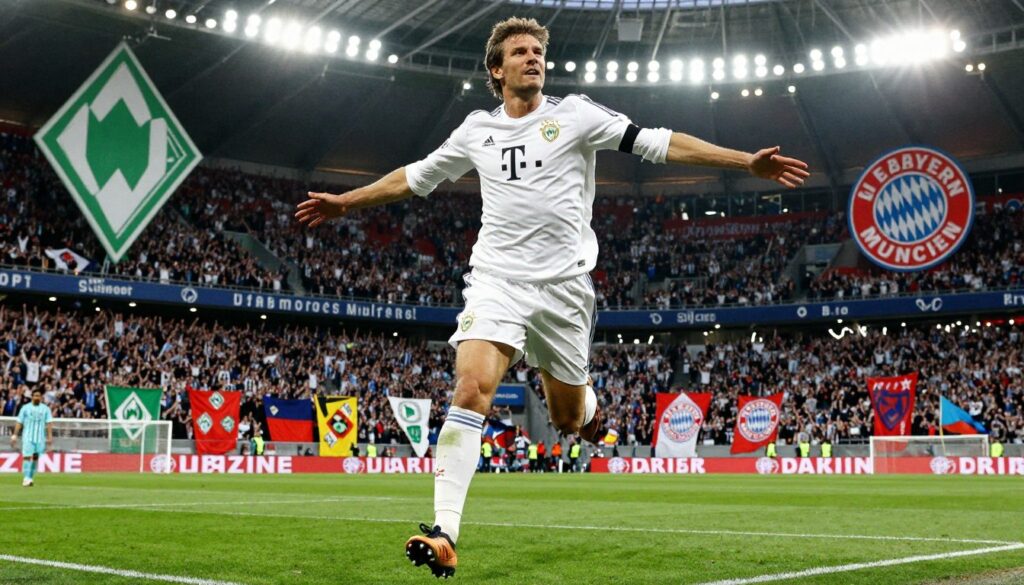
The evolution of a football star often showcases remarkable milestones. After establishing himself at Kaiserslautern, Klose made a significant move to Werder Bremen in 2004. His transfer for €5 million marked the beginning of a prolific scoring phase. During his time there, he netted an impressive 53 goals in just 89 league appearances.
In 2007, Klose transitioned to Bayern Munich, where he achieved major success. He played a pivotal role in helping the team secure the Bundesliga title and the DFB-Pokal in the 2007/08 season. His experience in the Champions League further solidified his reputation as a top-tier player.
Later, Klose joined Lazio in 2011, where he continued to impress. He scored his first goal in the 2011/12 season and quickly became a fan favorite. Over five seasons, he netted 63 goals in 171 appearances, showcasing his adaptability across different leagues.
| Club | Years | Goals Scored |
|---|---|---|
| Werder Bremen | 2004-2007 | 53 |
| Bayern Munich | 2007-2011 | 49 |
| Lazio | 2011-2016 | 63 |
International Breakthrough and World Cup Triumphs
The international stage became a defining moment for a rising football star. In 2001, Klose made his debut for the national team, making an immediate impact by scoring in a qualifier against Albania. This was just the beginning of a remarkable journey.
His performance at the 2002 FIFA event was nothing short of spectacular. Klose scored five goals, earning a spot on the list of top scorers. His prowess continued as he won the Golden Boot in 2006, showcasing his dominance on the global stage.
In 2014, Klose scored his 69th international goal, breaking the long-standing record held by the legendary Gerd Müller. This milestone solidified his status as a top scorer. He played a key role in helping Germany secure third place in both the 2006 and 2010 tournaments.
His tally of 16 goals in the FIFA tournament remains a benchmark for aspiring footballers. The crowning achievement came with the 2014 World Cup victory, a testament to his dedication to the national team.
| Year | Goals Scored | Achievements |
|---|---|---|
| 2002 | 5 | Top Scorer |
| 2006 | 8 | Golden Boot Winner |
| 2014 | 2 | Record Breaker |
Miroslav Klose World Cup: Ultimate Guide to Record Moments
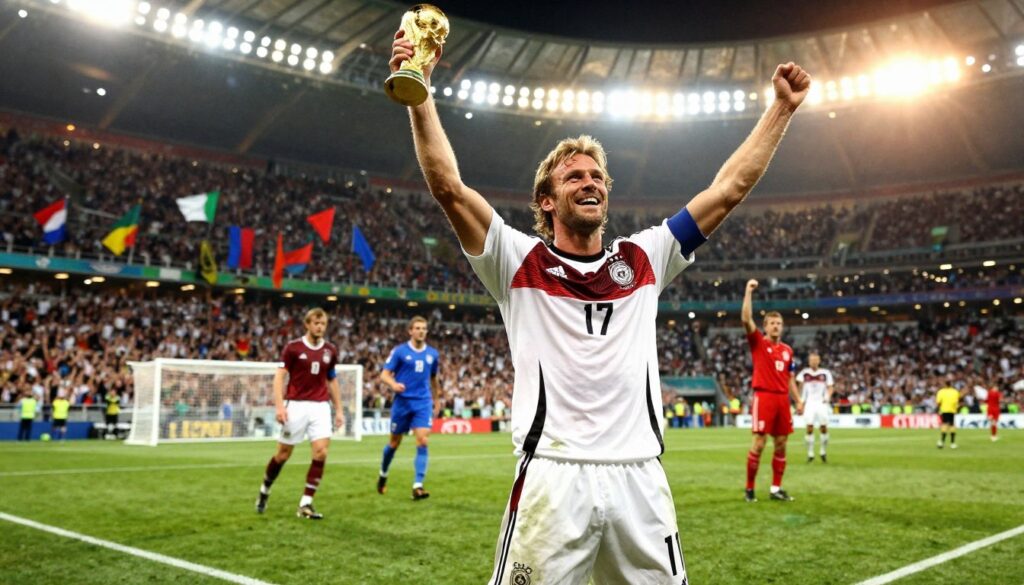
The legacy of a football icon is often shaped by extraordinary achievements on the global stage. Miroslav Klose made history by scoring a total of 16 goals across four FIFA tournaments: 2002, 2006, 2010, and 2014. This remarkable tally highlights his skill and consistency as a player.
During the 2014 FIFA event, he scored his 16th goal in a stunning 7-1 semi-final victory against Brazil. This achievement not only surpassed the previous record held by another legendary player but also marked him as the first athlete to appear in four consecutive World Cup semi-finals.
His journey through these tournaments is a testament to his ability to perform under pressure. Klose’s golden boot triumph in 2006 showcased his knack for scoring crucial goals, helping his national team advance through the knockout stages.
- The record of 16 goals scored by Klose in the FIFA tournament emphasizes his longevity and skill.
- His ability to score in four different editions places him among an elite group of athletes.
- Each goal was vital for his team’s progress, underscoring his impact on the field.
- Fans remember these moments as the pinnacle of his career, solidifying his status as a World Cup icon.
| Year | Goals Scored | Milestone |
|---|---|---|
| 2002 | 5 | Top Scorer |
| 2006 | 8 | Golden Boot Winner |
| 2014 | 2 | Record Breaker |
Playing Style, Technique, and On-Field Intelligence
Understanding the essence of a football player goes beyond statistics. Klose’s playing style was a blend of aerial prowess and sharp finishing accuracy. Known for his heading ability, he dominated the penalty area for both his club and national team. His adaptability allowed him to hold up play, creating vital space for teammates.
During his time at Bayern Munich, Klose showcased his versatility. He often played a supporting role, yet still contributed crucial goals. His technique in the Champions League proved he was more than just a goal scorer; he was a complete player. Klose scored with remarkable consistency, using his positional sense to navigate through defenses.
His influence on modern strikers is evident. He combined physical strength with the intelligence needed to lead the line effectively. Coaches admired his tactical discipline, which made him a favorite in every team he played for. The legacy of his playing style continues to shape how teams approach the striker position today.
- Known for his aerial prowess, Klose was a dominant force in the penalty area.
- His time at Bayern Munich highlighted his ability to adapt his game.
- The technique he displayed in the Champions League showcased his complete skill set.
- He scored consistently, finding space against the best defenders.
- His commitment to the team was always his defining characteristic.
Transition from Player to Coach: Continuing the Football Journey
After an illustrious playing career, the next chapter for this football star began in coaching. Transitioning from player to coach, he brought invaluable experience from his time on the national team. His insights from competing at the highest level now shape his coaching philosophy.
Initially, he served as an assistant manager at Bayern Munich under Hansi Flick. Here, he helped maintain the club’s high standards in the Champions League. His time at Bayern provided a strong foundation for his future roles.
In 2024, he took on the head coach position at 1. FC Nürnberg. This role allows him to mentor young men aspiring to play professionally. He focuses on teaching tactical plans similar to those he executed during his playing days.
As a coach, he emphasizes professionalism and dedication, qualities that defined his career. He remains a respected figure in football, often seen at Bayern Munich matches or scouting for his current club. His journey from a World Cup winner to a manager reflects his enduring love for the sport.
“Coaching is about passing on knowledge and inspiring the next generation.”
Conclusion
The story of a football hero often transcends mere statistics and records. Miroslav Klose remains the greatest scorer in the history of the FIFA tournament, with his 16 goals setting a standard that may stand for a long time. His journey from a young player in Poland to a champion with the Germany national team is a tale of perseverance and excellence.
By surpassing the record of Gerd Müller, he proved he belongs in the conversation of the best strikers ever. Whether at Bayern Munich or on the international stage, he prioritized his team’s success above personal accolades.
His transition into coaching ensures that his deep knowledge of football will continue to influence the sport for many years to come. We celebrate the career of this remarkable player, whose dedication to his craft made him a true legend of the game.
FAQ
What is the significance of the record for goals scored in the tournament?
How did the player rise to fame in international football?
What clubs did he play for during his career?
What makes his playing style unique?
How has he influenced modern strikers?
What are some memorable moments from his international career?
What is his coaching philosophy after retiring as a player?
Related Articles
All-Time World Cup Top Scorers | 1974 FIFA World Cup | 2006 FIFA World Cup | 2014 FIFA World Cup | Germany at the World Cup