
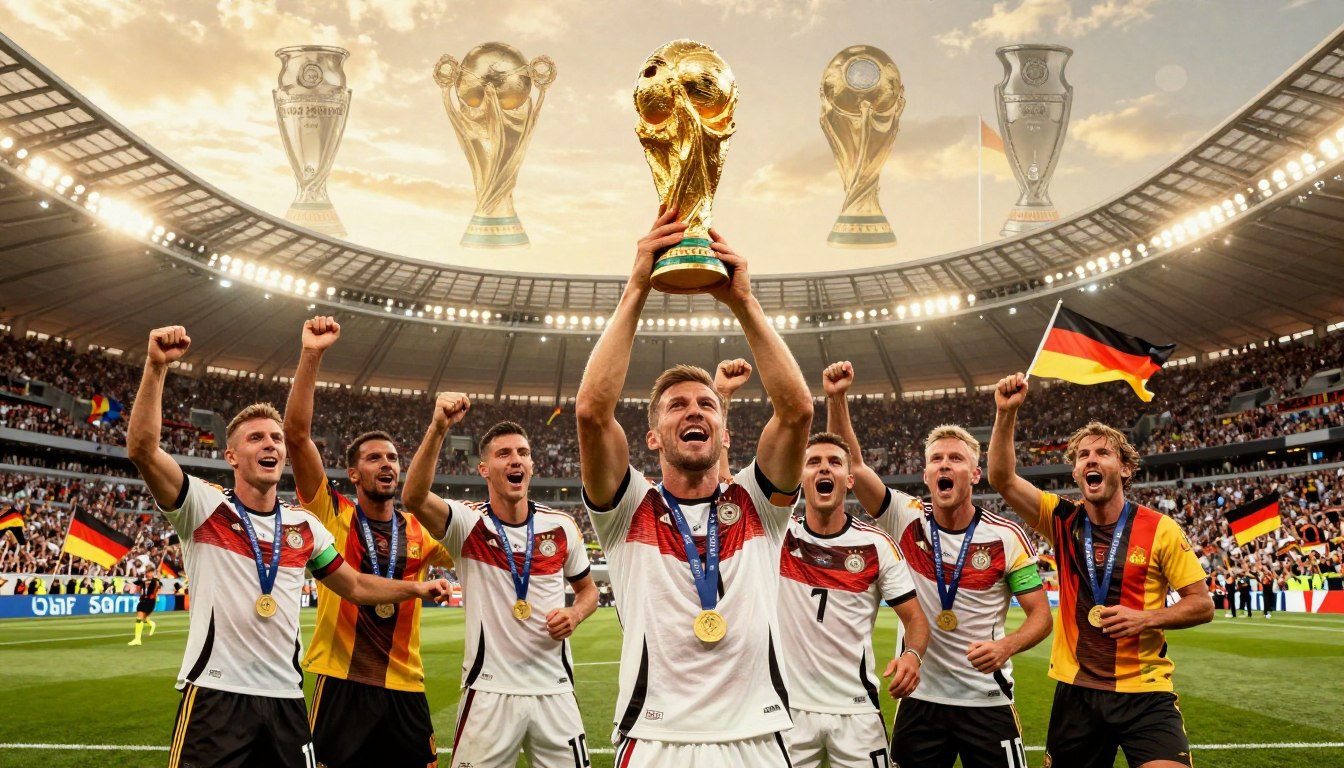

The journey of the national football team is nothing short of remarkable. With a legacy that spans decades, this team has secured four prestigious titles, showcasing their prowess on the international stage. The first victory came in 1954, followed by triumphs in 1974, 1990, and 2014. Each win has added to their reputation as a dominant force in the sport.
Founded in 1900, the German Football Association (DFB) has played a pivotal role in shaping the team’s identity. Over the years, this squad has evolved, adapting tactics and strategies that reflect the changing nature of the game. Legendary players have graced the field, each contributing to the team’s storied legacy.
In this ultimate guide, we will explore the rich narrative of the national team. From their early days to modern successes, we will highlight the defining moments that solidified their status as a powerhouse in international football.
Key Takeaways
- Germany’s national team has won four prestigious titles in the FIFA World Cup.
- The DFB was established in 1900, marking the beginning of a rich football tradition.
- Each victory reflects the team’s evolution and adaptation in international football.
- Legendary players have significantly shaped the team’s legacy over the decades.
- This guide explores the defining moments that established their dominance in the sport.
Introduction: An Overview of Germany’s World Cup Journey
From humble beginnings to global recognition, the national team has crafted a unique story in football. This journey is marked by consistent excellence, as they qualified for 20 out of 22 tournaments since their first appearance in the 1934 FIFA competition.
Every match played by this dedicated squad showcases a deep commitment to tactical discipline and physical endurance. These qualities have become synonymous with the country and its football culture.
As we set the stage for this legendary story, we will explore how the team evolved from early amateur beginnings into a professional powerhouse. The evolution of the team is punctuated by significant milestones, demonstrating their ability to adapt to every new tournament format.
By analyzing their performance, we gain insight into how they maintained their status as a top-tier contender in the global FIFA arena.
Germany World Cup history: Milestones and Records
The path taken by this football team is characterized by numerous significant milestones. With an impressive record of 12 podium finishes in just 20 tournaments, this team stands out in the global arena. This achievement is three more than any other nation in the competition.
Securing titles in 1954, 1974, 1990, and 2014, the squad has demonstrated remarkable consistency across generations. Each podium place represents a crucial milestone in the fifa world, showcasing their ability to perform under pressure.
We can analyze the statistical record, which highlights their dominance in reaching the semi-finals and finals throughout their extensive world cup history. These achievements solidify their position as a leader in the fifa world, setting a standard that few other nations have managed to replicate.
- 12 podium finishes, more than any other nation.
- Titles won in 1954, 1974, 1990, and 2014.
- Each finish showcases their performance under pressure.
- Statistical records emphasize their dominance.
- They set a standard in international football.
The Early Years: Formation and Pre-War Beginnings
The foundation of the national football team was laid in the early 20th century. The first official match for the team took place in 1908 against Switzerland. This event marked the beginning of a long and storied football journey.
Early players like Julius Hirsch played a vital role in shaping the team’s identity. Their contributions helped establish a strong foundation before the disruptions caused by the second world war. Despite these challenges, the team showcased its potential by finishing third in the 1934 World Cup.
We also explore pioneering moments, such as the 1912 Olympic performance. In that game, Gottfried Fuchs scored a remarkable 10 goals, setting a record that still stands today. These formative years navigated the complexities of international sports during a turbulent time.
| Year | Event | Significance |
|---|---|---|
| 1908 | First Match vs. Switzerland | Beginning of the team’s journey |
| 1934 | Third Place in World Cup | Proved potential on the global stage |
| 1912 | Olympics Performance | Fuchs scored 10 goals in one game |
The Miracle of Bern: The 1954 World Cup Victory
The final match of the 1954 tournament became a symbol of resilience and triumph for the national team. In a stunning display, West Germany faced Hungary, a team considered unbeatable. The match, known as the Miracle of Bern, saw the underdogs rally from a 0-2 deficit to secure a 3-2 victory.
Helmut Rahn etched his name in football lore by scoring the decisive goal in the 84th minute. This moment not only clinched the win but also restored national pride. The tactical adjustments made by manager Sepp Herberger played a crucial role in overcoming the Mighty Magyars.
This victory resonated throughout the country, proving that West Germany could compete with the best. As one commentator noted, “It was a match that united a nation and showcased the spirit of determination.” The impact of this win would shape the future of the national team for decades to come.
Tactical Mastery in the 1960s: Battles of 1966 and 1970
The tactical brilliance displayed by the national team in the 1960s left a lasting impact on international football. This era was marked by fierce competition and unforgettable matches that tested the team’s resilience and strategy.
One of the most talked-about moments came during the 1966 final against England. The match ended 4-2 after extra time, and it remains a subject of debate due to a controversial goal awarded to England. This match showcased the high stakes of tournament play and the fine line between victory and defeat.
In 1970, West Germany faced Italy in what is now known as the Game of the Century. This semi-final match was a true testament to the tactical mastery of both teams. The intense battle displayed not only skill but also endurance, pushing players to their limits.
These classic clashes defined an era, as the team navigated high-pressure situations that tested their strategic planning. The 1970 semi-final loss highlighted the competitive nature of the tournament, where every match could turn into a historic battle.
| Year | Match | Outcome |
|---|---|---|
| 1966 | Final vs England | Lost 4-2 (after extra time) |
| 1970 | Semi-final vs Italy | Lost in Game of the Century |
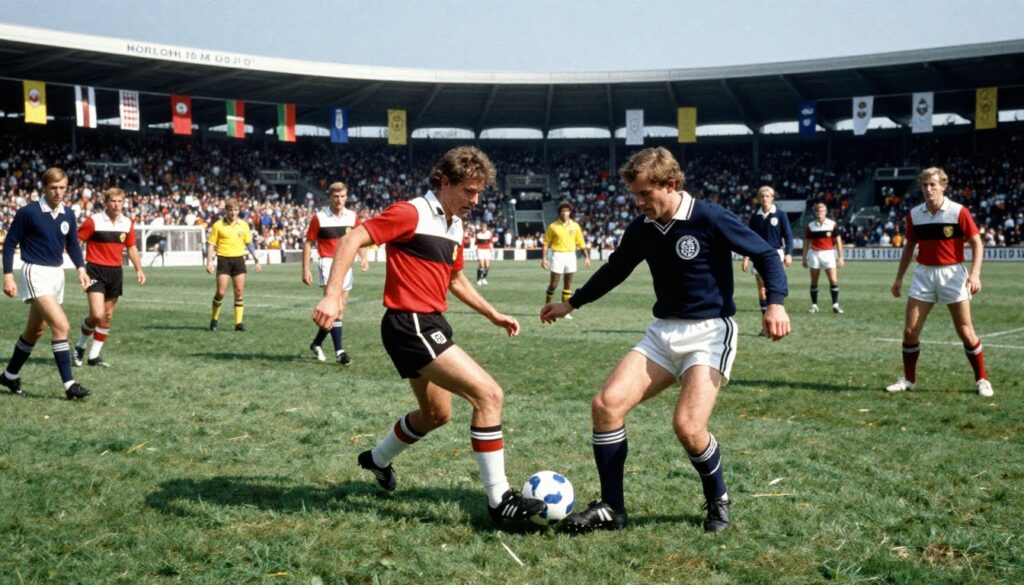
Home Soil Triumph: The 1974 World Cup Final
The 1974 tournament marked a pivotal moment for the national team as they showcased their skills on home soil. In the final match held in Munich, West Germany faced off against the Netherlands. This clash was not just a battle for the trophy; it represented a showdown between the Dutch Total Football philosophy and the disciplined tactics of the West German team.
As the host nation, West Germany achieved a historic victory, defeating the Netherlands 2-1. Paul Breitner and Gerd Müller emerged as the heroes of the final, each scoring a goal that secured the second world title for the team. This victory was a testament to their resilience, especially after overcoming an early penalty deficit.
The atmosphere in Munich was electric, as fans witnessed their team lift the trophy. This triumph on home soil remains a highlight in the annals of the tournament, showcasing the team’s ability to perform under immense pressure.
| Match | Outcome | Key Players |
|---|---|---|
| West Germany vs. Netherlands | 2-1 Victory | Paul Breitner, Gerd Müller |
| Penalty Outcome | Overcame early deficit | N/A |
| Location | Munich | N/A |
Iconic Rivalries and Memorable Matches
Rivalries in football create some of the most thrilling narratives in sports. The national team has engaged in fierce competitions with iconic teams like England and Argentina. These matchups have produced unforgettable moments that resonate with fans around the globe.
Every game against these global giants is treated as a high-stakes affair. The rich history between the teams adds an extra layer of intensity, making each encounter a spectacle. The tactical battles in these showdowns highlight the skill and experience of the players involved.
These rivalries have shaped the team’s identity. They push the players to elevate their performance in every world cup tournament. By analyzing these memorable matches, we gain insight into the competitive spirit that drives the team to excel against the best.
| Rival Team | Notable Matches | Significance |
|---|---|---|
| England | 1966 Final, 2010 | Historic rivalry with intense matches |
| Argentina | 1986 Final, 2006 | Clashes in multiple finals |
| Italy | 2006 Final | Memorable encounters in crucial matches |
The 1980s: Ups and Downs on the World Stage
The 1980s were a pivotal decade for the national team, marked by significant highs and lows. This period was defined by resilience, as the squad reached the finals of the world cup in both 1982 and 1986. Despite coming close to glory, they faced heartbreak in each tournament.
In 1982, West Germany battled Italy in the final, only to fall short with a score of 3-1. Four years later, they met Argentina in another final, where they lost 3-2. These matches tested the resolve of the players and showcased their ability to compete against the best teams.
Even with these near misses, the team maintained their focus and determination. Each experience contributed to their growth, preparing them for future success. The lessons learned during this decade were crucial for the team’s development.
| Year | Final Match | Opponent | Outcome |
|---|---|---|---|
| 1982 | World Cup Final | Italy | Lost 3-1 |
| 1986 | World Cup Final | Argentina | Lost 3-2 |
Beckenbauer’s Legacy: From Player to Coach
Franz Beckenbauer’s impact on the national team is both profound and multifaceted. He is celebrated not only for his exceptional skills as a player but also for his strategic brilliance as a coach. His journey reflects a deep commitment to the game and an unwavering dedication to the team’s success.
As a player, Beckenbauer captained the team to a world cup win in 1974. His leadership on the field was instrumental in guiding his teammates through intense matches. Later, he transitioned to coaching, leading the team to another world cup victory in 1990. This remarkable achievement showcased his ability to adapt and innovate.
Beckenbauer’s vision for the game set a standard for future generations. His understanding of football dynamics transformed the team’s tactics, emphasizing both discipline and creativity. This legacy continues to inspire players today, as they strive to emulate the success he achieved.
| Role | Year | Achievement |
|---|---|---|
| Player | 1974 | World Cup Win |
| Coach | 1990 | World Cup Win |
| Impact | N/A | Transformed Team Tactics |
The Unified Era: Post-Reunification Transformation
The reunification of the nation in 1990 opened a new chapter for the national football team. This pivotal moment allowed for the integration of talent from both East and West. The result was a stronger and more diverse squad, ready to compete on the international stage.
This transformation proved to be immediately successful. The team secured a world cup win in 1990, shortly after the fall of the Berlin Wall. This victory not only showcased their skills but also symbolized unity for the country.
However, merging two distinct football cultures came with its challenges. It required careful management to create a cohesive national team. The integration of players from the former East Germany added depth and variety to the squad, strengthening their chances in future tournaments.
This era represents a significant moment in the history of the team. They became a symbol of unity, demonstrating that together, they could achieve greatness on the world cup stage.
- The reunification marked a new chapter in the team’s journey.
- Success came quickly with a world cup win in 1990.
- Challenges arose from merging different football cultures.
- New players enriched the team’s dynamics.
- This period symbolizes unity and strength in the national identity.
Record Breakers: From Seeler to Klose
Throughout the years, the contributions of standout players have shaped the team’s legacy and success. One of the most remarkable figures is Miroslav Klose, who holds the record for the most goals scored in the tournament’s history with an impressive total of 16.
Alongside Klose, Lothar Matthäus stands out as the record appearance maker, featuring in 25 matches. Their achievements highlight the talent and dedication of these players, showcasing their vital roles in the team’s journey.
We celebrate the accomplishments of these record breakers, whose performances have been crucial in every tournament. The goal-scoring prowess of Klose, paired with the reliable defense of other key players, has defined the team’s identity for decades.
These individuals have left a lasting legacy, proving that the team’s success is built on the talent and commitment of its greatest players.
Tactical Evolution: Shifts in Style and Formation
The evolution of tactical approaches has been crucial in shaping the national team’s identity. Over the years, the team has transitioned from a focus on defensive discipline to a more fluid and offensive style of football.
This shift has allowed them to adapt formations to meet the changing demands of the game. By balancing defensive prowess with offensive brilliance, the team has successfully outmaneuvered some of the best competitors in the world cup.
The history of the team is a testament to constant innovation. They continually refine their strategies to stay ahead of rivals. These tactical shifts reflect the intelligence of the players and the strategic depth of the coaching staff.
- The tactical evolution of the team has seen a shift from rigid defensive structures to a more fluid and offensive style of football.
- We examine how the team adapted their formation to suit the changing demands of the game, ensuring they remained competitive in every world cup.
- By balancing defensive prowess with offensive brilliance, the team has managed to outmaneuver some of the best teams in the world cup.
- The history of the team is a story of constant innovation, as they refine their approach to the game to stay ahead of their rivals.
- These tactical shifts reflect the intelligence of the players and the strategic depth of the coaching staff in the world cup.
Defining Moments: Finals, Penalties, and Dramatic Clashes
Throughout the years, pivotal moments have defined the narrative of the national football team. Their journey is filled with unforgettable matches and significant events, particularly in finals and penalty shootouts.
In the 1990 final, a decisive penalty kick from Andreas Brehme secured a critical win, showcasing the team’s mental toughness. Fast forward to 2014, where a late goal by Mario Götze clinched the title, further solidifying their legacy.
These matches highlight the composure and skill of the players when facing immense pressure. Every tournament brings new challenges, yet the team consistently rises to the occasion, demonstrating their ability to triumph in dramatic circumstances.
By analyzing these historic clashes, we gain a deeper appreciation for the intensity and excitement that define the team’s experience in the world cup.
Off the Field: Cultural Impact and Fan Legacy
The cultural significance of the national football team extends far beyond the pitch. It serves as a powerful symbol of national pride, uniting the country during every world cup tournament they participate in. This unity is palpable, as fans from diverse backgrounds come together to support their team.
We explore the cultural impact of the team, from the media influence to the passionate fan legacy that supports them in every game. The excitement surrounding matches fosters a vibrant community, where shared experiences create lasting bonds among supporters.
The team has made significant global contributions to football, promoting the development of the game through the efforts of the DFB. Their initiatives help nurture young talent and enhance the sport’s reach, ensuring a bright future for football.
Fans across the country and the world celebrate the achievements of the team, creating a rich tapestry of support. This off-the-field legacy is just as important as the on-the-field success, as it connects the team to the hearts of millions of people.
Influence on Global Football: Controversies and Rule Changes
The impact of controversial matches on the national team has shaped the evolution of global football. Over the years, the team has been involved in several contentious games that led to significant rule changes by FIFA.
One notable example is the 1990 final, which prompted changes regarding tackles. This match highlighted the need for clearer guidelines to enhance player safety and fairness.
Similarly, the 1966 final featured a goal controversy that influenced refereeing standards. These incidents have taught the team valuable lessons, using them as catalysts for improving the quality of the game.
The history of the team is intertwined with the evolution of the rules, as their experiences in the world cup have shaped the sport. By examining these controversies, we gain insight into the impact the team has had on the global stage, beyond just their performance in the game.
These lessons have helped the team and the sport grow, ensuring that the world cup remains a fair and exciting competition for all teams.

Conclusion
The legacy of this national football team is a powerful testament to their enduring success and tactical innovation. With four titles and a consistent record of achievement, the team has solidified its status as a true giant in football.
From the early days to the modern era, players and coaches have continually pushed the boundaries of what is possible in the game. As we reflect on these accomplishments, it is evident that the team’s legacy will inspire future generations of players.
We celebrate the passion, skill, and determination that have made this team a perennial contender for the world cup trophy.
FAQ
How many times has the national team won the tournament?
Who is the all-time leading scorer for the national team in World Cup matches?
What was the significance of the 1954 victory?
How did the team perform in the 1974 final?
What role did Franz Beckenbauer play in the team’s success?
How has the team adapted since reunification?
What are some memorable rivalries in their World Cup journey?
How did the team evolve tactically over the years?
What cultural impact has the team had on fans?
How have controversies shaped their World Cup experience?
Related Articles
1954 FIFA World Cup | 1974 FIFA World Cup | 2014 FIFA World Cup | Miroslav Klose: Top Scorer | All World Cup Winners