
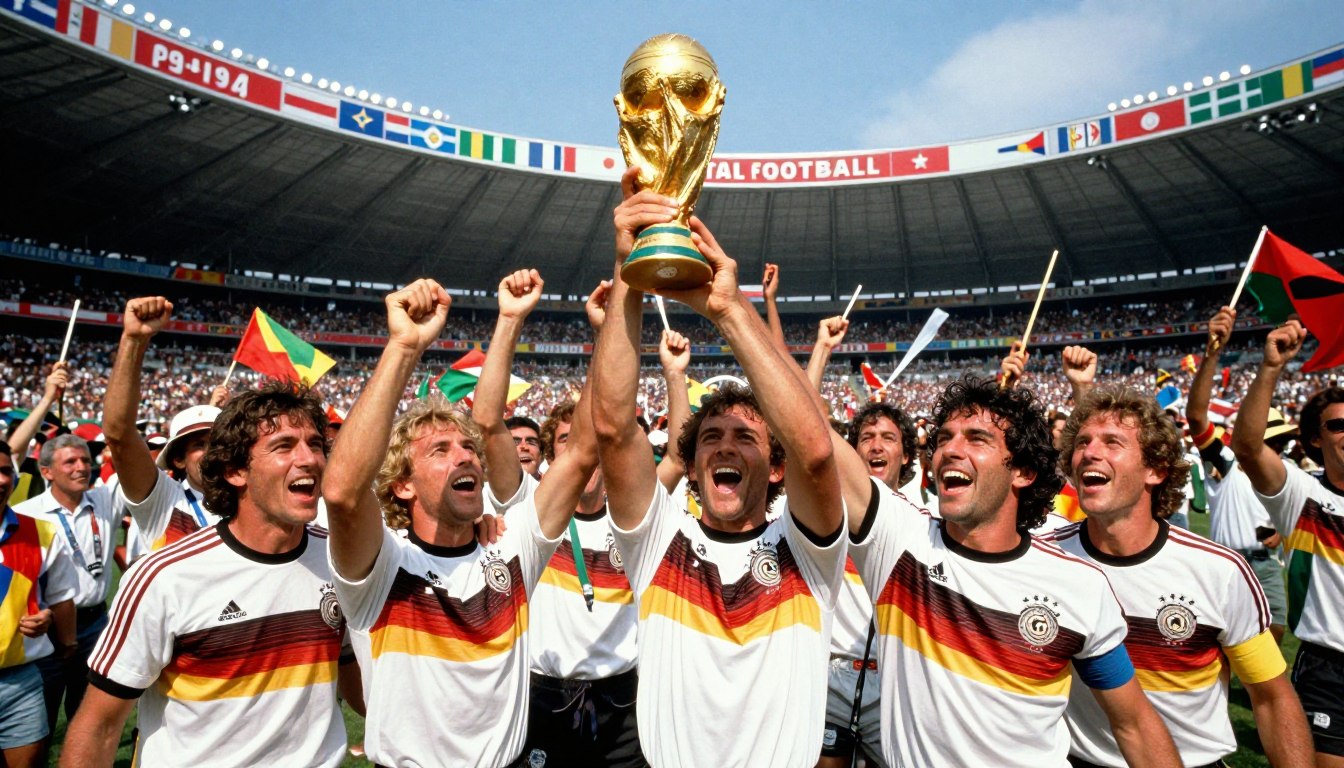

The 1974 FIFA World Cup was a pivotal moment in the history of sports. Held in West Germany from June 13 to July 7, it showcased the tactical brilliance of football during that era. This tournament marked the first time the current trophy was awarded, solidifying its significance.
Fans from around the globe tuned in to witness the remarkable journey of the West Germany team. They navigated a challenging path, ultimately defeating the Netherlands 2-1 in the final match. This victory secured their second title and left an indelible mark on the sport.
As we reflect on the 1974 event, we recognize its role in shaping modern, professionalized football. The final game remains one of the most iconic in the sport’s history, representing a shift towards a more commercialized approach to international competitions.
Key Takeaways
- The tournament introduced the current FIFA trophy, marking a significant milestone.
- West Germany’s victory highlighted their football prowess during this era.
- Fans witnessed a tactical evolution in the sport, influencing future generations.
- The final match against the Netherlands is celebrated as a historic game.
- This event set the stage for the commercialization of international football.
Introduction to the 1974 FIFA World Cup
In the summer of 1974, football fans witnessed a transformative tournament. This edition marked the tenth occurrence of the prestigious event, with sixteen national teams vying for glory. It was not just a competition; it was a celebration of football that captivated millions across various times.
The tournament introduced a new trophy, crafted by Italian sculptor Silvio Gazzaniga. This stunning piece replaced the Jules Rimet Trophy, which had been awarded permanently to Brazil after their third victory in 1970. The new trophy symbolized a shift towards a more competitive and global approach in the sport.
Throughout the history of football, few events have matched the cultural and athletic impact of this particular world cup held in Europe. It served as a bridge between the game’s amateur roots and the high-stakes environment we see today.
Overview of the Tournament
This tournament was significant as it attracted viewers from all over the globe, showcasing the sport’s growing popularity. By examining its significance, we gain a deeper understanding of how the world cup evolved into a global phenomenon.
| Feature | Details | Significance |
|---|---|---|
| Edition | Tenth | Milestone in tournament history |
| Teams | 16 National Teams | Increased global representation |
| Trophy Design | Silvio Gazzaniga | Symbol of modern football |
| Viewership | Millions Worldwide | Global interest in football |
| Cultural Impact | Bridge to professionalism | Influence on future tournaments |
Historical Context and Football Evolution
In a landmark decision, FIFA chose West Germany to host the tournament, signaling a new era for the sport. This selection, made during a meeting in London on July 6, 1966, set the stage for extensive infrastructure development. The post-war rebuilding of the country allowed West Germany to construct modern stadiums that surpassed many aging arenas across Europe.
This period also saw a shift toward more sophisticated training methods and a professional approach to football. The West German government recognized the tournament as a chance to showcase their modern, stable, and progressive society. They invested heavily in the event, ensuring that it would leave a lasting impression.
As the host country, West Germany faced the challenge of meeting high expectations while managing the logistics of such a massive international event. The advancements in facilities during this time provided a blueprint for future tournaments.
| Aspect | Details | Significance |
|---|---|---|
| Host Selection | FIFA Meeting in London | Initiated infrastructure projects |
| Stadium Modernization | New constructions | Superior facilities for matches |
| Government Investment | Heavy funding | Showcased national pride |
| Training Evolution | Professional methods | Improved player performance |
| Logistical Management | Event organization | Blueprint for future hosts |
Total Football Tactics Revolution
During this era, a groundbreaking system called Total Football began to reshape how the game was played. This innovative approach originated in the Netherlands and was largely pioneered by the Dutch club Ajax in the early 1970s.
In Total Football, players embraced versatility. They rotated between defensive, midfield, and attacking roles as the game required. This style of play emphasized fluidity and constant movement across the pitch.
The impact of Total Football is still evident in modern playing styles. Today, high pressing and positional interchange are standard tactical requirements. By abolishing rigid positions, the Dutch team created a dynamic football environment that challenged traditional defensive structures.
Coaches and analysts continue to study the 1974 Dutch squad. Their tactical revolution significantly influenced the evolution of the sport.
| Aspect | Details | Significance |
|---|---|---|
| System | Total Football | Revolutionized tactical play |
| Origin | Ajax, Netherlands | Pioneered new strategies |
| Player Roles | Fluid positions | Enhanced team dynamics |
| Modern Influence | High pressing | Standard tactical approach |
| Coaching Studies | Analyzing 1974 squad | Understanding tactical evolution |
Key Figures: Johan Cruyff and Football Legends
In the midst of intense competition, two players defined the tactical landscape of the tournament. Johan Cruyff emerged as the visionary leader for the Netherlands. He constantly directed his teammates, orchestrating the flow of the game with unmatched skill.
Franz Beckenbauer, on the other hand, provided essential leadership for West Germany. His calm and authoritative presence in defense allowed his team to recover from early setbacks. Both players were not just participants; they were icons who shaped the psychological battles of the tournament.
Cruyff’s influence was so profound that his absence from Ajax in the 1973/74 season led to a noticeable decline in their performance. Meanwhile, Beckenbauer’s ability to control the match tempo was crucial in guiding West Germany to victory.
The rivalry between Johan Cruyff and Franz Beckenbauer remains one of the most celebrated matchups in football history, illustrating how individual brilliance can impact a team’s success.
West Germany’s Tactical Triumph
The tactical prowess of West Germany became evident as they adapted their strategies throughout the tournament. Following a surprising group stage defeat to East Germany, the team made critical adjustments that set the stage for their success.
In the final, Paul Breitner stepped up to score a crucial penalty in the 26th minute, leveling the game after the Netherlands had taken an early lead. This moment shifted the momentum and showcased the team’s resilience.
The game-changing moment arrived just before halftime when Gerd Müller scored the winning goal in the 43rd minute, securing the title for the hosts. This victory mirrored their 1954 success, demonstrating their ability to recover from setbacks.
- West Germany achieved a tactical triumph by making strategic adjustments following their group stage defeat.
- Breitner’s penalty leveled the game after an early setback.
- Müller’s goal secured the championship for West Germany.
- The team’s adaptability under pressure showcased their depth and resilience.
- By the end of the final, West Germany proved their disciplined approach could overcome the flair of the Dutch side.
Exploring the 1974 FIFA World Cup Tournament
The tournament of 1974 emerged as a pivotal moment in football history, attracting fans worldwide. This massive event featured 38 matches played across 9 different cities in the host nation. Each game was filled with excitement, showcasing the skill and passion of the participating teams.
Throughout the tournament, a total of 97 goals were scored, averaging about 2.55 goals per match. This high scoring rate contributed to the thrilling atmosphere for fans in attendance and those watching from home.
Notably, this edition was the first fifa world cup broadcast entirely in color, marking a significant milestone in the sport’s global reach. The tournament format was also innovative, replacing the traditional knockout stage with a second group stage to determine the finalists.
Every one of the 38 games contributed to the narrative of the tournament, showcasing the diverse styles of the 16 participating nations. As a landmark event, the 1974 edition set high standards for organization, stadium quality, and commercial engagement.
Tournament Format and Draw Mechanics
A significant change in the tournament’s format reshaped how teams competed. The event featured 16 teams divided into four groups of four. This innovative structure was designed to ensure that the best teams would face each other in a mini-league format.
Unlike previous editions, the eight teams that advanced from the first group stage entered a second group stage rather than a knockout bracket. This format aimed to maximize the number of high-quality games played throughout the tournament.
The seeding process was also unique. It involved placing the hosts, the defending champions, and the semi-finalists from the last tournament into the top positions of their groups. This strategic placement helped to create exciting matchups right from the start.
By introducing this complex structure, organizers ensured a thrilling experience for fans. The second round format was used only twice in history, making this tournament a unique case study in competition design.
| Feature | Details | Significance |
|---|---|---|
| Teams | 16 Teams | Divided into four groups |
| Advancement | Second Group Stage | Replaced knockout format |
| Seeding Process | Hosts and champions in top spots | Ensured competitive balance |
| Unique Format | Used only twice | Significant for tournament history |
| Game Quality | Maximized high-quality matchups | Enhanced viewer experience |
Qualification Journeys and Surprises
Several nations took their first steps onto the global stage during the qualification process. The excitement was palpable as new teams emerged, eager to showcase their talent. Among them, Australia became the first team from Oceania to qualify, while Zaire made history as the first representative from sub-Saharan Africa.
However, the qualification phase was not without its controversies. Political tensions played a significant role, notably leading to the disqualification of the USSR. Their refusal to travel to Chile following the 1973 coup d’état underscored the complex relationship between politics and sports.
- New teams brought unpredictability, challenging established football powers.
- The inclusion of diverse teams expanded the global footprint of the tournament.
- Debutants faced unique challenges, from long travel distances to intense pressure.
- Each first-time participant added a fresh narrative to the competition.
- Despite struggles, these teams made lasting impressions on fans worldwide.
Group Stage Drama and Standout Performances
The group stage brought thrilling moments as teams battled fiercely for advancement. Each match was crucial, and the stakes were high. Poland emerged as a standout performer, with Grzegorz Lato leading the tournament in scoring with an impressive seven goals.
One of the most memorable moments came from Haiti, who scored against Italy, ending Dino Zoff’s remarkable 1,142-minute clean sheet streak. This goal was a testament to the unpredictability of the group stage.
The intensity of these matches forced many top teams to adjust their tactics to avoid early elimination. Several players rose to the occasion, delivering performances that would define their careers and earn them international recognition.
Every goal scored was vital for the final standings of the participating teams, making the group stage a captivating experience for fans around the globe.
Second Round Battles and Semi-final Implications
The second round of the tournament ignited fierce competition among the teams. This phase was not just a formality; it effectively served as semi-finals for the participants.
In Group A, the Netherlands displayed dominance. They secured a stunning 4-0 victory over Argentina, showcasing their offensive prowess. Key players like Johan Neeskens and Johan Cruyff led the charge, particularly in their decisive match against Brazil.
The clash with Brazil was a pivotal moment. The Dutch victory not only solidified their reputation but also guaranteed their place in the final. Meanwhile, in Group B, West Germany faced off against Poland, ultimately edging out their opponents to advance.
These second round matches were characterized by high stakes and physical play. Each team understood that only a win would suffice to progress. The structure of this round ensured that the most consistent teams would ultimately compete for the title in the final.
| Group | Teams | Key Matches |
|---|---|---|
| A | Netherlands, Argentina | Netherlands 4 – 0 Argentina |
| A | Netherlands, Brazil | Netherlands vs. Brazil |
| B | West Germany, Poland | West Germany vs. Poland |
The Final Showdown: Strategies and Controversies
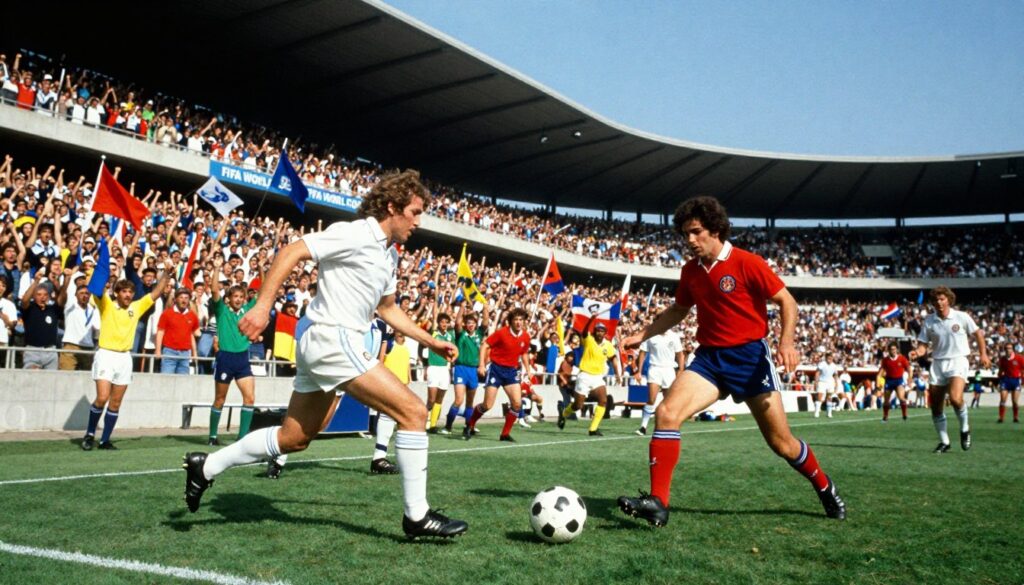
The final match was a dramatic clash that would define the tournament. It began with Johan Neeskens scoring a penalty for the Netherlands just one minute into the game. This early goal set the stage for a thrilling encounter.
Controversy quickly emerged, particularly surrounding the penalty decisions made by English referee Jack Taylor. His calls shifted the momentum of the game, creating tension on the field.
Penalty Decisions and Game Turning Points
West Germany responded with a crucial equalizer from the penalty spot by Paul Breitner. This moment allowed the team to regain their composure and confidence. As the match progressed, the atmosphere intensified, with both teams battling fiercely.
Iconic Goals and Final Moments
In the 43rd minute, Gerd Müller scored the winning goal, marking one of the most iconic moments in final history. The Dutch team’s frustration grew as they struggled to find an answer, leading to a tense finish.
Ultimately, West Germany’s victory in the final solidified their status as the best team in the world, capping off a remarkable tournament performance.
Venues, Stadiums, and Fan Experiences
The venues that hosted the matches during this tournament showcased modern advancements in stadium design. A total of nine venues were utilized, including the impressive Olympiastadion in Munich, which served as the stage for the final match.
Fans experienced a unique atmosphere at these stadiums, which were significantly more advanced than older arenas found in other countries. With an average attendance of 49,099 per match, the tournament drew massive crowds to every one of the 38 games played.
The facilities provided a comfortable place for spectators, even though some stadiums still featured athletics tracks common at the time. These venues were a testament to the host nation’s commitment to providing a world-class experience for both players and fans.
The success of the tournament in these stadiums helped establish a new benchmark for future hosts to follow.
Commercial and Economic Impact of WM74
The 1974 tournament not only captivated fans but also marked a pivotal shift in the economics of football. With costs soaring to approximately US$ 650 million, this event set a new standard for financial involvement in sports.
Private sector capital played a major role, indicating the start of a new era for corporate involvement in the tournament. The profit generated exceeded 50 million Deutsche marks, benefiting FIFA, the organizing association, and the participating teams.
This tournament proved that the world cup could be a massive economic engine, paving the way for the multi-billion dollar industry seen in later years. Global exposure for the sport reached new heights, as the tournament was broadcast to millions around the globe.
The economic impact demonstrated the growing power of football as a global commercial product.
| Aspect | Details | Significance |
|---|---|---|
| Cost | US$ 650 million | Shift toward commercialization |
| Profit | 50 million Deutsche marks | Financial benefits for stakeholders |
| Corporate Involvement | Increased private sector investment | New era for sponsorships |
| Global Exposure | Broadcast to millions | Expanded football’s reach |
| Economic Engine | Massive financial impact | Paved way for future tournaments |
Political and Social Influences Surrounding the Event
Football became a stage for political expression during the intense rivalry between East and West Germany. The 1974 tournament was deeply influenced by the political climate, particularly the ongoing tensions of the Cold War.
The match between East Germany and West Germany in Hamburg was one of the most politically charged games in history. East Germany won this crucial group stage match thanks to a goal by Jürgen Sparwasser. This victory not only shocked the football world but also had broader implications.
- The meeting in Hamburg reflected the intense rivalry and political tensions of the era.
- East Germany’s victory forced a realignment of the West Germany team, ultimately contributing to their success in the tournament.
- Football served as a platform for international relations, allowing teams from behind the Iron Curtain to showcase their nations.
- The social impact of the tournament was significant, providing a snapshot of a divided yet modern country.
- Despite the political pressures, the tournament remained a celebration of the sport, uniting nations from across the globe.
Legacy and Long-Term Influence on Global Football
The legacy of the tournament has left an indelible mark on the global football landscape. Players like Ruud Krol and Johnny Rep gained international fame during this event, becoming icons of the sport.
This tournament initiated the globalization of the transfer market. In the years that followed, players began moving across borders more freely, changing the dynamics of club football.
- The legacy of the tournament is evident in the globalization of football, as players like Ruud Krol and Johnny Rep became international stars.
- In the years following the tournament, the transfer market became more liberal, allowing players to move between clubs in different countries.
- The winners of the tournament, West Germany, established a dynasty that would win multiple titles in the years to come.
- This event changed how clubs scouted talent, as performance on the international stage became crucial for recruitment.
- The influence of the tournament on global football is still felt today, as it set the standard for modern competition.
- By showcasing the talents of players like Ruud Krol and Johnny Rep, the tournament helped bridge the gap between domestic club football and the international game.

Conclusion
The culmination of the tournament showcased the essence of football, highlighting both the strategic finesse of the Dutch and the tenacity of the West German squad. This edition remains a high point in the history of the sport, marking a time of significant change.
New formats and commercial models introduced during this tournament would shape the future of the competition. The final match between the two best teams served as a fitting conclusion to an event that celebrated the very best of the game.
Reflecting on the 1974 event allows us to appreciate how it laid the foundation for the modern, globalized game we enjoy today. The legacy of this tournament continues to inspire new generations of players and fans.
Ultimately, it proved that the competition is more than just a series of games; it is a cultural phenomenon that unites the world.
FAQ
What was the significance of the 1974 tournament?
Who were the standout players in the tournament?
How did the group stage impact the final outcome?
What were the key tactical strategies used by West Germany?
How did political influences affect the tournament?
What was the legacy of the 1974 tournament?
Explore More World Cup History
← 1970 FIFA World Cup | 1982 FIFA World Cup → | Germany at the World Cup | Complete World Cup History | All World Cup Winners