
The 2014 FIFA World Cup was a remarkable event held in Brazil from June 12 to July 13. This tournament is remembered for its thrilling matches and unforgettable moments. Among these, Germany’s stunning 7-1 victory over Brazil stands out as one of the most iconic moments in sports history.
As 32 nations competed for glory, fans around the globe were captivated by the intense atmosphere and high stakes. This ultimate guide will delve into the tactical brilliance and dramatic events that made this tournament a landmark in football.
Join us as we explore how this event transformed the landscape of the sport. We will analyze the innovative technology and unforgettable performances that defined the tournament. Revisit the excitement of July 2014, when the world united in support of their teams in the vibrant stadiums of Brazil.
Key Takeaways
- The tournament featured 32 nations competing for the prestigious trophy.
- Germany’s 7-1 victory over Brazil is one of the most memorable moments in sports.
- The event showcased innovative technology and tactics in football.
- Fans worldwide were deeply engaged during the tournament.
- This World Cup significantly impacted the future of the sport.
Historical Context of the 2014 FIFA World Cup
In a historic announcement in 2007, Brazil was confirmed as the host nation for a global football spectacle. This marked a significant moment in the history of the FIFA World Cup in South America. It was the fifth time the tournament was held on this continent, reflecting the region’s passion for the game.
Prior to the excitement of June 2014, organizers dedicated years to preparing 12 unique venues. These efforts aimed to ensure that the tournament’s legacy would be lasting and impactful. Notably, this was the second time Brazil hosted the event, the first being in 1950.
By July 2014, extensive infrastructure projects transformed host cities into vibrant hubs for football enthusiasts. The selection of venues across Brazil was designed to distribute matches throughout major regions, creating a truly national experience for fans.
| Year | Host Nation | Significance |
|---|---|---|
| 1950 | Brazil | First time hosting |
| 2014 | Brazil | Second time hosting |
| 2007 | Brazil | Awarded hosting rights |
The Road to Brazil: Tournament Setup and Qualification
The journey to the prestigious tournament began long before the matches in Brazil. Qualification was a fierce battle, with 31 national teams vying for a chance to join the host nation in the final tournament.
Among these teams, Bosnia and Herzegovina made history as the only debutant to qualify, proudly representing their football association on the global stage. This was a significant achievement for the nation.
From June 2011 to November 2013, teams from five confederations fought for their spots. By the time the tournament kicked off in July 2014, all 32 qualified teams had finalized their squads of 23 players each.
The road to the tournament was rigorous, ensuring that only the most prepared teams reached the final stages of the competition.
| Team | Debut | Football Association |
|---|---|---|
| Bosnia and Herzegovina | Yes | Football Association of Bosnia and Herzegovina |
| Spain | No | Royal Spanish Football Federation |
| Brazil | No | Brazilian Football Confederation |
Overview of the 2014 FIFA World Cup
Brazil hosted an unforgettable football tournament that captured the hearts of millions from June to July 2014. A total of 64 matches were played across 12 vibrant host cities, showcasing the beauty of the nation.
This massive tournament featured 32 teams from five confederations, all competing for the coveted title. The excitement peaked with an average of 2.67 goals per match, ensuring fans were entertained throughout.
The format of the tournament allowed every team to play at least three group stage matches before entering the knockout rounds. By the end of July 2014, a remarkable total of 171 goals had been scored, highlighting the offensive nature of the competition.
- The tournament brought together 32 teams from five confederations.
- 64 matches were played across 12 host cities in Brazil.
- Each match averaged 2.67 goals, providing thrilling entertainment.
- Every team played at least three group stage matches.
- A total of 171 goals were scored by the end of the tournament.
Group Stage Drama and Key Matches
The excitement of the tournament was palpable as teams clashed during the group stage. This phase brought unexpected twists and intense rivalries that kept fans on the edge of their seats.
One of the most shocking moments came when defending champions Spain faced elimination. Their early exit left fans and analysts alike stunned. This unexpected turn of events highlighted the unpredictable nature of the tournament.
Throughout the group matches, underdogs frequently challenged the traditional football powerhouses. The atmosphere in the stadiums was electric, with every point fiercely contested. Teams knew that a single mistake could mean the end of their tournament dreams.
Between June 2014 and July 2014, the pressure was immense. These matches set the tone for the competition, proving that no team was safe from a surprise exit.
- Defending champions Spain were eliminated early.
- Underdogs often challenged established teams.
- Every match was filled with high stakes and tension.
- Fans experienced thrilling moments throughout the group stage.
- Early matches shaped the narrative of the tournament.
| Team | Performance | Outcome |
|---|---|---|
| Spain | Defending Champions | Eliminated in Group Stage |
| Brazil | Strong Performance | Advanced to Knockout Stage |
| Bosnia and Herzegovina | Debut Success | Advanced to Knockout Stage |
Analysis of Tactics and Playing Styles in the Tournament
During the tournament, teams showcased innovative tactics that transformed the game. A notable shift toward high-pressing systems emerged, particularly among the top European teams. Coaches spent the period between June 2014 and July 2014 adjusting their strategies to adapt to Brazil’s unique climate conditions.
The tournament displayed a rich variety of playing styles. Smaller nations often relied on disciplined defensive structures, while teams like Germany embraced expansive, attacking play. Managers faced the challenge of balancing squad rotation with tactical consistency to navigate the grueling match schedule.
This tactical evolution was a defining feature of the tournament. It influenced how teams approached international football for years afterward, setting new standards for strategy and performance on the global stage.
Germany’s 7-1 Semi-Final: A Tactical Masterclass
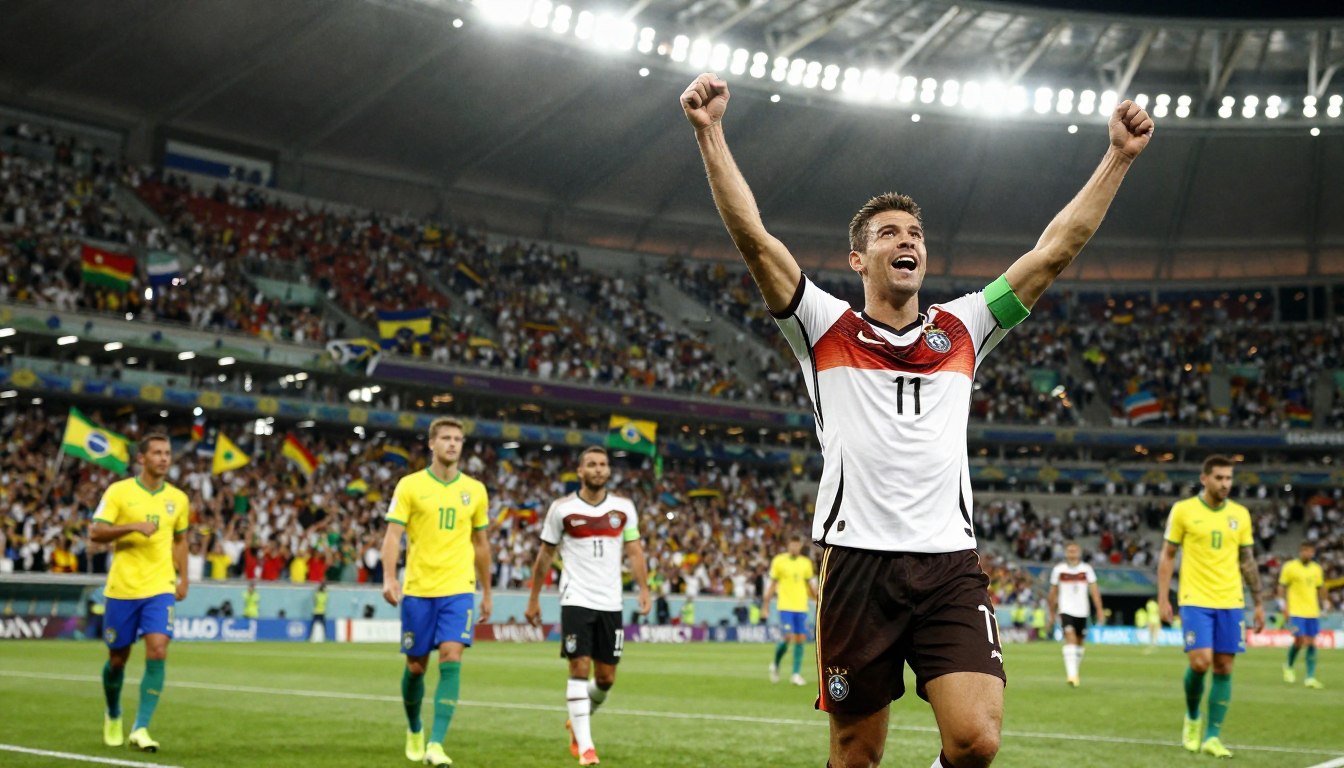
In a stunning display of football prowess, Germany delivered a remarkable performance in the semi-final. This match against Brazil is widely regarded as one of the most shocking games in the tournament’s history.
The German team executed a perfect strategy, scoring five goals in the first half. This dismantled the host nation’s defense completely, leaving fans in disbelief.
Miroslav Klose made history during this game by scoring his 16th World Cup goal, surpassing the record previously held by Ronaldo. This performance remains a masterclass in efficiency.
The tactical discipline shown by the German team set a new standard for high-stakes matches. By July 2014, the Brazilian crowd was left in stunned silence, as Germany showcased their dominance on the world stage.
Argentina vs. Germany: The Finals Showdown
In July 2014, the stage was set for a thrilling conclusion to the month-long football festival. The final match between Germany and Argentina was a tense affair that required extra time to determine a winner.
Mario Götze secured the title for Germany with a clinical volley in the 113th minute of the world cup final. Both teams fought valiantly throughout the match, showcasing their skill and determination.
Germany’s persistence finally broke the deadlock in the second period of extra time. This victory marked Germany’s fourth world title, a crowning achievement for the project started by Joachim Löw years prior to July 2014.
The final match was a fitting conclusion to a tournament that had captivated the world since it began in June 2014.
- The 2014 FIFA World final was a tense affair that required extra time.
- Mario Götze scored the winning goal in the 113th minute.
- Both teams fought valiantly throughout the match.
- This victory marked Germany’s fourth world title.
- The final was a fitting conclusion to the tournament.
Technological and Rule Innovations in 2014
During the 2014 tournament, innovations emerged that transformed how football is played and officiated. One of the most significant advancements was the introduction of goal-line technology. This technology ensured that referees could accurately determine if the ball had crossed the line, reducing the chances of controversial decisions.
Another notable change was the use of vanishing spray for free kicks. This spray helped referees mark the ten-yard distance for defending teams, ensuring fair play during set pieces.
To address the high temperatures in Brazil, the tournament implemented cooling breaks for players when the Wet Bulb Globe Temperature exceeded 32 degrees Celsius. These adjustments significantly improved the fairness and safety of the tournament between June 2014 and July 2014.
By the time the final was played in July 2014, these technological advancements had become an accepted part of the modern game, setting a precedent for future competitions.
The Role of Fan Fests and National Pride
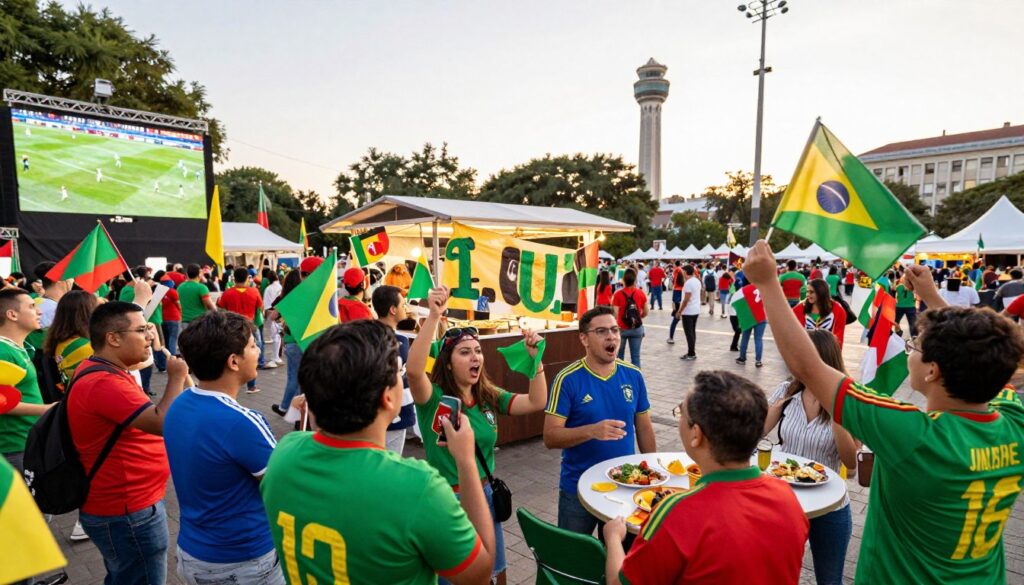
The vibrant atmosphere of Brazil in June and July 2014 brought fans together in a celebration of football. FIFA Fan Fests were held in all 12 host cities, gathering a total of 5 million people to celebrate the tournament together.
These events allowed fans who could not attend the matches to experience the spirit of the tournament in public spaces. National pride was on full display as supporters from 202 countries visited Brazil.
The Fan Fests became a cultural phenomenon, showcasing the passion that defines the tournament for millions of global spectators. By providing a communal space for viewing, the Fan Fests ensured that the tournament reached every corner of the host nation.
- 5 million attendees celebrated together at Fan Fests.
- Public spaces brought the tournament’s spirit to fans unable to attend matches.
- National pride was evident as supporters from around the globe gathered.
- Fan Fests highlighted the passion of football culture.
- Communal viewing spaces enhanced the tournament experience for all.
Impact on Football History and Future World Cups
The stage was set in Brazil for a tournament that left an indelible mark on the history of football. This event was notable as it marked the first time a European team claimed victory on American soil. Germany’s triumph not only showcased their skill but also established them as a global powerhouse.
This landmark tournament set a high bar for organization and fan engagement. Future hosts have aimed to replicate the excitement and atmosphere experienced during the matches in June and July 2014. The success demonstrated that the tournament could thrive in diverse environments, influencing how subsequent events were planned.
As we reflect on the legacy of this tournament, it’s clear that the lessons learned regarding infrastructure and technology remain vital for the sport’s development. The impact of the 2014 event continues to resonate, shaping the future of international competitions.
- Germany became the first European team to win in the Americas.
- This tournament set a high standard for future hosts.
- It proved that the competition could succeed in various environments.
- Germany’s victory solidified their status as a football powerhouse.
- Lessons from June and July 2014 are crucial for future developments.
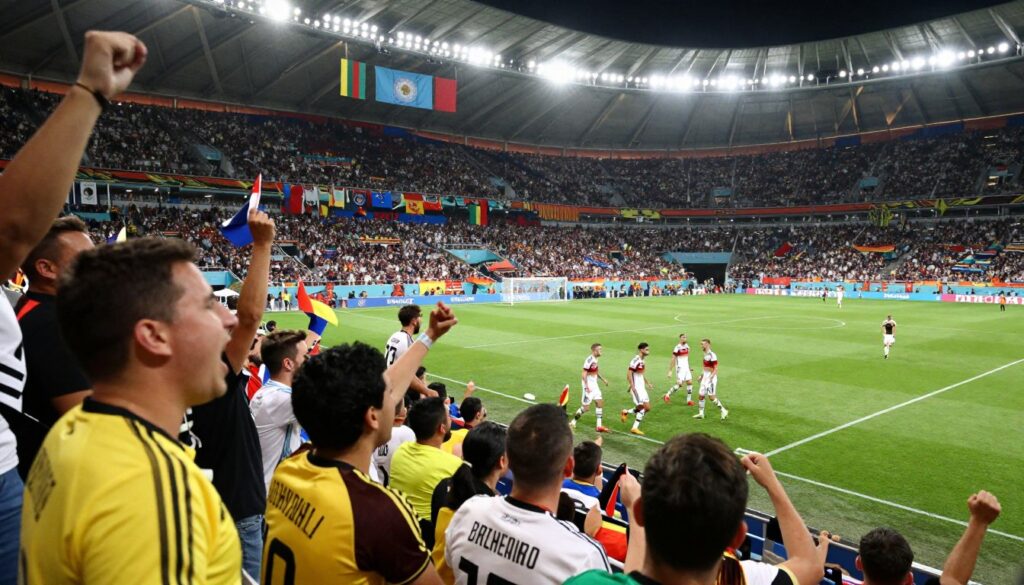
Player Performances and Legendary Moments
Throughout the matches, standout players emerged, capturing the attention of fans worldwide. The tournament became a stage for individual brilliance, with several athletes leaving a lasting impact.
Lionel Messi was recognized as the best player of the tournament, receiving the Golden Ball for his outstanding contributions to Argentina. His skill and leadership were vital in guiding his team through challenging matches.
James Rodríguez emerged as a global star, finishing as the top scorer with six goals during the tournament held in June 2014. His performances not only showcased his talent but also captured the hearts of football fans everywhere.
Many players used this event as a platform to showcase their talents to the entire world. The individual brilliance of these players provided some of the most memorable moments between June 2014 and July 2014.
Every player who stepped onto the pitch contributed to the narrative of a tournament that will be remembered for decades to come.
- Lionel Messi was awarded the Golden Ball for his exceptional performance.
- James Rodríguez scored six goals, becoming the tournament’s top scorer.
- Players showcased their talents on a global stage.
- Memorable moments were created by individual brilliance.
- Each player added to the rich history of the tournament.
Off-the-Field Moments and Global Fandom
The tournament was not just about football; it was a cultural phenomenon that drew global attention. Celebrities and political leaders alike flocked to Brazil, making their presence felt in the stands.
Among the notable attendees were Angela Merkel and Dilma Rousseff, who were there to witness the final match. Their attendance highlighted the significance of the event on a global scale.
Additionally, stars like Rihanna and David Beckham were spotted cheering for their favorite teams. This showcased the massive cultural reach of the tournament.
Fans from the United States and around the world traveled to Brazil to experience the excitement firsthand during June 2014 and July 2014. The presence of such high-profile individuals underscored the tournament’s status as a premier global event.
These off-the-field stories added depth to the tournament, illustrating how football connects people from all walks of life.
Behind the Scenes: Organizational Excellence
Brazil’s hosting of the tournament demanded exceptional coordination and innovative solutions. Organizing this global event required overcoming significant logistical challenges. Managing 12 venues across a vast country was no small feat.
To ensure smooth travel for teams and fans during the tournament in June 2014, innovative solutions were implemented. Coordination between local authorities and FIFA was essential for the smooth operation of the tournament until its end in July 2014.
Behind the scenes, thousands of staff members worked tirelessly. Their dedication maintained the high standards expected of such a massive event. This organizational excellence was a key factor in the overall success of the tournament, despite initial concerns regarding infrastructure.
Media Coverage and Global Reception
The global football community was captivated by the spectacular tournament held in Brazil during the summer of 2014. Media coverage reached unprecedented levels, with over a billion people watching the final on television. This massive viewership highlighted the tournament’s significance and its ability to unite fans across the globe.
Outlets like BBC Sport provided extensive reporting on the matches, ensuring fans stayed updated throughout the tournament. Their coverage was instrumental in bringing the excitement of each game to audiences worldwide.
The digital impact of the tournament was significant. Social media platforms became the primary way for fans to discuss the sport. As excitement built, reports from sport. June 2014 highlighted the intense emotions and dramatic shifts in momentum that defined the competition.
By the time the tournament concluded in July 2014, the global reception confirmed its status as a massive media success. The blend of traditional and digital media created a vibrant narrative around the event, showcasing the power of football to connect people.
- Over a billion viewers watched the final match.
- Extensive coverage by outlets like BBC Sport kept fans informed.
- Social media played a crucial role in fan engagement.
- Reports captured the emotional highs and lows of the tournament.
- The event’s success was reflected in its global reception.
Fan Experiences and Traveling Stories
Traveling supporters immersed themselves in Brazil’s rich culture while cheering for their teams. The vibrant atmosphere made each journey memorable as fans explored various host cities.
National squads utilized 32 separate base camps during the tournament. Teams like South Korea chose to stay in the South Region of the country, which offered unique experiences.
These base camps provided a unique glimpse into the daily lives of the players during the tournament in June 2014. Fans shared stories of their journeys, creating a global community that celebrated the event until July 2014.
The interaction between traveling supporters and local residents was a highlight of the experience. This connection added to the overall excitement and camaraderie surrounding the tournament.
- Fans experienced the vibrant local culture of Brazil while following their team across various host cities.
- National squads utilized 32 separate base camps, with teams like South Korea choosing to stay in the South Region of the country.
- These base camps provided a unique glimpse into the daily lives of the players during the tournament in June 2014.
- Fans shared stories of their journeys, creating a global community that celebrated the tournament until July 2014.
- The interaction between traveling supporters and local residents was a highlight of the 2014 FIFA World experience.
Conclusion
The football tournament held in Brazil has become a defining moment in the sport’s history. From the opening match in June to the final in July, this event captivated the world with its drama and skill.
Germany’s victory and the unforgettable semi-final will be discussed by football fans for many years to come. Innovations like goal-line technology and the use of the Arena Fonte Nova and Estádio Nacional Mané Garrincha defined the modern era of the sport.
We hope this guide has provided a comprehensive look at the 2014 FIFA World Cup and its enduring legacy in global football.
FAQ
What was the most memorable match of the tournament?
How many teams participated in the tournament?
What were some of the key innovations introduced during the tournament?
Where were the matches held?
How did the tournament impact the host country?
Who were the standout players of the tournament?
What role did fan fests play during the event?
How was the media coverage of the tournament?
Explore More World Cup History
← 2010 FIFA World Cup | 2018 FIFA World Cup → | Germany at the World Cup | 10 Greatest Goals in World Cup History | Messi’s World Cup Journey