
The recent tournament in Qatar marked a significant chapter in sports history. This event was the first time the tournament took place in the Middle East, captivating fans worldwide. Argentina emerged victorious, claiming their third title in a thrilling final against France.
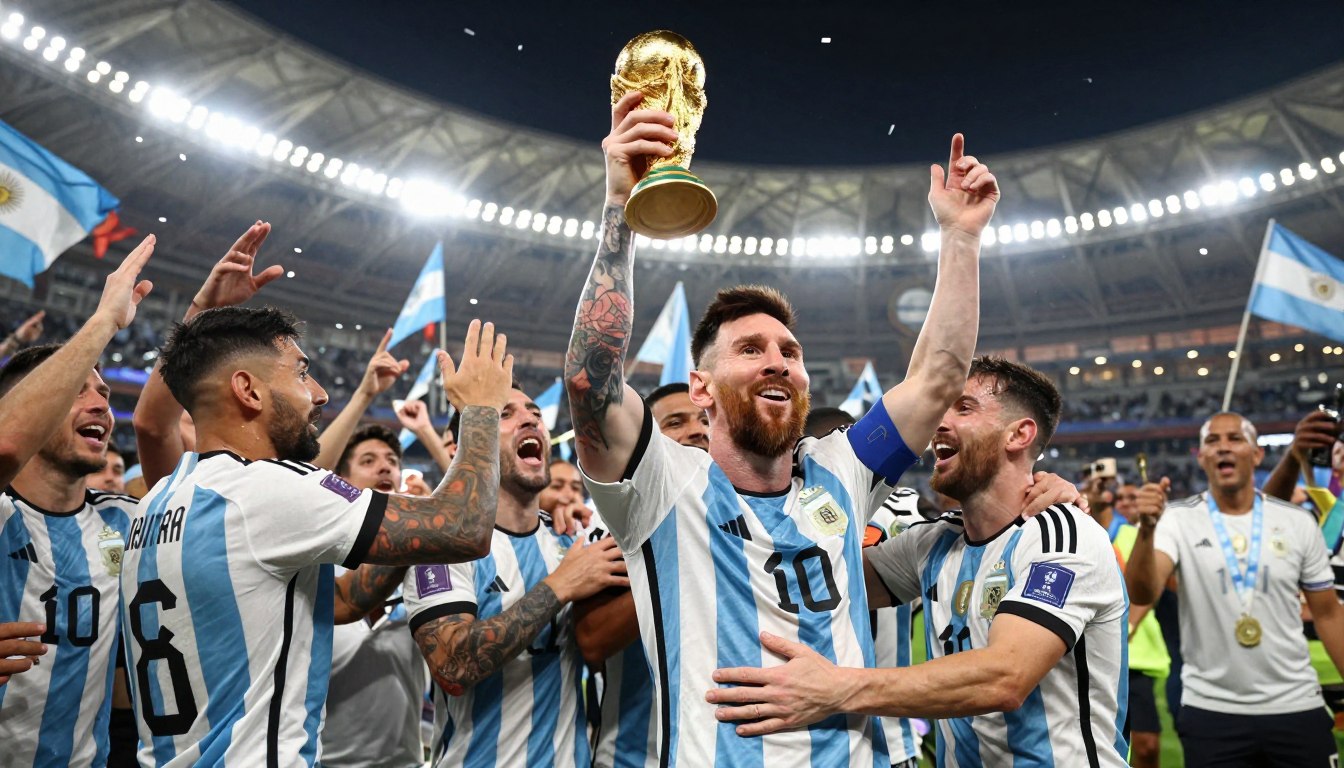
Leading the charge was Lionel Messi, who fulfilled his lifelong dream by guiding his national team to glory. This victory not only solidified Argentina’s legacy but also sparked debates about Messi’s status as one of the greatest players ever.
As the last tournament featuring 32 teams, this event set the stage for future expansions. Fans from every corner of the globe witnessed an unforgettable finale, making this edition truly historic.
Key Takeaways
- This tournament was the first hosted in the Middle East.
- Argentina secured their third title in a dramatic final.
- Lionel Messi achieved his dream of winning the tournament.
- It was the last competition with 32 teams before expansion.
- Fans experienced one of the most exciting finals in history.
Overview of the 2022 FIFA World Cup
The tournament held in Qatar showcased a remarkable moment in sports history. This unique event was scheduled for November and December to avoid the extreme summer heat typical of the region.
In total, 32 teams participated, competing in 64 matches across eight state-of-the-art venues in five cities. The compact nature of the tournament, lasting just 29 days, made it accessible for all teams involved.
With a total attendance of 3,404,252 spectators, the competition highlighted the global appeal of the sport. Notably, Qatar became the first country in the Middle East to host matches, setting a new standard for future international tournaments.
Argentina’s Historic Third Star
Argentina’s victory in the recent tournament stands as a landmark achievement in football history. The team secured their third star by defeating the defending champions France in a thrilling cup final that ended 4-2 following a penalty shootout.
This win marked Argentina’s first title since their legendary 1986 campaign led by Diego Maradona. The match was intense, ending in a 3-3 draw after extra time, showcasing the resilience of the South American side against a formidable French opponent.
By winning this title, Argentina became the first nation from outside of Europe to achieve world cup honors since the 2002 tournament in Asia. The triumph was celebrated by millions of fans, cementing the 2022 squad’s place in the history of the fifa world governing body.
| Year | Title | Final Match | Result |
|---|---|---|---|
| 1986 | Champion | Argentina vs. West Germany | 3-2 |
| 2022 | Champion | Argentina vs. France | 4-2 (penalties) |
Lionel Messi’s Crowning Moment
The tournament highlighted Lionel Messi’s journey, culminating in a moment that defines his illustrious career. His exceptional performance earned him the prestigious Golden Ball, recognizing him as the tournament’s best player for the second time.
This victory is seen as the crowning achievement in Messi’s career, fulfilling the last requirement to solidify his status as one of the greatest players in history. Throughout the tournament, he demonstrated remarkable leadership and skill, proving he remains the best player even in the later stages of his career.
The impact of this win on Messi’s legacy is profound. He finally captured the one trophy that had eluded him for years, a feat that fans and experts alike celebrated. His consistency was evident as he scored crucial goals, helping Argentina ascend to the top of the FIFA world rankings.
| Award | Player | Year | Significance |
|---|---|---|---|
| Golden Ball | Lionel Messi | 2022 | Best player of the tournament |
| Golden Ball | Lionel Messi | 2014 | First win, leading Argentina to the final |
Tournament Format and Exciting Rule Changes
The recent tournament brought innovative changes that reshaped the way football is played. Among the most notable adjustments was the introduction of five substitutions during normal time. This rule provided coaches with enhanced tactical flexibility, allowing them to adapt their strategies more effectively.
Additionally, the tournament made history with the first use of a dedicated concussion substitution. This substitution did not count against the regular quota of five changes, emphasizing player safety. Iranian goalkeeper Alireza Beiranvand was the first player to be replaced under this new protocol during his country’s opening match against England.
These changes were designed to maintain the high intensity of the 64 matches played throughout the tournament. With a remarkable 172 goals scored, this edition set a record for the highest number of goals in the 32-team format, showcasing the effectiveness of these new rules.
| Rule Change | Description |
|---|---|
| Five Substitutions | Teams could make five substitutions during normal time. |
| Concussion Substitution | A dedicated substitution that did not count towards the five changes. |
Memorable Matches and Final Drama
The thrilling matches of the tournament left an indelible mark on football history. The world cup final at Lusail Stadium was a spectacle, as Argentina and France exchanged goals in a gripping encounter. This match will be remembered for decades.
Each knockout stage match brought intense pressure, but none compared to the final, which required a penalty shootout to determine the champion. Spectators were treated to a display of offensive football, with a record-breaking total of 172 goals scored throughout the event.
Remarkably, the final match attracted an estimated 1.5 billion viewers, showcasing the massive global reach of the fifa world championship. From the group stage to the final, the tournament delivered unforgettable moments, solidifying the 2022 world cup as a unique chapter in football history.
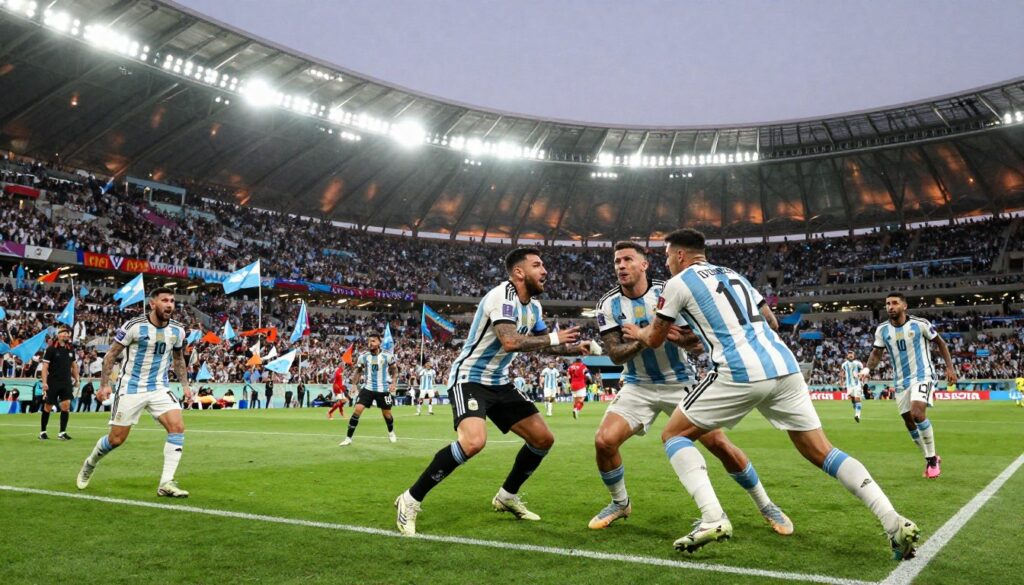
Road to the Epic Final: Argentina vs. France Showdown
The journey to the final was a thrilling saga for Argentina, marked by resilience and determination. After a long qualification process, the team faced early setbacks but ultimately emerged stronger. Their path was not easy, yet they navigated it with skill and tenacity.
France entered the tournament as the title holder, aiming to make history by winning consecutive championships. They sought to join Brazil, the last team to achieve this feat in 1962. Both teams demonstrated why they were at the top of the fifa world rankings.
Tactical brilliance was on display as both managers prepared their squads for the high-stakes world cup final in Lusail. This clash represented the pinnacle of international football competition, showcasing years of preparation and dedication.
Spotlight on Key Players and Standout Performances
The spotlight shone brightly on key players during the tournament, showcasing their exceptional talents. Among them, Kylian Mbappé stood out, making history with his remarkable hat-trick in the final. This achievement made him the first player to score a hat-trick in a final since Geoff Hurst in 1966.
Mbappé’s performance solidified his status as a global superstar. He scored a total of eight goals, earning the Golden Boot for being the tournament’s top scorer. His ability to find the net in crucial moments was unmatched.
Additionally, he became the first player to score in two consecutive finals since Brazilian legend Vavá did so in 1958 and 1962. Other notable performances included Emiliano Martínez, who received the Golden Glove for his outstanding goalkeeping, and Enzo Fernández, awarded the Young Player Award for his impressive contributions.
These standout performances ensured that the tournament would be remembered for the individual brilliance of players who scored goals when it mattered most.
Impact on Global Football and Future Trends
The impact of the recent tournament resonates far beyond the pitch, influencing the global landscape of football. An estimated 5 billion people engaged with the tournament through various media platforms, showcasing its immense reach.
This event has significantly influenced the cultural landscape of international football, introducing the sport to new audiences in the Middle East and the Arabian Peninsula. The excitement generated is expected to inspire future generations.
Looking ahead, national teams are likely to prioritize compact tournament structures. This approach aims to reduce travel fatigue for players, enhancing performance and enjoyment.
Furthermore, the success of the tournament has prompted FIFA to explore new ways to expand the reach of the championship to emerging markets. As the sport evolves, the legacy of this tournament will serve as a benchmark for how host nations can integrate infrastructure with football culture.
Geopolitical and Social Controversies in Qatar
The decision to hold the tournament in Qatar sparked intense scrutiny over labor practices and human rights. Concerns were raised regarding the treatment of migrant workers, women, and LGBTQ+ rights. Critics frequently pointed to the 2015 corruption case involving allegations of bribery among FIFA officials during the bidding process.
While former president Sepp Blatter was linked to earlier controversies, the recent tournament faced its own unique set of challenges. International organizations monitored the situation closely, emphasizing the need for greater transparency within the FIFA world governing body and its host selections.
Despite these controversies, the tournament proceeded as scheduled. This left a complex legacy regarding the intersection of sports, politics, and human rights, igniting ongoing discussions about ethics in global sports.
Host Selection and State-of-the-Art Venues
The selection of Qatar as the host for the tournament marked a pivotal moment in sports governance. Qatar was awarded the right to host matches in December 2010, part of a highly competitive world cup bid process. This decision came with an estimated cost of over $220 billion, making it the most expensive world cup bid in history.
Architects designed the stadiums with sustainability in mind. They incorporated advanced cooling systems to reduce temperatures by up to 20 °C, ensuring player comfort. The legacy of these venues is noteworthy; plans include disassembling upper tiers and donating them to countries with less developed sports infrastructure.
By successfully hosting the event, Qatar demonstrated its ability to manage the logistical demands of the fifa world championship on a global scale. This accomplishment not only reflects Qatar’s commitment to sports but also sets a precedent for future tournaments.
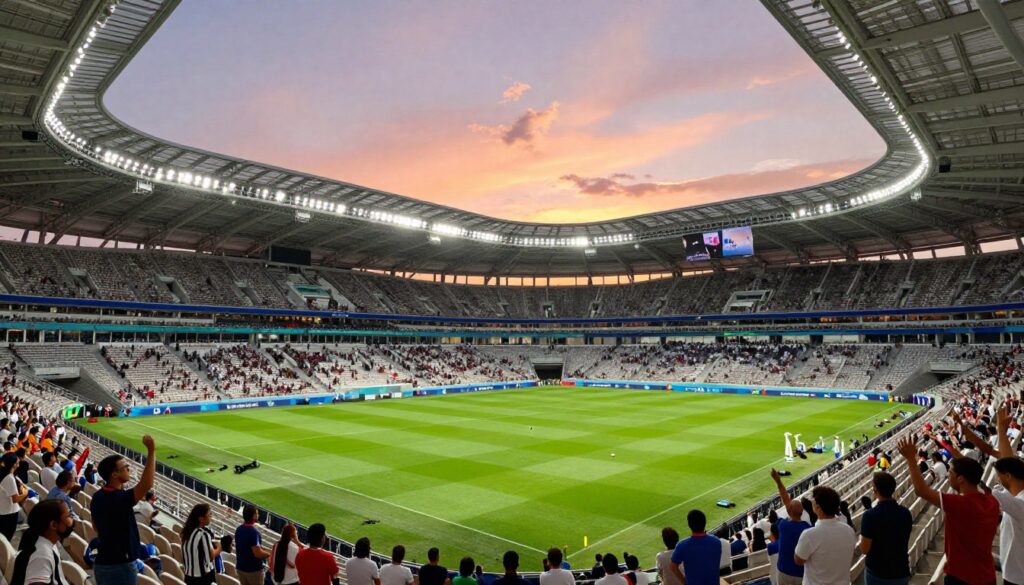
Team Journeys: Debuts, Returnees, and Historic Gaps
The recent tournament highlighted the diverse journeys of national teams, showcasing both new faces and long-awaited returns. Qatar made a significant mark as they became the first host nation to debut in the tournament since Italy in 1934. This milestone was a proud moment for their national team.
Wales also made headlines with their historic return after a 64-year gap, having last participated in the 1958 tournament. Similarly, Canada ended a long absence, returning to the world stage for the first time in 36 years since their appearance in 1986.
Other nations, like the Netherlands and Ecuador, also made comebacks after missing the previous tournament. These journeys underscore the competitive nature of the qualification process for the FIFA world championship across all six continental confederations.
- Qatar became the first host nation to make their tournament debut since Italy in 1934.
- Wales returned to the world cup after a 64-year absence, last appearing in 1958.
- Canada ended a 36-year drought, returning since their 1986 appearance.
- The Netherlands and Ecuador returned after missing the last tournament, enriching the competition.
- These stories highlight the fierce competition in the qualification process for the FIFA world championship.
Analyzing Group Stages and Knockout Rounds
This tournament showcased a series of remarkable upsets and historic achievements in both the group and knockout stages. The group stage provided several surprises, as teams from different confederations challenged the traditional dominance of European and South American nations.
Morocco made history during the knockout stage by becoming the first African nation to reach the semi-final of a world cup tournament. This achievement highlighted the evolving landscape of international football.
Notably, every participating team managed to score at least one goal during the group stage, reflecting the high level of competition in the tournament. The knockout stage was characterized by tactical adjustments, as teams fought to advance through the bracket toward the final match.
For the first time, the tournament structure allowed for a compact schedule, enabling players to remain at their base camps throughout the entire event. This innovation contributed to the overall excitement and engagement of the teams and fans alike.
Legacy of the 2022 FIFA World Cup on International Football
The legacy of the recent tournament is reshaping the landscape of international football. With a record-breaking 172 goals scored, it showcased the attacking prowess of the participating national teams. This thrilling display of talent highlighted the excitement and competitiveness of the matches.
By successfully hosting the event in the Middle East, the tournament expanded the reach of international football to a new and passionate fan base. The use of advanced cooling technology in stadiums has set a new standard for sustainability in future tournaments held in hot climates.
Moreover, the event proved that the championship could be held in the winter, potentially changing the scheduling of future domestic league seasons. Ultimately, this championship will be remembered for its dramatic conclusion and the historic achievements of players like Lionel Messi and Kylian Mbappé.
Behind the Scenes: Security and Organizational Insights
The organization of the tournament involved meticulous planning and coordination to ensure safety and efficiency. The Qatari government employed approximately 50,000 security personnel from 13 different countries to ensure the safety of all participants and spectators.
Organizational insights reveal that the compact nature of the tournament allowed for efficient management of the 64 matches played across the eight venues. Unlike the era of Sepp Blatter, the recent tournament faced intense scrutiny from international media regarding the conduct of FIFA officials and host organizers.
Security forces included military and police units from nations such as Pakistan, Turkey, and the United Kingdom, working in coordination for the world cup. The successful execution of such a massive security operation demonstrated the logistical capabilities required to host the FIFA world championship in the modern era.
Looking Ahead: Expansion and the Next World Cup Era
The next chapter in football’s history is set to unfold with the expansion of the tournament format. The upcoming competition will feature 48 teams, a significant increase from the previous 32. This expansion aims to provide more opportunities for nations to compete on the global stage.
The 2026 tournament will be jointly hosted by Canada, Mexico, and the United States. This collaboration marks a new era for the FIFA world championship, promising a festival of football across North America.
- The recent tournament was the final world cup to feature 32 teams.
- Lessons learned from the 2014 and 2018 world cups have helped organizers prepare for this larger format.
- This expansion is designed to enhance participation from teams in Africa, Asia, and North America.
- The 2022 world cup remains a pivotal moment that bridged the gap to this upcoming era.
Conclusion
The tournament in Qatar has left an unforgettable mark on the world of sports. It concluded as a historic event that saw Argentina win world cup glory for the third time in their storied history.
Lionel Messi finally achieved his dream, while Kylian Mbappé became the first player to score a hat-trick in a final in over 50 years. With a remarkable 172 goals scored, this championship set a new record for the highest number of goals in the 32-team format.
For the first time, the tournament was held in the Middle East, proving that the fifa world championship can thrive in diverse cultural environments. As we look toward the future, the legacy of this tournament will continue to influence how international football is organized and experienced by fans worldwide.
FAQ
What teams participated in the tournament?
Who won the Golden Ball award?
What were some key rule changes in this tournament?
How did Argentina perform in the knockout stages?
What was the impact of the tournament on global football?
Were there any controversies surrounding the host nation?
What can we expect from future tournaments?
Explore More World Cup History
← 2018 FIFA World Cup | Messi’s World Cup Journey | Argentina at the World Cup | 2026 World Cup Favorites