
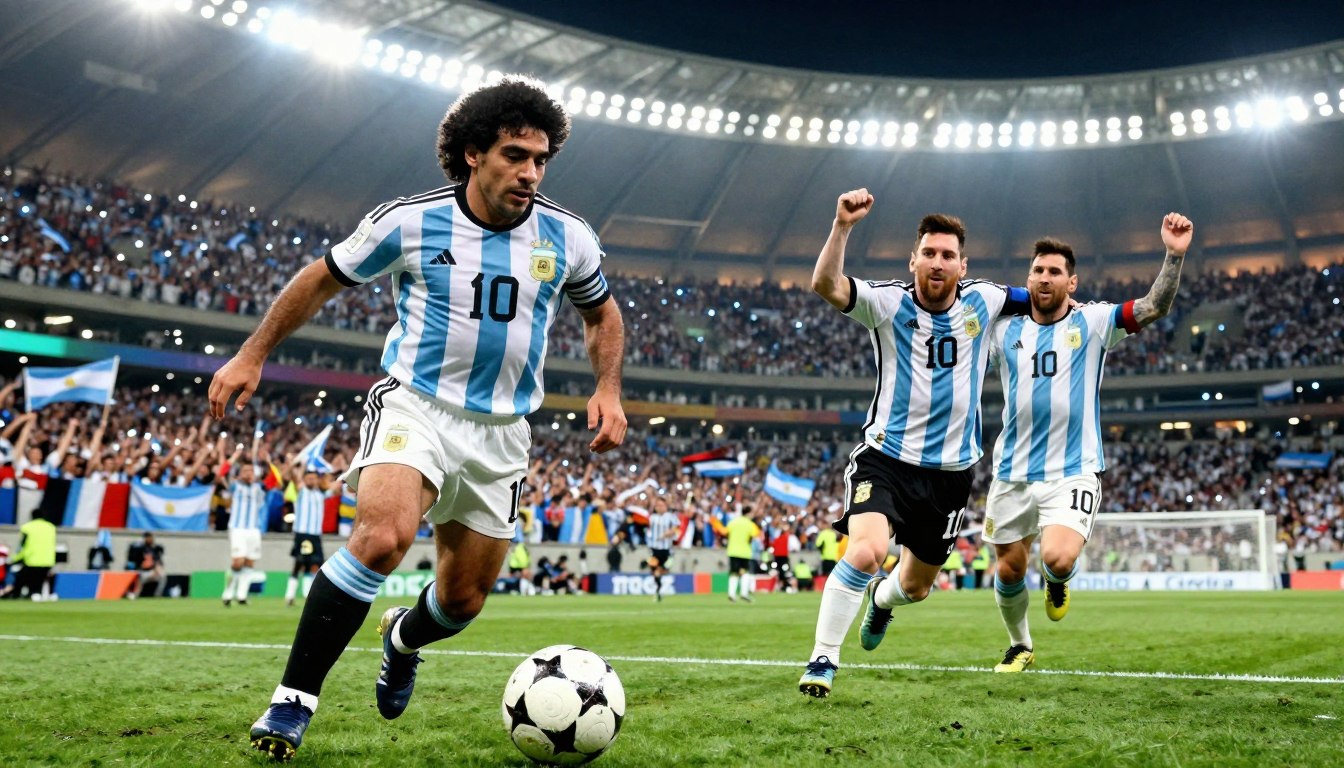

The journey of a football team is often marked by triumphs and challenges. This is especially true for a national team that has captured the hearts of many. Known as La Albiceleste, this squad has made a significant impact on the international stage.
In this ultimate guide, we delve into the remarkable journey of a team that has seen great success in the prestigious tournament. With victories in 1978, 1986, and 2022, their legacy is rich and storied. Readers will explore how this team transformed into a powerhouse through decades of fierce competition.
From iconic players to unforgettable matches, we highlight the tactical evolution that has defined their spirit. This analysis covers everything from early appearances to the latest triumphs, showcasing the stars like Maradona and Messi who have left an indelible mark on the sport.
Key Takeaways
- Explore the journey of La Albiceleste in the tournament.
- Learn about the legendary players who shaped the team’s success.
- Discover the tactical evolution over the decades.
- Review memorable matches that defined their legacy.
- Understand the significance of their three championship victories.
Introduction to Argentina World Cup History
In the realm of football, a team’s narrative is often a blend of triumphs and trials. The journey of this national team began long before they claimed their first title. It is deeply rooted in a passion for the sport.
Argentina’s first international match occurred on July 20, 1902, against Uruguay, where they won decisively with a score of 6-0. This victory marked the beginning of a rich football tradition.
As a founding member of CONMEBOL in 1916, the nation solidified its presence in international tournaments. The first world cup in 1930 saw them reach the final, setting the stage for a century filled with high-stakes drama.
Understanding the significance of the tournament reveals how football became a primary expression of national identity. The passion for the game transcends mere sport; it embodies the spirit of a nation.
| Year | Event | Outcome |
|---|---|---|
| 1902 | First International Match | Win 6-0 |
| 1916 | Founding of CONMEBOL | Member Established |
| 1930 | First World Cup | Finalist |
Overview of Argentina’s World Cup Journey
The saga of a national football team is filled with both victories and defeats. Over the course of 18 tournaments, this team has shown remarkable consistency, achieving 47 wins in 88 matches. Their journey has been a blend of glory and heartbreak.
They have reached the final six times, a testament to their competitive spirit. The team claimed the trophy in 1978, 1986, and 2022, but also faced the disappointment of being runners-up in 1930, 1990, and 2014.
The evolution of this squad reflects changing tactical philosophies. They transitioned from early offensive styles to a more balanced approach in recent years. Each appearance has solidified their legacy as one of the most successful teams in the sport.
- 47 victories in 88 matches across 18 tournaments.
- Six finals reached, showcasing their high-level competition.
- Trophy wins in 1978, 1986, and 2022.
- Runner-up finishes in 1930, 1990, and 2014.
- Evolution from offensive styles to modern tactics.
The Three Iconic Stars: Maradona, Messi, and Beyond
A national team’s legacy is often woven with the threads of its most celebrated players. Two figures stand out prominently in this narrative: Diego Maradona and Lionel Messi.
Diego Maradona remains a central figure in the story of the tournament. His unmatched brilliance led the team to glory in 1986, where he captained the squad to victory. His impact was not just in skills but in the heart he brought to the game.
Lionel Messi transformed the modern era of the team. His historic captaincy culminated in a victory during the 2022 tournament in Qatar. Messi’s leadership and skill have made him a beacon for aspiring players everywhere.
Beyond these two icons, every player who wore the jersey contributed to the team’s pride and success. The role of a star player is often defined by their ability to shoulder national expectations during crucial matches.
Both legends have been awarded the Golden Ball, a testament to their influence on the grand stage of the tournament.
Examining Argentina’s Historic World Cup Finals
Every football team’s legacy is shaped by its most pivotal matches. The finals in which a team competes often define its standing in the sport. For this squad, two finals stand out: 1930 and 1990.
The 1930 world cup final in Montevideo was a fierce battle, ending in a 4-2 loss to Uruguay. This match established a rivalry that continues to resonate today. It was a defining moment that showcased the passion and intensity of both teams.
Fast forward to the 1990 cup final, where Argentina faced West Germany in Rome. A late penalty kick decided the match, giving the Europeans a narrow victory. This match highlighted the importance of strategy and individual brilliance in critical moments.
Each final appearance has been a defining moment for the nation. These matches often reflect tactical shifts and the resilience of the squad. Analyzing these encounters reveals how the team adapted to various opponents on the grand stage.
| Year | Opponent | Outcome |
|---|---|---|
| 1930 | Uruguay | Loss 4-2 |
| 1990 | West Germany | Loss 1-0 |
Tactical Evolution and Iconic Matches
The transformation of a national team reveals its resilience in the face of challenges. Over the decades, tactical strategies have shifted significantly. The approach has evolved from the offensive-minded style of the 1970s to a more structured defensive organization seen in recent tournaments.
Two iconic matches highlight this evolution. The 6-0 victory against Peru in the 1978 tournament remains a defining moment in the national team’s history. This match showcased the team’s attacking prowess and set a high standard for future performances.
Another memorable game occurred in 2006 when the squad defeated Serbia and Montenegro 6-0. This match illustrated the depth of talent available to the coaching staff and the team’s ability to adapt to the evolving nature of international football.
Key factors in maintaining a competitive edge include:
- Shifting tactical strategies from offensive to defensive.
- Iconic matches that define an era.
- Balancing creative freedom with tactical discipline.
- Adapting to the evolving nature of international football.

Deep Dive into the 1978 World Cup Triumph
Moments of glory in football can transform a nation’s identity and pride. The 1978 tournament was a pivotal chapter in the journey of the national team. Hosting the event provided a unique advantage, as the players thrived on the support of their passionate fans.
Mario Kempes emerged as the hero of the tournament. He scored two crucial goals in the final against the Netherlands, leading the team to victory. His performance not only secured the title for the champions but also etched his name in football folklore.
In a thrilling climax, Daniel Bertoni added a third goal in the 115th minute, sealing a 3-1 victory. This triumph marked the first time the trophy was brought home, solidifying the nation’s status as a global football power.
Coach César Luis Menotti’s strategy emphasized possession and technical skill, which proved effective throughout the tournament. The 1978 world cup remains a cornerstone of national pride, a moment when the team truly arrived on the world stage.
A Closer Look at the 1986 Maradona Magic
A single tournament can redefine a team’s legacy, and 1986 did just that. The event is synonymous with the brilliance of Diego Maradona, who led the team to their second title in Mexico. His impact was profound, making this tournament a memorable chapter in football.
In the final against West Germany, Argentina secured a thrilling 3-2 victory. Jorge Burruchaga scored the decisive goal in the 84th minute, sealing the title. The match also featured goals from José Luis Brown and Jorge Valdano, showcasing the collective effort behind the individual magic.
Maradona was voted the best player of the tournament, having scored five goals and provided crucial assists throughout the competition. The tactical mastery displayed by Carlos Bilardo allowed the team to overcome formidable opponents and claim the world cup title with style.
The Legacy of Lionel Messi in World Cup History
The impact of a legendary player resonates far beyond the pitch, influencing fans and future generations. Lionel Messi has solidified his legacy in the tournament, especially during the 2022 World Cup. As captain, he led his team to their third championship title, a remarkable achievement.
In the thrilling final against France, Messi scored two crucial goals, showcasing his exceptional talent. This performance was pivotal in securing a dramatic victory in a penalty shootout. His efforts throughout the tournament earned him the prestigious Golden Ball, an award he also claimed in the 2014 final.
With an impressive tally of 116 goals for the national team, Messi stands as the top scorer in the program’s history. His ability to perform under pressure in critical moments has made him a global icon of the sport.
- The legacy of Lionel Messi in the tournament was solidified in 2022.
- During the final, he scored two goals, leading to victory.
- Messi won the Golden Ball in both 2014 and 2022.
- He is the top scorer in the national team’s history with 116 goals.
- His performances have made him a symbol of excellence in football.
Statistical Breakdown and Record-Breaking Moments
A comprehensive look at a team’s statistics unveils their journey through the tournament. This national team has made its mark with impressive numbers that reflect both consistency and excellence.
They have participated in 18 world cup tournaments, placing them among the top contenders alongside Brazil and Germany. Throughout these competitions, the team has played a total of 88 matches, demonstrating a strong performance record.
Statistical analysis reveals that they have scored 152 goals in their world cup journey, showcasing their offensive capabilities over the decades. Their achievements include winning three titles and reaching the finals six times since 1930.
Every match contributes to the ongoing narrative of the team, reinforcing their status as a perennial contender in the world of football.
Argentina in the Group Stages and Knockout Rounds
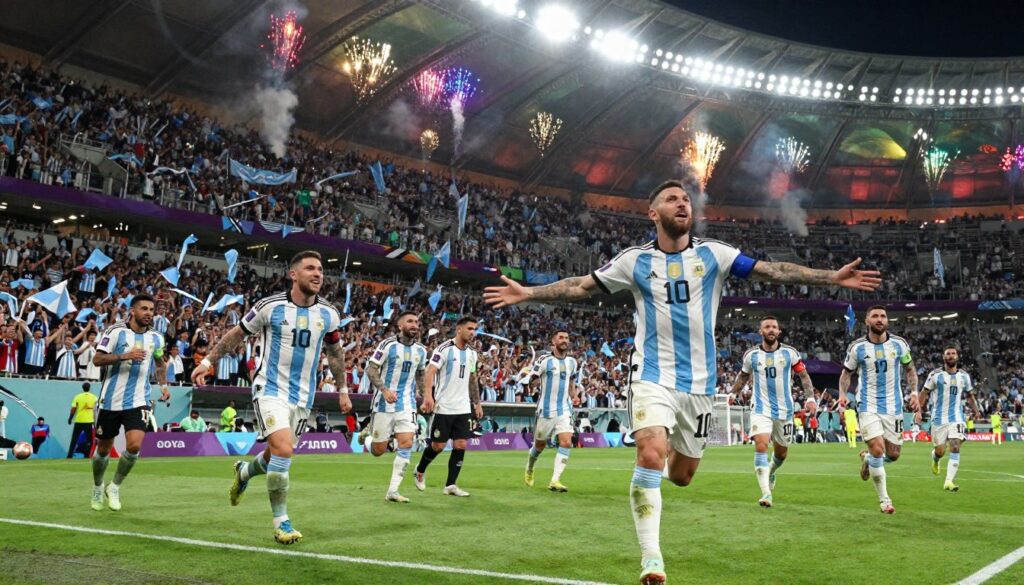
The path through the group stages is often a defining moment for any national football team. For this squad, memorable encounters have shaped their tournament journey. One such match was the thrilling 6-3 victory against Mexico in 1930. This high-scoring game showcased their attacking prowess right from the start.
As teams advance, the knockout round demands a different level of intensity. A prime example is the crucial 2-1 win against Australia during the 2022 tournament. Each match in this phase is a high-stakes game, where a single mistake can lead to elimination.
The team has faced various opponents in the group stage, learning to adapt their strategy to different styles of play from around the globe. Success in the tournament often hinges on the ability to win crucial knockout matches, a skill this squad has refined over many years.
| Year | Match | Outcome |
|---|---|---|
| 1930 | vs Mexico | Win 6-3 |
| 2022 | vs Australia | Win 2-1 |
Rivalries and International Competition
In the world of football, intense rivalries shape the narrative of tournaments. The history of the tournament is defined by fierce competitions with teams like Brazil, England, France, Germany, the Netherlands, and Uruguay. These matchups often become the most anticipated events, drawing millions of viewers worldwide.
Argentina has faced Germany in seven matches during the tournament, including several finals that have been marked by high tension and memorable moments. These rivalries push the team to perform at their best, as every game against a major opponent carries significant historical weight.
International competition is not just about winning a trophy; it’s about the pride that comes from defeating storied teams. The thrill of these clashes adds to the excitement of the tournament, making each match a pivotal moment in the football narrative.
- Intense rivalries with teams like Brazil and Germany.
- Matches against traditional rivals are highly anticipated.
- Seven encounters with Germany highlight significant history.
- Every match against major opponents carries historical weight.
- Winning is about pride, not just trophies.
Behind the Scenes: Team Strategies and Coaching Tactics
Behind every successful football team lies a complex web of strategies and coaching tactics. The success of this national team in the tournament is often attributed to the tactical vision of influential coaches.
Winning managers like César Luis Menotti (1978), Carlos Bilardo (1986), and Lionel Scaloni (2022) each brought a unique philosophy to the team. They adapted their football tactics to match the strengths of the players available at the time.
Behind the scenes, the coaching staff, including figures like Pablo Aimar and Roberto Ayala, works diligently to prepare the squad for every tournament challenge. Adapting to the modern game requires constant innovation, reflecting how the team has evolved its defensive and offensive structures.
The legacy of these coaches is measured by their ability to guide the team through the pressure of the tournament and secure victory.
| Coach | Year | Title Won |
|---|---|---|
| César Luis Menotti | 1978 | World Cup |
| Carlos Bilardo | 1986 | World Cup |
| Lionel Scaloni | 2022 | World Cup |
Cultural Impact of Argentina’s World Cup Success
The success of a football team can create a powerful sense of unity among its fans. For the national team, known as La Albiceleste, victories in the tournament have sparked celebrations that resonate across the nation.
Fans proudly wear the iconic white and light blue striped jersey, which has been a symbol of their identity since its debut in 1908. This uniform is more than just clothing; it represents a deep connection to the team’s legacy.
Every world cup victory ignites massive celebrations, showcasing the nation’s passion for football. National pride is closely tied to the team’s performance, making each match a significant cultural event.
The achievements of the squad serve as a symbol of resilience and hope, reflecting the spirit of the nation during both triumphs and challenges.
| Year | Event | Impact |
|---|---|---|
| 1978 | First World Cup Victory | Nationwide celebrations |
| 1986 | Second World Cup Victory | Unifying national pride |
| 2022 | Third World Cup Victory | Renewed hope and joy |
Key Moments in Argentina World Cup history
Key moments in football can leave an everlasting impact on a team’s legacy. Throughout the years, certain milestones have defined the narrative of this national team on the global stage.
One of the most legendary moments is Diego Maradona’s “Hand of God” goal during the 1986 tournament. This iconic goal not only showcased his unique talent but also became a symbol of the team’s spirit.
Another historic milestone occurred in 1924 when Cesáreo Onzari scored the first “Olimpico” goal directly from a corner kick. This remarkable feat highlighted the creativity and skill present in the squad.
These moments reflect specific times when the team captured the world’s attention through their unique approach to the game. Reflecting on these events provides a deeper understanding of how they have shaped the evolution of the tournament over the last century.
Legacy and Future Prospects of the Albiceleste
The legacy of a national football team evolves with each new generation of players. As the squad prepares for the upcoming tournaments, exciting talents are emerging. Players like Julián Alvarez and Enzo Fernández are set to make their mark in the next world cup.
Currently, the team ranks 3rd in the FIFA Men’s World Ranking as of May 2026. This status reflects their strength and competitiveness in international football.
Looking ahead, the focus is on:
- Maintaining the high standards set by previous generations.
- Integrating fresh faces into the squad to ensure a bright future.
- Adapting to the evolving landscape of the tournament.
- Continuing the winning tradition that has defined the team.
- Building on the rich history to inspire the next generation of players.
Every upcoming tournament is an opportunity to further solidify their legacy and showcase the spirit of the team.
Conclusion
The spirit of a football team often ignites a shared passion that unites its fans. The journey in the tournament is a powerful reminder of how the game can inspire millions. From the early days in 1930 to the glorious victory in 2022, the team has consistently showcased excellence on the global stage.
The contributions of legends like Maradona and Messi have left an indelible mark on the tournament’s legacy. As the team looks toward future challenges, the spirit of La Albiceleste remains as strong as ever.
We hope this guide has provided a comprehensive look at the moments, players, and tactics that define the Argentine experience in the world cup.
FAQ
How many times has Argentina won the World Cup?
Who are the most famous players in Argentina’s World Cup history?
What was the significance of the 1986 World Cup for Argentina?
How does Argentina’s football style differ from other teams?
What are some memorable matches in Argentina’s World Cup history?
How has Lionel Messi’s presence influenced the team?
What challenges has the team faced in recent tournaments?
How do fans celebrate Argentina’s World Cup achievements?
Related Articles
1986 FIFA World Cup | 2022 FIFA World Cup | Maradona’s World Cup Legacy | Messi’s World Cup Journey | All World Cup Winners