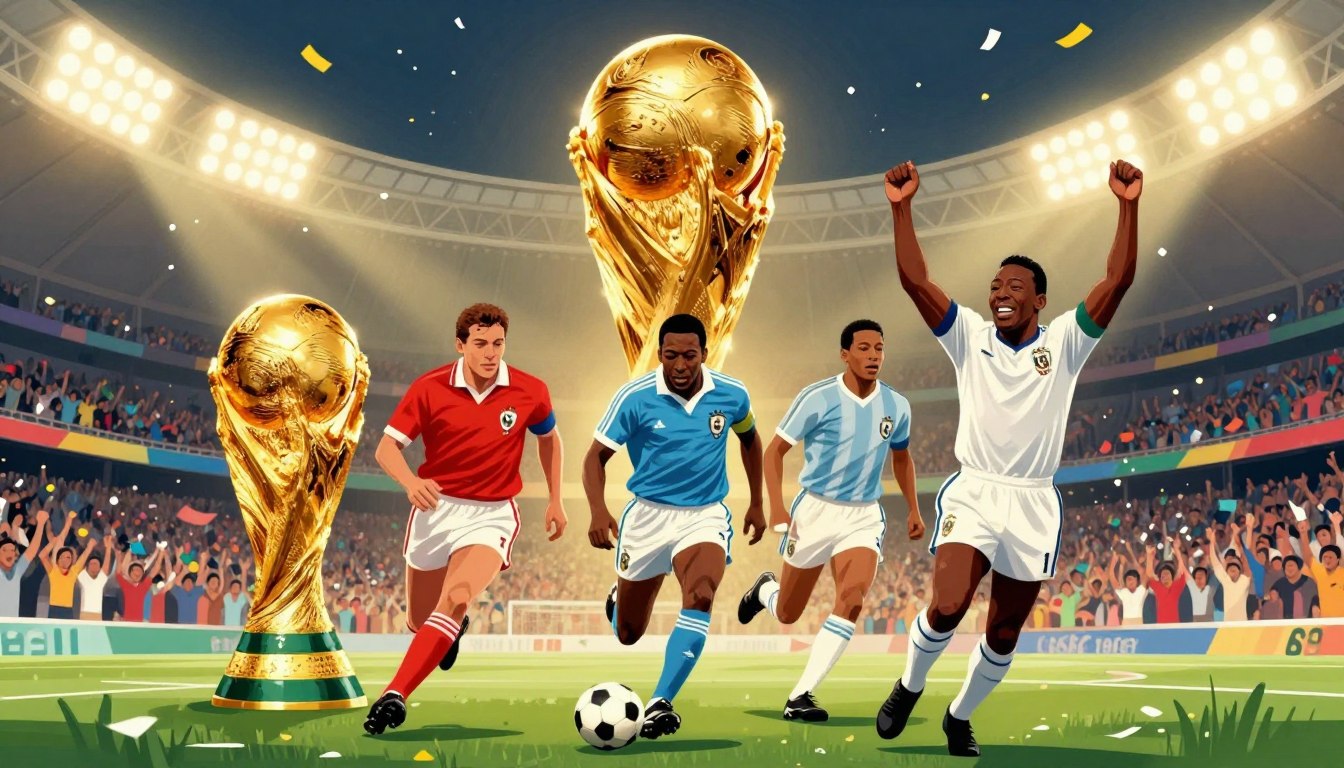

In the realm of football, few names resonate as powerfully as that of Pelé. Born Edson Arantes do Nascimento on October 23, 1940, in Três Corações, Brazil, he is celebrated as one of the most iconic figures in the sport’s history. With an astounding record of 1,279 goals in 1,363 games, he set a benchmark for forwards everywhere.
Pelé’s legacy is particularly highlighted by his unique achievement of winning three championship titles. This remarkable feat has cemented his status as a legendary player. His journey began with his debut in 1958, and since then, he has transformed the game, inspiring generations.
This ultimate guide delves into the life and career of Pelé, examining how his extraordinary talent and vision changed the sport forever. By analyzing his contributions, we uncover why he is often regarded as the greatest player of all time.
Key Takeaways
- Pelé is the only player to secure three championship titles in football.
- He scored an impressive 1,279 goals throughout his professional career.
- His debut in 1958 marked the rise of a global football superstar.
- Pelé’s talent redefined the standards for future forwards.
- His influence on the sport continues to inspire players worldwide.
Introduction: The Journey of a Football Legend
Few athletes have captured the essence of football like the legendary figure from Brazil. His journey began in the small town of Três Corações, where he honed the skills that would later conquer the world stage. Throughout his professional career, he displayed an unmatched ability to influence the outcome of any game with his vision and precise passing.
As a central figure for his national team, he set records that stood for over fifty years, solidifying his status as a global icon. His rise from local talent to international sensation is one of the most compelling narratives in the sport’s history. This remarkable transition showcases his dedication to the team and the game, leading to success that few athletes have ever matched.
| Year | Award | Organization |
|---|---|---|
| 1999 | Athlete of the Century | International Olympic Committee |
| 2000 | World Player of the Century | IFFHS |
The Early Years: From Três Corações to Bauru
In the heart of Brazil, a young boy’s passion for football began to flourish. Born in 1940 to Dondinho and Dona Celeste, his father was a professional footballer. This connection ignited a spark in him, shaping his future aspirations.
Growing up in Bauru, he faced challenges, including poverty. Instead of a proper ball, he often played with a grapefruit or a sock stuffed with newspaper. These early years taught him creativity and resourcefulness, vital traits for a future star.
He joined local amateur teams like Sete de Setembro and Canto do Rio. Playing for these teams helped him develop the quick thinking needed for professional play. His father’s guidance was crucial, instilling the fundamentals of the sport long before he reached the world stage.
These formative experiences in the streets of Bauru shaped the resilience that would define his later professional history.
| Year | Event | Significance |
|---|---|---|
| 1940 | Birth | Born to a footballer father |
| 1950 | First Game | Played with amateur teams |
| 1958 | Debut | Started professional career |
Rising Star at Santos and National Recognition
At just 15, a talented player was about to change the course of football history. In June 1956, he signed his first professional contract with Santos FC, after being discovered by the legendary coach Waldemar de Brito. His debut year was nothing short of spectacular.
He made an immediate impact, scoring his first professional goal in a dominant 7-1 victory against Corinthians de Santo André. This remarkable performance quickly caught the attention of national selectors, leading to his first international call-up.
By the age of 16, he was already seen as a vital member of the team, showcasing skills that outshone many veteran athletes. This period marked the beginning of a golden era for Santos FC, as they dominated the local league, largely thanks to his prolific scoring ability.
The 1958 World Cup Miracle: A Global Debut
In 1958, a young star emerged on the international stage, captivating fans around the globe. The 1958 World Cup in Sweden marked the first world cup appearance for this talented player, who was only 17 years old. Despite battling a knee injury, he showcased remarkable resilience, becoming the youngest player to win the tournament.
His journey in this tournament was nothing short of extraordinary. He scored a hat-trick in the semi-final against France, solidifying his reputation as a football prodigy. In the final against Sweden, he not only scored two goals but also provided a crucial assist, leading his team to victory.
Even when doubts arose from the team psychologist, he proved his worth by netting the only goal in the quarter-final match against Wales. This defining moment at the 1958 FIFA World Cup introduced the world to the extraordinary talent of this young Brazilian forward.
Exploring the Pelé World Cup Triumphs
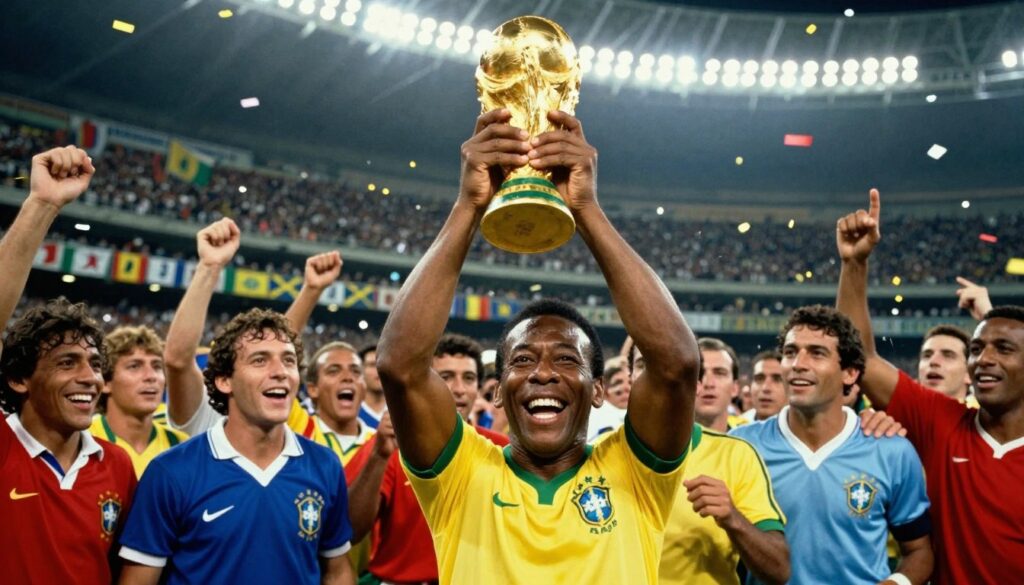
The legacy of a Brazilian football icon transcends generations and inspires countless players. He remains the only athlete in world cup history to have secured three championship titles, a record that has stood for over fifty years. His dominance in the fifa world cup tournaments of 1958, 1962, and 1970 established him as the most successful national team player ever.
Analyzing his contributions to world cup history reveals how he adapted his style to lead his teammates to victory in different decades. As one of the most decorated world cup winners, he set a benchmark for excellence that continues to inspire modern football stars today.
His ability to perform under pressure in the cup history of the sport remains a subject of study for coaches and analysts worldwide.
| Year | Title Won | Significance |
|---|---|---|
| 1958 | FIFA World Cup | Youngest winner at 17 |
| 1962 | FIFA World Cup | Key player despite injury |
| 1970 | FIFA World Cup | Led team to victory with iconic plays |
1962 World Cup: Resilience in the Face of Adversity
In the face of adversity, the Brazilian squad demonstrated remarkable unity during the 1962 championship. The tournament, held in Chile, started strong for the team. They won their opening match against Mexico, with an early goal from their star player.
However, during the group stage match against Czechoslovakia, a leg injury sidelined him. This setback could have derailed the team’s hopes, but the Brazilian players rallied together. They showed incredible teamwork and determination, ultimately securing their second championship title.
Injury Challenges and Team Cohesion
Despite the injury, the team’s cohesion shone through. They adapted their strategy, relying on the depth of their squad. His early contributions in the group stage were vital in setting the path for success. The players demonstrated that they could win even without their star.
Securing Brazil’s Second Championship
In the final, Brazil triumphed without their key player on the pitch. This victory highlighted the strength of the entire team. Their ability to overcome challenges became a defining moment in their history, showcasing the spirit of Brazilian football.
1966 World Cup Challenges: A Test of Strength
The challenges faced by the team in the 1966 World Cup tested their strength and resolve. This tournament was marked by aggressive tactics that hampered their performance on the field. The Brazilian squad struggled against brutal targeted tackling, which took a toll on their game.
During one critical match, Pelé suffered a significant knee injury. This setback limited his ability to contribute effectively, leading to a disappointing exit in the first round of the FIFA tournament. This harsh lesson prompted the team to reevaluate their preparation for future competitions.
The physical toll of the 1966 World Cup made Pelé briefly consider retirement from international play. The lack of protection for players was a serious concern. However, this challenging experience ultimately strengthened his resolve to return to the World Cup stage with a more prepared squad.
- The 1966 tournament highlighted the need for better protection for players.
- Pelé’s injury was a turning point for the team’s strategy.
- The early exit served as a lesson for future FIFA tournaments.
- Team cohesion was tested under pressure.
- Resilience became a key focus for the players moving forward.
1970 World Cup Glory: The Pinnacle of Success
The 1970 tournament in Mexico marked a defining moment in football history. It was here that the team achieved its third championship title, showcasing extraordinary talent and teamwork. The performance of the players during this event remains unforgettable.
During this tournament, the athlete won the prestigious Golden Ball for his outstanding contributions. He scored four goals, including the opening goal in the final match against Italy, which ended in a 4-1 victory.
One of the most iconic moments of the 1970 world cup was the shirt swap with the legendary English defender Bobby Moore after a challenging match. This gesture symbolized respect and sportsmanship.
His vision was evident during the final, where he delivered a legendary pass to Carlos Alberto, leading to the team’s fourth goal. This victory not only highlighted his skills but also cemented his legacy as one of the greatest players in the history of the fifa world cup.
| Achievement | Details | Significance |
|---|---|---|
| Golden Ball | Outstanding performance in 1970 | Recognized as the best player |
| Opening Goal | Scored in the final against Italy | Set the tone for victory |
| Iconic Shirt Swap | With Bobby Moore | Symbol of sportsmanship |
| Legendary Pass | To Carlos Alberto | Led to the fourth goal |
International Career Highlights Beyond the World Cup
The impact of a legendary footballer extends far beyond the grand stages of the World Cup. Throughout his international career, he scored an impressive 77 goals in 92 games, establishing himself as the top scorer for the Brazilian national team.
His influence reached various international tournaments and friendly matches, where he consistently performed at a high level. Notably, he was named the best player of the 1959 South American Championship, finishing as the top scorer with eight goals for his team.
His ability to lead the team in different environments demonstrated his versatility and commitment to the sport on a global scale. These achievements highlight why he remains the most celebrated national team player in the history of the sport.
Club Legacy: Santos FC’s Record-Breaking Era
The legacy of a football club is often defined by the remarkable players who have graced its ranks. Santos FC achieved legendary status during its golden era, largely due to one extraordinary player.
During his time at Santos FC, he scored an incredible 643 goals in 659 games, setting a record for the most goals for a single club. This achievement solidified his status as a prolific forward.
He led the team to consecutive Copa Libertadores titles in 1962 and 1963, proving that his success was not limited to the international stage. His partnership with teammates like Coutinho and Pepe allowed the team to dominate both domestic and international competitions for over a decade.
Every year, the club toured the world to showcase his talent, making Santos the most famous team in the history of South American football. His historic goal-scoring feats at the club level remain a testament to his consistency and skill as a professional forward.
Transition to New York Cosmos: Expanding Football in the United States
A legendary football icon took his talents to the United States, forever changing the landscape of the sport. In 1975, he signed with the New York Cosmos, a move that significantly increased the popularity of football across the country.
His arrival brought unprecedented attention to the game, as fans flocked to see the renowned player in his final career years. During his time with the Cosmos, he played 64 games and scored 37 goals, helping to build the foundation for the modern league.
The New York Cosmos became a global brand, attracting other international stars to the United States to play alongside him. His decision to join the team was driven by a desire to promote the sport and study sports marketing in the United States.
| Year | Team | Games Played | Goals Scored |
|---|---|---|---|
| 1975 | New York Cosmos | 64 | 37 |
The Art and Philosophy of the Beautiful Game
Football’s beauty lies in the artistry of its players, and few have embodied this like the Brazilian legend. His remarkable ability to strike the ball with either foot transformed the way the game is played. He was a master of the pitch, using his vision and passing ability to create scoring opportunities that seemed impossible to his opponents.
His philosophy of the beautiful game emphasized team play and creativity. This inspired countless young athletes to pursue their dreams on the pitch. By innovating new techniques and movements, he changed the game at both the club and international levels.
His ability to score goals with either foot made him a nightmare for any defender, regardless of the team he faced. Even in retirement, he continued to serve as an inspiration, proving that the beautiful game is about more than just winning matches.
| Aspect | Details | Impact |
|---|---|---|
| Vision | Exceptional ability to see plays develop | Created scoring chances for teammates |
| Technique | Innovative movements and skills | Redefined play style in football |
| Inspiration | Motivated young athletes globally | Encouraged pursuit of excellence |
Memorable Matches and Iconic Goals
In the chronicles of football, memorable matches and legendary goals define the essence of greatness. One of the most unforgettable moments occurred in 1961 when he scored the “gol de placa” against Fluminense. This stunning goal earned him a standing ovation from the opposing team’s fans, showcasing the respect he commanded on the pitch.
Another pivotal moment came in 1969 when he scored his 1,000th career goal during a high-stakes match against Vasco da Gama at the Maracanã Stadium. This achievement marked a significant milestone in his illustrious career.
Every goal he scored was a testament to his skill, but his performance in the 1958 final remains the most significant match of his life. His ability to deliver a crucial goal in a championship match defined his career and solidified his status as a legend of the sport.
Fans still recount the details of every iconic goal, analyzing how he managed to outmaneuver the best defenders in the history of the game.
| Match | Year | Significance |
|---|---|---|
| Gol de Placa vs. Fluminense | 1961 | Earned a standing ovation |
| 1,000th Goal vs. Vasco da Gama | 1969 | Milestone achievement |
| 1958 Final Performance | 1958 | Defining match of his career |
Impact on Soccer Marketing and Global Culture
The influence of a football legend reaches far beyond the pitch, shaping the future of sports marketing. He was the highest-paid athlete in the world during his playing days, showcasing how a single player can leverage fame for commercial success.
His participation in exhibition games around the globe helped transform football into a cultural phenomenon that transcended borders. By playing for the New York Cosmos, he demonstrated how one individual could alter the marketing landscape of an entire country’s sports industry.
Even after retirement, he remained a global ambassador for the sport. His efforts supported humanitarian causes and promoted football’s growth worldwide. The legacy of his career continues to influence how modern teams and players approach their brand and global presence in the digital age.
Global Influence: From Brazil to the United States and Beyond
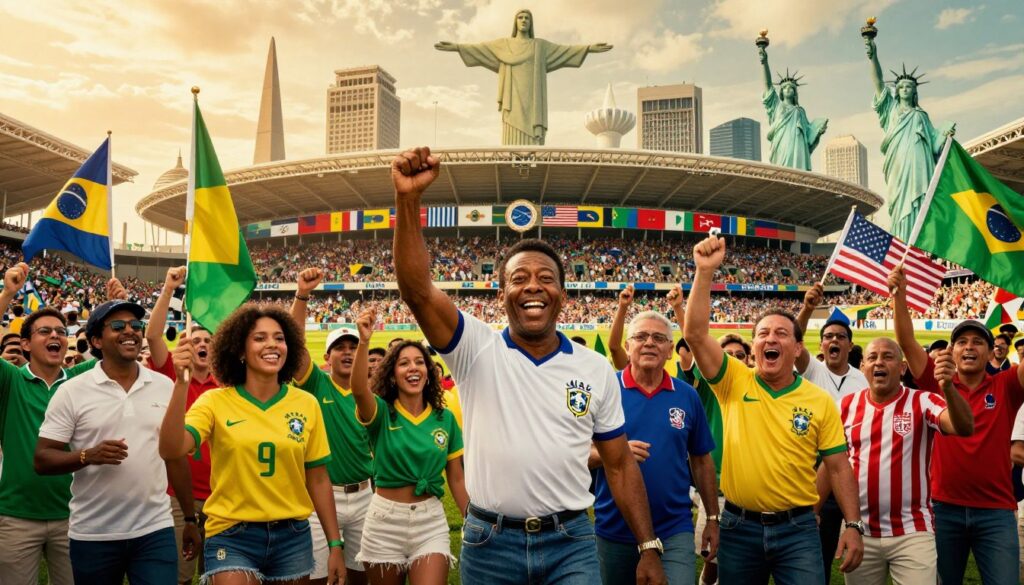
The global impact of a football icon transcends borders and cultures. His influence stretched from his home in Brazil to the United States, paving the way for international stars to join the league. By playing in various countries, he demonstrated that the sport could unite people from different backgrounds.
His presence in the United States helped establish a new era for the sport, leading to the growth of professional teams across the country. He was more than just a player; he became a symbol of hope and excellence for millions who watched his games.
As noted by the International Olympic Committee, he was named Athlete of the Century, solidifying his legacy. His impact remains unmatched, as he continues to be recognized as one of the most important figures in the history of football.
| Achievement | Details | Significance |
|---|---|---|
| Athlete of the Century | Named by the IOC | Recognized for global impact |
| Influenced Players | Franz Beckenbauer and Carlos Alberto | Joined NASL due to his impact |
| Symbol of Hope | Inspiration for millions | Elevated the sport’s profile |
Conclusion
The legacy of a three-time world champion in football sets the gold standard for excellence. His journey from a small town in Brazil to the global stage inspires young players everywhere. By mastering the beautiful game, he transformed the sport into a global phenomenon.
His contributions to his team and unwavering commitment to the sport have left an indelible mark on history. We celebrate his life and career, recognizing him as the greatest player to ever grace the pitch in a major tournament.
FAQ
How many titles did Pelé win in the World Cup?
What was Pelé’s impact on the 1958 World Cup?
How did Pelé’s early life influence his football career?
What challenges did Pelé face during the 1966 World Cup?
What were some of Pelé’s iconic moments in the 1970 World Cup?
How did Pelé contribute to soccer’s popularity in the United States?
What legacy did Pelé leave in club football?
How did Pelé’s style of play influence future generations?
Related Articles
1958 FIFA World Cup | 1970 FIFA World Cup | Brazil at the World Cup | All-Time World Cup Top Scorers | 10 Greatest Goals in World Cup History