
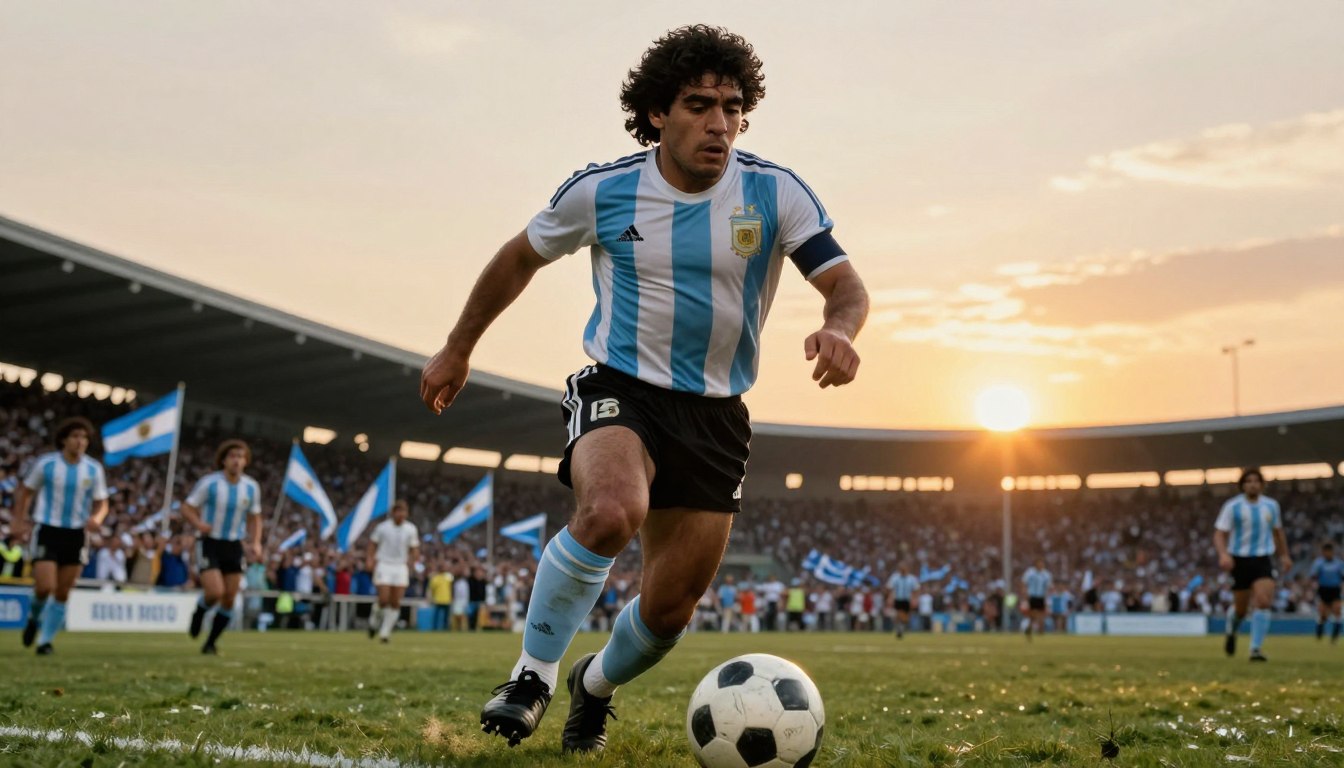

Born on October 30, 1960, in Lanús, Argentina, Diego Armando Maradona is celebrated as one of the sport’s greatest players. His influence on the game is unmatched, particularly on the grand stage of the international tournament. This ultimate guide delves into his legendary career, highlighting how he transformed the sport.
Maradona’s iconic number 10 jersey became synonymous with his vision, ball control, and leadership. His tactical brilliance allowed him to dominate the tournament, guiding his team to incredible success. From humble beginnings in Buenos Aires, he rose to global fame, creating unforgettable moments that secured his legacy in football history.
Join us as we revisit the memorable 1986 tournament, where Maradona’s skills shone brightly, making him a lasting symbol of pride for Argentina. His journey is not just about football; it’s a story of passion, determination, and triumph.
Key Takeaways
- Maradona’s impact on football is profound and lasting.
- His leadership and skills redefined the way the game is played.
- The 1986 tournament remains a highlight of his career.
- His journey from Buenos Aires to global stardom is inspiring.
- Maradona continues to symbolize Argentine pride in sports.
Introduction to a Football Legend
The story of a football legend begins with a young boy from Lanús, who would captivate the world. Known for his extraordinary skills, he remains a central figure in world cup history. His unique ability to maneuver with a low center of gravity allowed him to outshine larger opponents.
Throughout his career, he was celebrated as an advanced playmaker, excelling in the classic number 10 position. His contributions to the sport have left an indelible mark, inspiring fans and athletes alike. The legend of his performances in the world cup continues to resonate decades after his peak.
As we explore his journey, we will delve into the specific attributes that made him a free kick specialist and a leader capable of changing any game.
“Football is the most important of the least important things in life.”
| Attribute | Description | Impact |
|---|---|---|
| Agility | Low center of gravity | Outmaneuvered larger players |
| Playmaking | Advanced vision and creativity | Created scoring opportunities |
| Leadership | Inspiring presence on the field | Motivated teammates |
Early Life and the Making of the Golden Boy
In the heart of Argentina, a future football icon entered the world on October 30, 1960. Raised in Villa Fiorito, a shantytown on the outskirts of Buenos Aires, he faced many challenges. Despite these hardships, his immense talent shone through from a young age.
At just eight years old, a scout recognized his potential. This led him to join the youth team of Argentinos Juniors in 1969. His exceptional skills earned him the nickname El Pibe de Oro, or The Golden Boy, a title that would follow him throughout his career.
During his time with the youth squad, he showcased remarkable abilities, leading the team to an impressive 141 undefeated games. His talent was undeniable, and on October 20, 1976, he made his professional debut for Argentinos Juniors, just ten days shy of his 16th birthday.
| Event | Date | Significance |
|---|---|---|
| Birth | October 30, 1960 | Born in Lanús, Argentina |
| Joined Youth Team | 1969 | Started at Argentinos Juniors |
| Nickname | Throughout Career | El Pibe de Oro |
| Professional Debut | October 20, 1976 | At 15 years old |
The Road to International Stardom
In the world of football, few journeys are as compelling as that of a young boy from Lanús, destined for greatness. His debut for the Argentina national team came in February 1977, marking the start of an illustrious international career.
He quickly gained recognition by winning the 1979 FIFA World Youth Championship in Japan. During this tournament, he was awarded the prestigious Golden Ball trophy, showcasing his extraordinary talent.
Despite his early success, he faced a setback when he was dropped from the squad for the 1978 world cup held in his home country. This experience, however, only fueled his determination to succeed.
His development as a player during these formative years prepared him for the immense pressure of representing his nation on the global stage. The transition from a local star to an international icon was marked by his consistent performance for both club and country.
| Milestone | Date | Significance |
|---|---|---|
| First Cap | February 1977 | Debut for Argentina national team |
| World Youth Championship | 1979 | Won in Japan, awarded Golden Ball |
| 1978 World Cup | 1978 | Not selected for the squad |
Diego Maradona World Cup: Iconic Moments and Matches
In the annals of football history, few matches are as legendary as the one that showcased the incredible talents of a young player from Argentina. The 1986 quarter-final against England was a turning point, filled with drama and unforgettable moments.
One of the most talked-about events was the infamous Hand of God goal. Using his fist, the player scored, leaving the world in shock. Just minutes later, he produced the Goal of the Century, dribbling past five defenders over 60 meters. This incredible feat showcased his unparalleled skill and vision.
This match remains one of the most discussed events in football history due to the contrasting nature of his two goals. The Hand of God incident sparked intense debate, yet the second goal solidified his reputation as the most gifted player of his generation.
Every game he played in that tournament served as a masterclass in individual skill, tactical awareness, and sheer determination to win.
The 1986 World Cup Triumph: A Transformative Journey
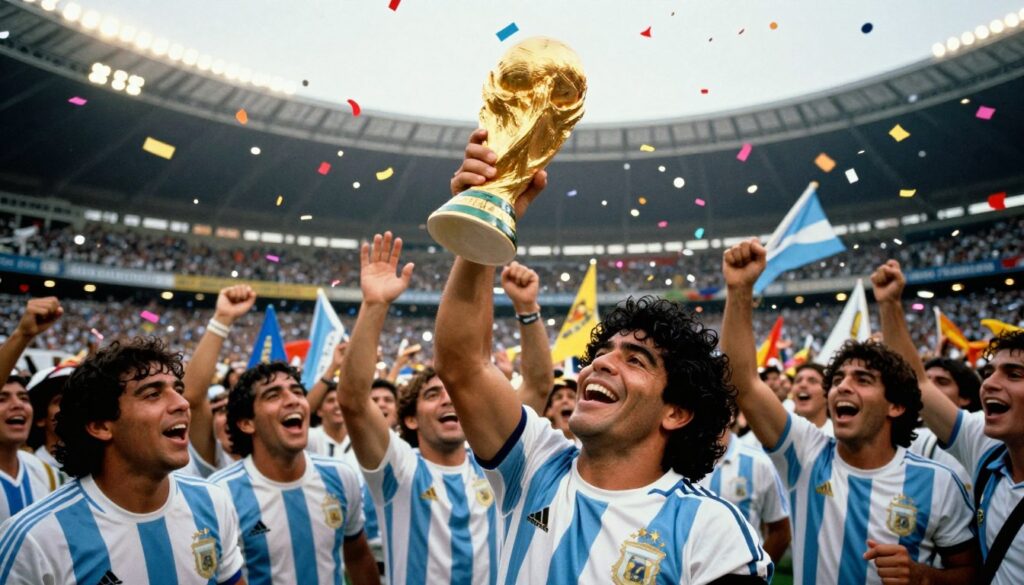
The 1986 World Cup marked a pivotal moment in football history, showcasing the brilliance of a young Argentine captain. Leading his team to a historic victory over the formidable side of West Germany, he displayed unmatched skill and determination.
As captain, he was involved in all three goals during the final match, proving his role as the ultimate leader on the pitch. His performance throughout the tournament earned him the Golden Ball, confirming his status as the best player in the competition.
This victory against West Germany in the final remains the defining moment of his international career and a source of national pride. The triumph transformed the landscape of football, as he single-handedly carried his team to the top of the world stage.
Tactical Genius: Maradona’s Creative Influence on the Game
In the realm of football, few players have redefined their positions as profoundly as this Argentine legend. Operating in the classic number 10 role, he brought a unique blend of vision and creativity to the game. His remarkable ability to control the ball and orchestrate plays set him apart from his peers.
His low center of gravity allowed him to keep the ball glued to his feet, making it nearly impossible for defenders to dispossess him. This skill was particularly evident during the world cup, where he consistently drew multiple defenders toward him. This created space for his teammates to exploit, showcasing his understanding of team dynamics.
Beyond scoring, he was a master of the final pass and a dangerous free kick specialist. Coaches and players today still study his tactical approach, aiming to emulate his style. His influence on the game is enduring, proving that creativity and vision can transform football.
“The ball is the most important thing in football.”
| Attribute | Description | Impact |
|---|---|---|
| Vision | Ability to see plays develop | Dictated game pace |
| Ball Control | Low center of gravity | Difficult to dispossess |
| Playmaking | Creating space for teammates | Enhanced team performance |
Comparing Eras: Maradona and Modern Football Legends
The legacy of football’s greatest players often sparks debate among fans and analysts alike. Comparing legends like Lionel Messi and his predecessors reveals much about their impact on the game.
When examining the careers of Diego Maradona and Messi, analysts frequently focus on their contributions during the prestigious tournaments. While Messi has celebrated numerous successes, Maradona’s unique ability to elevate his entire team stands out.
This comparison highlights how different eras in football history have shaped expectations for elite players. Many experts argue that both Messi and Maradona possess a similar level of technical genius, despite the vastly different tactical environments they faced.
Ultimately, both athletes are pillars of football history, with their legacies significantly defined by their performances on the grand stage of the world cup.
Impact on Club Football: A Dual Legacy
A football icon’s legacy extends beyond international tournaments to his club endeavors. Throughout his career, he played for several iconic teams, including Boca Juniors, Barcelona, and the historic side of Napoli.
He was the first player to set the world record transfer fee twice, moving to Barcelona in 1982 and then to Napoli in 1984. His time at each club was marked by intense passion and a desire to win, often mirroring his intensity in the international tournament.
Despite the challenges he faced at various clubs, his ability to influence the outcome of a match remained consistent throughout his career. His legacy at the club level is just as significant as his achievements on the global stage, cementing his status as a global icon.
Napoli Years: Elevating a Team and a City
In the vibrant city of Naples, a football legend emerged, changing the fate of a club forever. Arriving in 1984, he quickly became a savior for Napoli, a team that had never won a league title. His impact was immediate and profound.
In 1987, he led the team to their first Serie A title, sparking massive celebrations throughout Naples. Fans rejoiced for a week, marking a historic moment for the city. His partnership with stars like Careca and Bruno Giordano helped secure a second league title in the 1989-90 season.
The legacy he left at Napoli was so significant that the stadium was renamed the Stadio Diego Armando Maradona in 2020, honoring his contributions. His success at the club level provided a perfect contrast to his achievements in the international tournament, showcasing his versatility as a player.
Controversies and Off-field Challenges
Throughout his career, the journey of this football legend was often marred by personal struggles and controversies that shaped his public image. His time in Italy was particularly tumultuous, as he faced significant challenges, including a ban for cocaine use. This issue not only impacted his performance but also kept him away from the pitch during the 1994 world cup.
Despite these setbacks, he demonstrated resilience by returning to the sport as a manager. He took the helm of the national team during the 2010 world cup in South Africa. This tenure was a major media event, highlighting his enduring connection to the team and the fans.
These moments of adversity are part of his complex story. They illustrate the highs and lows of a life lived in the public eye, reminding us that even legends face challenges.
Cultural Impact: Maradona’s Enduring Image in Argentina
In the bustling neighborhoods of Buenos Aires, a legend was born, embodying the spirit of a nation. More than just a footballer, he is a cultural symbol of Argentina, representing the hopes and dreams of its people.
His story is deeply intertwined with the identity of the country. Murals depicting his image can be found across Buenos Aires, serving as constant reminders of his contributions to the world cup and the joy he brought to fans.
Whenever Argentina celebrates its sporting achievements, his name is invoked. This connection illustrates the profound emotional bond between the player and the people of his beloved country.
- He is a central part of the national consciousness.
- His legacy resonates deeply with fans of all ages.
- His impact goes beyond football, inspiring unity and pride.
International Recognition and Iconic Awards
The accolades and honors he received are a testament to his extraordinary impact on the game. Throughout his career, he garnered numerous awards, including the prestigious Golden Ball for his performance at the 1986 world cup.
His recognition extends beyond individual accolades. He is consistently ranked among the greatest players in history by organizations like AIPS and renowned magazines such as FourFourTwo.
This international recognition underscores his unique talent and the way he changed the course of football forever. Many aspiring players credit his influence as a primary reason for their own success on the global stage.
The awards he collected throughout his time in the sport serve as a permanent record of his dominance and lasting legacy.
Shaping Football Tactics: Maradona’s Revolutionary Style
A revolutionary force in football, this iconic player transformed the way teams approached the game. Known for his exceptional dribbling skills and low center of gravity, he maneuvered past defenders with ease.
His style forced teams to adapt their defensive tactics whenever they faced him in a world cup game. Coaches developed specific plans to stop him, often resorting to aggressive challenges to disrupt his rhythm during a match.
His ability to control the ball in tight spaces allowed him to create scoring opportunities out of nothing. This influence extended to how teams structured their midfield, emphasizing the importance of a creative playmaker.
By observing his movement with the ball, one can see how he anticipated the actions of other players, gaining a competitive advantage on the pitch.
Inspiration for Future Generations
The influence of a football legend transcends generations, inspiring young athletes around the globe. His remarkable journey continues to ignite passion in aspiring players who dream of competing on the grand stage.
Coaches today study his dedication and technical mastery. They aim to teach the next generation the essence of the game. Even after his time on the pitch, highlights of his performances serve as lessons in the beauty and complexity of professional football.
Many young players strive to emulate the passion he displayed for his team. This quality resonates deeply with those who wish to follow in his footsteps. His legacy ensures that he remains a relevant figure in the game for many years to come, influencing how it is played.
| Aspect | Description | Impact |
|---|---|---|
| Inspiration | Influences young players | Motivates future talent |
| Training Methods | Legacy in coaching | Shapes modern practices |
| Passion | Emotional connection | Drives player dedication |
Lessons Learned from a Storied Career
The remarkable journey of a football icon offers invaluable lessons for aspiring athletes. His career, spanning from 1976 to 1997, exemplifies the pressures of fame and the importance of resilience in the game.
From a young boy in Argentina to a champion, his story shows that talent must be paired with immense hard work. Throughout his time in the spotlight, he faced incredible success alongside personal challenges that tested his character.
Aspiring players can learn from his ability to perform under pressure, even when the entire world was watching his every move. His career remains a powerful example of how one individual can change the course of history through dedication to the sport.
| Aspect | Lesson | Impact |
|---|---|---|
| Resilience | Overcoming challenges | Strengthened character |
| Hard Work | Talent combined with effort | Achieved greatness |
| Performance Under Pressure | Staying focused | Enhanced reputation |

Conclusion
Looking back at a storied career, we recognize a player who not only defined an era but also inspired generations. Diego Maradona remains the most influential figure in world cup history, having redefined what it means to be a football legend.
His performance in the 1986 tournament stands as the greatest individual display in the history of the world cup. We have explored how his tactical genius and personal journey shaped the game for future generations of players and fans.
His legacy is not just about the goals he scored, but about the passion he brought to every game he played. As we look back at his time on the pitch, it is clear that his impact on the world cup will never be forgotten.
FAQ
What made the 1986 tournament so special?
How did his early life influence his career?
What were some key moments in his international career?
How did he impact club football?
What are some controversies associated with him?
How is he viewed in modern football?
What lessons can future players learn from his career?
Related Articles
1986 FIFA World Cup | The Hand of God: Maradona 1986 | Argentina at the World Cup | Maradona vs Messi: The Legacy Debate | 10 Greatest Goals in World Cup History