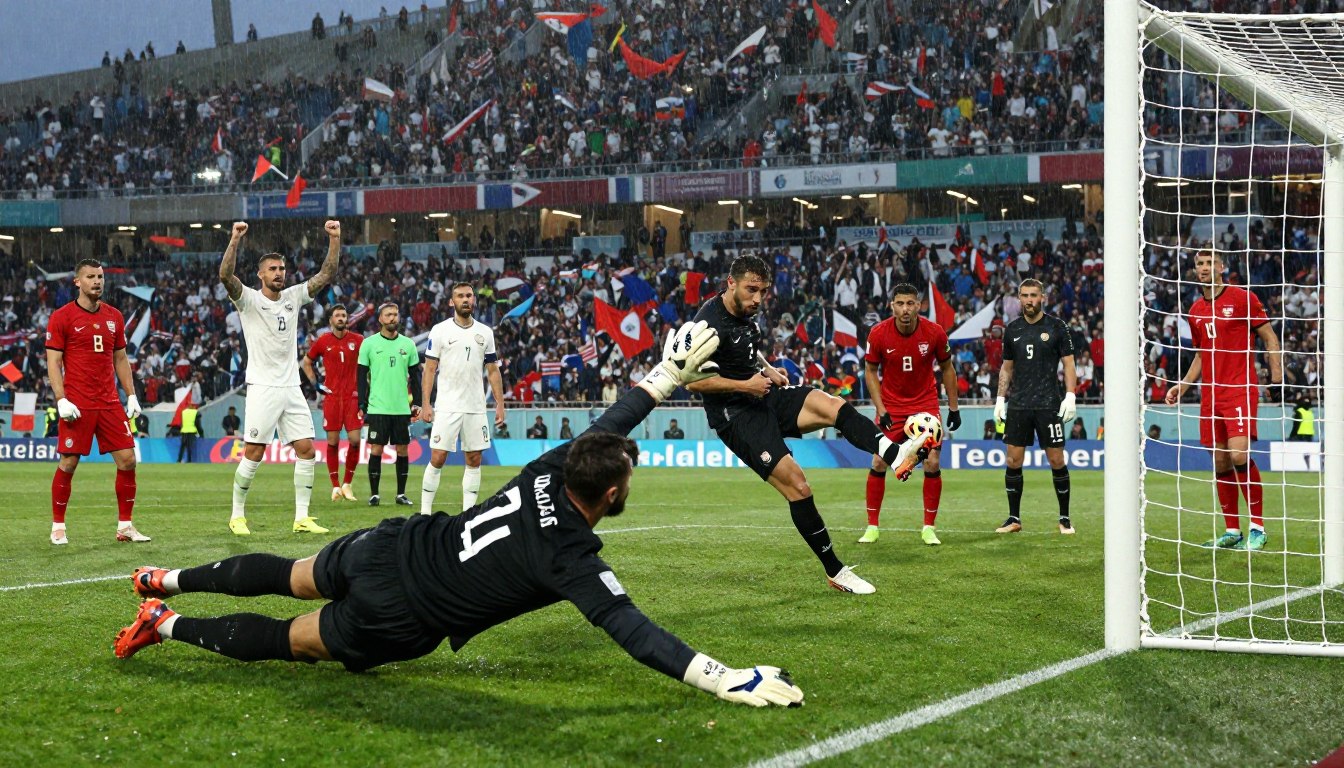

The FIFA tournament has seen its fair share of thrilling moments, but few can match the intensity of the penalty shootouts. Since their introduction in 1978, these high-stakes situations have captivated fans and defined the careers of many players. The first penalty shootout in the history of this prestigious event took place on July 8, 1982, in Seville, setting the stage for countless dramatic moments.
With a total of 35 shootouts recorded in the tournament’s history, each one represents a nail-biting conclusion to knockout matches. The 2022 tournament in Qatar featured a record five shootouts, highlighting the escalating drama that accompanies these decisive moments. This ultimate guide will delve into the most unforgettable performances and pivotal moments that have shaped the narrative of the world cup final.
From the inaugural match to recent tournaments, these shootouts have provided fans with unforgettable memories. Join us as we explore the statistics, records, and psychological strategies that make the penalty shootout a unique and exhilarating aspect of the tournament.
Key Takeaways
- There have been 35 intense shootouts since the format was first adopted in 1978.
- Each shootout represents a high-stakes game that can define a player’s career.
- The shootout has evolved into a dramatic way to decide the tournament’s champion.
- From 1982 to 2022, these moments have created some of the most memorable highlights.
- This guide offers insights into the statistics and strategies behind these decisive moments.
Introduction: An Ultimate Guide to Legendary Shootouts
There are few scenarios in sports as electrifying as the conclusion of a football match that leads to a shootout. This ultimate guide explores the fascinating history of the world cup penalty shootout, a format that has decided the fate of many teams since its introduction in 1978.
In the 1982 semi-final, the clash between West Germany and France marked a pivotal moment in world cup history. It was the first time a shootout determined the outcome of a match in this prestigious tournament. FIFA introduced this method to eliminate the reliance on drawing lots, ensuring a more thrilling conclusion.
Even the 2022 final between Argentina and France showcased the drama that these moments can create. While some critics argue that shootouts depend on luck, the skill and pressure faced by players are immense.
- We analyze how the world cup final has been shaped by these high-pressure moments.
- Join us as we break down the statistics, records, and iconic players who have faced the pressure of the world cup.
- These shootouts remain the most dramatic conclusion to a football game, whether in a round of 16 match or the final.
Evolution of Penalty Shootouts in the World Cup
In the realm of football, the way we conclude matches has transformed dramatically. Before the introduction of the penalty shootout in 1978, knockout matches that ended in a tie after extra time were resolved through the drawing of lots or replays. This often led to confusion and dissatisfaction among fans.
The International Football Association Board (IFAB) officially adopted the penalty shootout format for the 1978 World Cup tournament. This pivotal change marked a new era in world cup history. The 1982 tournament was the first time the shootout was utilized to determine a match outcome, showcasing its impact on the sport.
As the rules evolved, FIFA recognized the need to manage crowded schedules while maintaining the integrity of the competition. Today, every penalty taken in the tournament is under standardized conditions, reflecting the pressures players face during these critical moments.
- Before 1978, FIFA relied on drawing lots or replays to decide tied matches.
- The adoption of the penalty shootout changed the tournament forever.
- The 1982 World Cup final and semi-final were the first to use this format.
- Rule changes have refined the shootout, ensuring fairness and excitement.
- Understanding this evolution helps fans appreciate the pressure players endure.
Key Rules and Procedures of World Cup Penalty Shootouts
Understanding the rules of a penalty shootout is crucial for appreciating the drama it brings to the tournament. The format ensures that every game has a clear winner, adding to the excitement of the match.
The referee tosses a coin to determine which goal will be used and which team takes the first kick. Each team sets the order of their five kickers, and all players must be on the pitch at the end of the match.
Should the score remain tied after the initial five kicks, the sudden death mechanism comes into play. This has occurred twice in world cup history, requiring additional rounds until one team scores and the other misses.
As an example, the 2022 World Cup final showcased this when Argentina triumphed after Gonzalo Montiel converted the fourth kick, ending the shootout early.
- The standard format for a world cup penalty shootout requires each team to take five kicks, with the winner decided by the most goals.
- Every world cup penalty must be taken from the 11-meter mark, with only the goalkeeper defending the goal during the shootout.
- The rules for the world cup penalty shootout ensure that every game has a clear winner, even if the match ends in a draw.
- Law 10 of the Laws of the Game specifies the procedure for kicks from the penalty mark to determine the outcome of a match.
Iconic Moments: The Inaugural Shootout and Its Impact
The drama of football matches often reaches its peak during decisive moments, especially when a shootout is involved. The 1982 semi-final between West Germany and France is a prime example of this intensity. After a thrilling 3-3 draw, the match went to the first-ever World Cup penalty shootout.
In this historic event, Harald Schumacher emerged as a hero, saving two crucial penalties. Horst Hrubesch sealed the victory by scoring the winning penalty, propelling West Germany to the final. This match is also infamous for a controversial challenge by Schumacher on French player Patrick Battiston, adding to the drama.
The shootout featured a total of 12 penalties, making it one of the highest counts in the tournament’s history. This inaugural event set the standard for future penalty shootouts, demonstrating the format’s potential for high drama.
- The 1982 semi-final was the first match decided by a shootout.
- Harald Schumacher’s saves became legendary, securing West Germany’s place in the final.
- This match remains a cornerstone of World Cup history, illustrating how a shootout can change a game’s outcome.
- We analyze the impact of this first shootout on the evolution of the format in the tournament.
- The drama of this shootout is still a hot topic among football fans today.
| Event | Details | Significance |
|---|---|---|
| Match | West Germany vs. France | First-ever World Cup penalty shootout |
| Final Score | 3-3 after extra time | Set the stage for shootouts in future tournaments |
| Hero | Harald Schumacher | Saved two penalties |
| Winning Penalty | Horst Hrubesch | Secured West Germany’s place in the final |
| Total Penalties | 12 | One of the highest counts in history |
1990s Drama: When Shootouts Defined the Tournament
The 1990s marked a transformative decade for the tournament, where shootouts became the defining moment in many crucial matches. This era saw intense drama unfold, particularly during high-stakes moments that kept fans on the edge of their seats.
In the 1990 World Cup, Argentina faced Yugoslavia in a gripping shootout that highlighted the tension of the moment, with five penalties missed by both teams. The semi-final clash between West Germany and England further exemplified this pressure, as the Germans emerged victorious and eventually claimed the title.
Fast forward to the 1994 World Cup final, where Brazil faced Italy. The match was decided by a single penalty kick, with Roberto Baggio missing the crucial shot that altered the course of football history. This decade also saw teams focus on the psychological aspects of the shootout, refining their strategies for kicker order and mental preparation.
Finally, the 1998 World Cup featured Argentina defeating England in a round of 16 shootout, adding another chapter to their storied rivalry. The drama of the 1990s proved that even the best teams could be eliminated by a single missed kick.
Modern Era: Breakthrough Shootouts in the 2000s and Beyond
The modern era of football has introduced thrilling narratives, particularly in the context of decisive moments like penalty shootouts. The 2006 World Cup final showcased Italy’s remarkable comeback against France. After a tense match, Italy triumphed in the shootout, redeeming themselves after their 1994 loss.
Fast forward to 2022, when Argentina faced France in a dramatic final. Lionel Messi led his team to victory, scoring his penalty during the shootout. This match highlighted the growing trend of shootouts in modern tournaments, with a record five occurring in 2022.
Moreover, Croatia has emerged as a consistent force, winning all four of their penalty shootouts in the 2018 and 2022 tournaments. This underscores the importance of preparation and strategy in the contemporary game.
Modern goalkeepers, like Emiliano Martínez, have also adopted psychological tactics to gain an edge during these high-pressure moments. The evolution of penalty shootouts has become a central part of the drama that defines the tournament.
Stats and Records in World Cup penalty shootouts
The history of the tournament is filled with records that highlight the significance of penalty shootouts. These statistics not only showcase the drama but also reflect the teams’ abilities under pressure.
Argentina holds the record for the most appearances in these thrilling moments, participating in seven penalty shootouts throughout their history. The excitement peaked during the 1982 semi-final between West Germany and France, where a remarkable 12 penalties were taken, a record for a single shootout.
Only two shootouts in this tournament’s history have reached the sudden death stage after being tied at the end of the initial five kicks. Germany and Croatia have both excelled, maintaining a perfect record by winning all four of their shootouts.
Interestingly, the lowest number of penalties taken in a shootout is seven, a record shared by matches in 1986, 2006, and 2022. These records provide a fascinating look at the evolution of the penalty shootout format and the teams that have mastered it.
- Argentina has the most world cup penalty shootout appearances with seven matches.
- The 1982 semi-final between West Germany and France featured a record 12 penalties.
- We explore the rare instances of sudden death in penalty shootouts.
- Germany and Croatia have won every world cup penalty shootout they have participated in.
- Seven penalties is the lowest number recorded in a shootout, seen in 1986, 2006, and 2022.
Goalkeeper Showdowns: Heroic Saves and Nerve-Wracking Misses
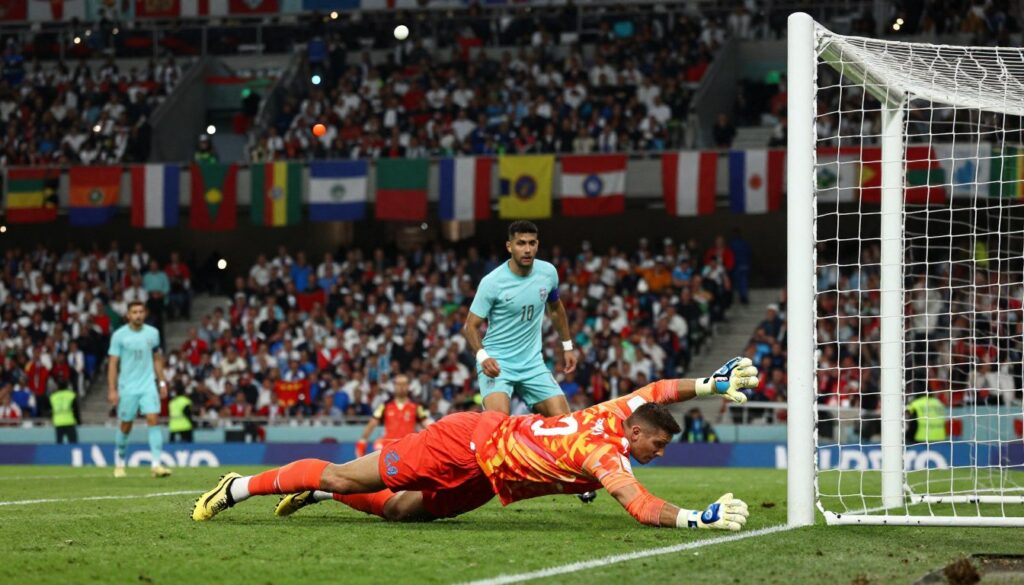
When the match reaches its climax, the spotlight often shines brightest on the goalkeeper, who can become a hero or a villain. The pressure is immense, and their performances can determine the outcome of a match.
Notable goalkeepers have etched their names in world cup history with remarkable saves. For instance, Ricardo saved three penalties for Portugal against England in the 2006 tournament. Similarly, Danijel Subasic made three crucial saves for Croatia against Denmark in 2018.
In 2022, Dominik Livakovic matched this feat, saving three penalties against Japan in the round of 16. These performances highlight the goalkeeper’s vital role during a penalty shootout.
Additionally, Sergio Goycochea set a high bar by saving four penalties in the 1990 tournament. Only Oleksandr Shovkovskiy and Yassine Bounou have kept clean sheets in a shootout, showcasing the rarity of such feats.
- The goalkeeper is often the most important player during a penalty shootout.
- Heroic performances can turn the tide in crucial matches.
- Each shootout features a duel between the kicker and the goalkeeper.
- A single save can change the outcome of any knockout match.
| Goalkeeper | Match | Penalties Saved |
|---|---|---|
| Ricardo | Portugal vs. England (2006) | 3 |
| Danijel Subasic | Croatia vs. Denmark (2018) | 3 |
| Dominik Livakovic | Croatia vs. Japan (2022) | 3 |
| Sergio Goycochea | Argentina (1990) | 4 |
| Oleksandr Shovkovskiy | Ukraine (2006) | Clean Sheet |
Individual Bravery Under Pressure
When the pressure mounts, players are called to show remarkable courage, especially in decisive matches. The stories of legends like Roberto Baggio and Lionel Messi illustrate the intensity of these moments.
Baggio’s miss in the 1994 final against Brazil is a heart-wrenching reminder of how high the stakes can be. In contrast, Messi has consistently delivered, scoring in all three of his World Cup penalty shootouts. His calmness under pressure sets an example for aspiring players.
Luka Modric has also faced the challenge, scoring in three shootouts to help Croatia advance. Similarly, Ivan Rakitic’s ability to net the winning penalty in two shootouts during the 2018 tournament highlights the importance of mental strength in football.
- Individual bravery is tested during every World Cup penalty shootout, where legends like Roberto Baggio have faced both triumph and heartbreak.
- Lionel Messi has shown incredible consistency in the World Cup penalty shootout, scoring in every match he has participated in for Argentina.
- We explore the defining moments of players who have stepped up to take a penalty in the World Cup final or a crucial knockout match.
- Ivan Rakitic’s ability to score the winning penalty in two different World Cup matches highlights the importance of mental strength in football.
- These stories of individual bravery define the World Cup penalty shootout and make it one of the most compelling aspects of the tournament.
Tactical Innovations and Psychological Strategies
In the competitive arena of football, tactical innovations have become essential during critical moments. The evolution of the penalty shootout has led teams to explore various psychological strategies to gain an edge. One notable change was the 2016 rule that introduced a coin toss to determine which goal is used. This aimed to minimize potential crowd bias and level the playing field.
Goalkeepers often employ distraction techniques, such as gesturing or delaying the kicker. Research indicates that these tactics can reduce the goal conversion rate by up to 20 percent. This psychological warfare adds another layer of complexity to the shootout.
Teams are now meticulous in planning the order of their penalty takers. They often place their most confident players in the first three spots to maximize their chances of success. Understanding these tactical and psychological strategies provides a deeper insight into the world cup penalty shootout and its complexity.
- Tactical innovations in the shootout include psychological strategies by both goalkeepers and takers.
- Teams adapt to high-pressure situations by analyzing data to determine the best order for penalty takers.
- The 2016 rule change regarding goal selection is an example of how the format has evolved.
- Goalkeepers use distraction techniques to gain a psychological advantage over opposing players.
Controversies and Unforgettable Shootout Decisions
Controversies have always surrounded the thrilling moments of the tournament, particularly during decisive shootouts. These events have led to heated debates and unforgettable memories in world cup history.
One notable incident occurred in the 1994 quarter-final between Sweden and Romania. This dramatic shootout ended 5-4 after a crucial save by Thomas Ravelli, showcasing how a single penalty can alter a team’s fate.
Another memorable moment was the 1986 match between Brazil and France. It involved a controversial goal where the ball rebounded off the post and the goalkeeper, raising questions about the rules of the game.
Spain’s shocking loss to Morocco in the 2022 shootout, where they failed to score a single penalty, remains one of the most debated performances. Such instances highlight the intense pressure players face during these moments.
Controversies often arise from referee decisions or goalkeeper movements, prompting updates in the Laws of the Game. The 1990 World Cup saw the Republic of Ireland and the Netherlands separated by drawing of lots, a practice later replaced by shootouts.
- Controversies have been a part of the world cup penalty shootout since its inception, leading to important lessons for FIFA and the teams.
- The 1994 world cup match between Sweden and Romania is a prime example of how a single penalty can decide the fate of a tournament.
- We discuss the most debated moments in world cup history, including the controversial goals and the pressure of the sudden death format.
- Lessons learned from these shootouts have helped improve the rules of the world cup penalty, ensuring a fairer game for all teams.
- These unforgettable decisions have shaped the world cup penalty shootout into the dramatic and high-stakes event that we see today.
| Match | Outcome | Controversy |
|---|---|---|
| Sweden vs. Romania (1994) | 5-4 (Shootout) | Crucial save by Thomas Ravelli |
| Brazil vs. France (1986) | Controversial Goal | Ball rebounded off post |
| Spain vs. Morocco (2022) | 0-3 (Shootout) | No penalties scored |
| Republic of Ireland vs. Netherlands (1990) | Drawing of Lots | Old practice replaced by shootouts |
Looking Ahead: The Future of World Cup Shootouts
As we look towards the future, the dynamics of penalty shootouts in football are set to evolve significantly. The 2026 World Cup will feature more teams, which may lead to an increased number of these thrilling moments. With this expansion, fans can expect even more drama during knockout stages.
Data analytics are becoming essential for teams preparing for the tournament. Coaches are now analyzing detailed player profiles to enhance their strategies. This trend suggests that teams will develop new tactics for the penalty shootout, making it an even more critical aspect of the game.
Moreover, goalkeepers are likely to refine their psychological tactics to gain an edge. As the game evolves, FIFA continues to monitor the rules of the shootout, ensuring fairness and excitement for fans. The future will undoubtedly bring more nail-biting moments.
- The future of the shootout will likely involve advanced data analytics for better preparation.
- New strategies and tactics are expected to emerge from players and coaches alike.
- As the tournament expands, the frequency of shootouts may increase.
- These moments will always test nerves, providing fans with unforgettable experiences.
- We look forward to seeing how the shootout shapes the history of football in the coming years.
Conclusion
In the landscape of football, few events can rival the tension of a decisive shootout. The world cup penalty shootout has become the most dramatic way to decide the outcome of a tied match in the tournament. From the inaugural match in 1982 to the thrilling moments of the 2022 final, these shootouts have delivered iconic memories.
We have explored the statistics, records, and psychological strategies that make the penalty shootout a unique challenge for players. Whether it is a round of 16 game or the world cup final, the shootout remains the ultimate test of skill and bravery.
As we reflect on the world cup history, it is clear that the penalty shootout will continue to define the tournament’s legacy. Thank you for joining us on this journey through the most dramatic moments ever played on the global stage.
FAQ
What is a penalty shootout?
How many kicks does each team get in a shootout?
What happens if a match goes to a penalty shootout?
Who decides the order of penalty takers?
Are there any specific rules for the goalkeeper during a shootout?
What is sudden death in a penalty shootout?
Can a player be substituted during a shootout?
What are some famous penalty shootouts in history?
How do teams prepare for a penalty shootout?
What psychological factors come into play during a shootout?
Related Articles
5 Greatest World Cup Finals | Every World Cup Final | 1990 FIFA World Cup | 10 Greatest Goals in World Cup History | Complete World Cup History