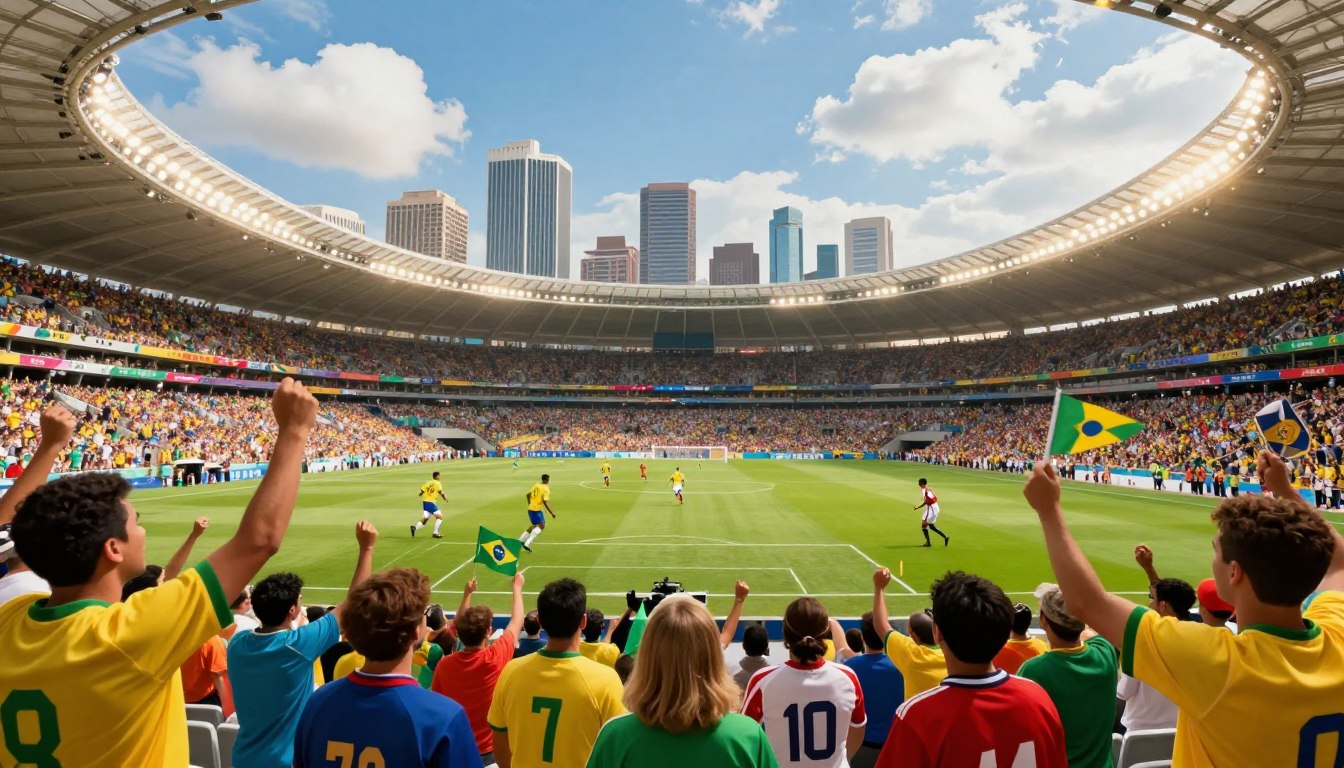

The summer of 1994 marked a significant chapter in sports history as the United States welcomed the globe to its shores for a major soccer tournament. From June 17 to July 17, fans from all corners of the world gathered to witness an exhilarating display of talent and competition. This event was not just a tournament; it was a celebration of culture and sport.
With 24 national teams vying for glory, the tournament showcased the best of international football. It also served as a turning point for soccer in the United States, a nation previously unsure about the sport’s popularity. Brazil emerged victorious, claiming their fourth title in a nail-biting final that ended in the first penalty shootout in the tournament’s history.
In this article, we will delve into the historical significance of this iconic event. We will explore the matches, the players, and the cultural shifts that defined that unforgettable summer.
Key Takeaways
- The 1994 tournament was a pivotal moment for soccer in the United States.
- Brazil’s victory added a fourth star to their impressive legacy.
- The event drew fans from around the world, showcasing international unity.
- This World Cup changed perceptions of soccer in America.
- The tournament’s matches and players left a lasting impact on the sport.
Introduction to the 1994 FIFA World Cup
In the summer of 1994, the United States opened its doors to a thrilling soccer tournament that captured the world’s attention. This championship was the 15th edition, featuring 24 teams from five confederations competing in a total of 52 matches.
Every game played during this remarkable tournament contributed to a record-breaking total attendance of 3,587,538 spectators across nine different host cities. The average attendance reached an impressive 68,991 per game, setting a record that still stands today.
This tournament is widely regarded as one of the most successful in the history of the fifa world due to its massive commercial and cultural impact. Organizers worked tirelessly to ensure that each match was a spectacle, elevating the profile of the sport on a global stage.
Moreover, the world cup provided a unique platform for emerging nations to showcase their talent against established powerhouses. By the end of the tournament, millions of new fans were introduced to the excitement of professional soccer, creating an unforgettable atmosphere throughout the month of play.
Background and Historical Context
In a bold move, FIFA decided to host the prestigious tournament in the United States, aiming to elevate soccer’s profile in a country where it was not the leading sport. This decision was not made lightly; it was a strategic gamble that sought to expand the sport’s reach.
Historically, the United States had previously bid for the 1986 tournament, which ultimately went to Mexico. FIFA officials believed that bringing the world cup to the U.S. would ignite a long-term interest in soccer among the American public.
This period in world cup history also marked a shift towards more attacking styles of play, catering to global television audiences. Critics were skeptical, questioning whether a nation without a professional league could host such a massive event. Yet, despite these doubts, the tournament proved its resilience, exceeding all financial and attendance expectations.
“Understanding the background of this event is essential to appreciating how the world cup evolved into the global phenomenon we see today.”
The Bid Process: How the United States Won Hosting Rights
In a historic decision, the United States was awarded the rights to host a major soccer tournament. This event marked a pivotal moment for the sport in America. The voting took place in Zurich on July 4, 1988, and the U.S. won in a single round.
Three nations submitted bids: the United States, Brazil, and Morocco. Ultimately, the FIFA Executive Committee chose the U.S. due to its readiness and existing infrastructure. The American bid showcased fully functional stadiums, which set it apart from competitors that required extensive new construction.
- The U.S. spent approximately $500 million to prepare for the tournament.
- The success of the 1984 Summer Olympics in Los Angeles bolstered confidence in the U.S. as a capable host.
- This selection process highlighted the importance of logistical preparedness in hosting a world-class event.
- By winning the bid, the United States committed to fostering a professional soccer environment.
- FIFA recognized the unique opportunity to tap into a vast, untapped market for soccer in the U.S.
Tournament Innovations: New Rules and Regulations
During a memorable tournament, the United States implemented revolutionary rules that changed the dynamics of international soccer. The introduction of the three points for a win system was a significant shift aimed at promoting more attacking football. This new approach encouraged teams to strive for victory rather than settling for draws.
Additionally, the back-pass rule was introduced to enhance the excitement of matches. This rule prevented goalkeepers from picking up deliberate passes from teammates, compelling them to engage more actively in play. These changes were a direct response to the low-scoring, defensive matches that characterized previous tournaments.
FIFA officials believed that these innovations would not only improve the quality of the tournament but also attract a larger television audience. By enforcing these new regulations, the event organizers successfully transformed the way teams approached each match, making the competition more thrilling for fans worldwide.
Venues: The Iconic Stadiums and Cities of the Tournament
Across the United States, iconic stadiums became the backdrop for unforgettable soccer moments. The 1994 tournament utilized nine remarkable venues, showcasing the country’s diversity. Among these, the Pontiac Silverdome and the Rose Bowl stood out for their unique contributions.
Highlights of the Pontiac Silverdome and Rose Bowl
The Pontiac Silverdome made history by hosting the first indoor match, where the United States drew 1-1 against Switzerland in front of 73,425 fans. This event set a precedent for future indoor matches in the sport.
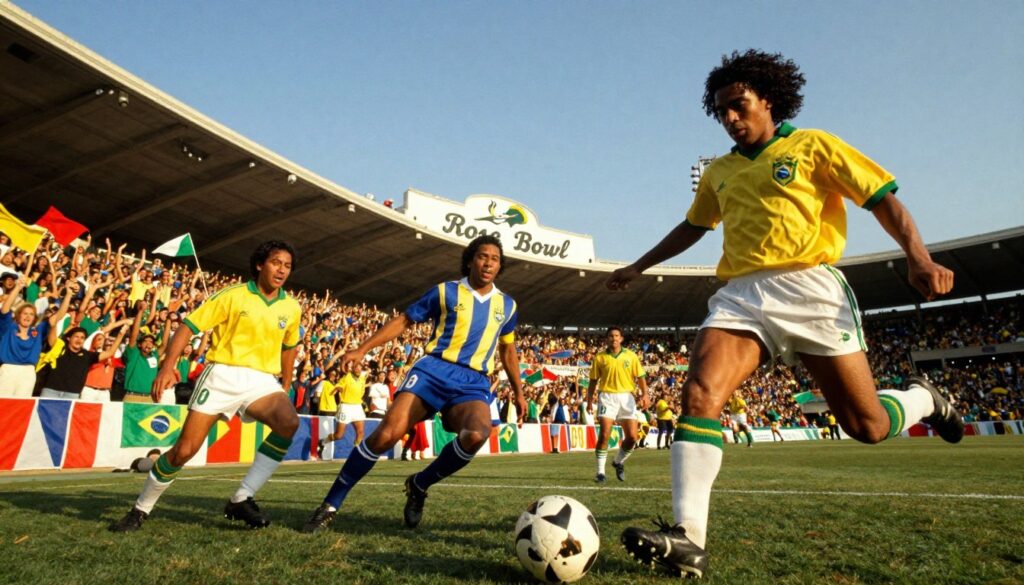
Meanwhile, the Rose Bowl in Pasadena served as the centerpiece of the tournament, hosting eight matches, including the final. It was here that Brazil claimed their fourth title against Italy, creating a lasting memory for fans.
Unique Conditions in Host Cities
Players faced diverse and challenging conditions throughout the tournament. Some venues experienced extreme heat and humidity, testing their physical endurance. Organizers had to manage these unique climates, influencing match scheduling to accommodate European television audiences.
Each venue was selected for its capacity and infrastructure, ensuring the world cup could host massive crowds. Fans traveling to these venues experienced the rich culture of the United States while enjoying the highest level of international football.
USA’s Hosting Experience: Overcoming Skepticism and Setting Records
The United States defied expectations in 1994 by successfully hosting a major soccer tournament that captivated millions. The total attendance reached an astounding 3,587,538, with an average of 68,991 fans per game. These figures remain the highest in the history of the tournament.
Despite initial doubts about the popularity of soccer, the event drew millions of fans to stadiums in every host city. This achievement not only proved skeptics wrong but also changed the perception of soccer as a niche sport in the country.
Organizers worked diligently to overcome logistical challenges, ensuring that the tournament was accessible and enjoyable for all attendees. The legacy of this hosting experience continues to influence how the United States prepares for future international sporting events.
| Statistic | Figure |
|---|---|
| Total Attendance | 3,587,538 |
| Average Attendance per Game | 68,991 |
| Record Status | Unsurpassed |
1994 FIFA World Cup – Unforgettable Matches and Moments
A thrilling final unfolded in 1994, as two teams battled for glory in a match that would be remembered for ages. The championship match ended in a scoreless draw after 120 minutes of intense play. For the first time in the tournament’s history, the title was decided by a penalty shootout at the Rose Bowl.
Brazil emerged victorious, securing their fourth title after Roberto Baggio missed the decisive penalty for Italy, sending the ball over the crossbar. This match remains one of the most memorable moments in the tournament’s history, showcasing the drama and tension of international football.
Fans around the world watched as the title was decided by the smallest of margins in a high-stakes penalty shootout. The match highlighted the defensive prowess of both teams, who fought hard to keep their opponents from scoring throughout the game.
Every penalty taken during that final was a test of nerves, cementing the legacy of the tournament in the minds of football enthusiasts. The victory for Brazil was a crowning achievement for a team that had waited 24 years to lift the trophy once again.
Analyzing the Draw and Group Stage Drama
The anticipation surrounding the draw for the soccer tournament in the United States was palpable as fans eagerly awaited the matchups. Held at the Las Vegas Convention Center on December 19, 1993, this event featured celebrities like Dick Clark, adding to the excitement.
FIFA implemented specific seeding and geographic restrictions to ensure a balanced group stage for all participating teams. Each group was constructed to prevent teams from the same confederation from meeting too early in the tournament.
The group stage drama began immediately, as teams fought for position to advance to the knockout rounds. Analyzing the draw reveals the complex planning required to organize a tournament of this magnitude across the vast United States.
The FIFA committee ensured that the host nation, the United States, was placed in a favorable position to maximize fan engagement. Every group presented unique challenges, with teams adapting to different climates and travel schedules throughout the stage.
“The draw set the stage for the intense competition that would define the tournament and keep fans on the edge of their seats.”
Remarkable Matches: From Group Stage to Knockout Rounds
In a remarkable display of skill, the United States men’s national team took center stage during the group stage of the international soccer tournament. Their opening match against Switzerland at the Pontiac Silverdome ended in a 1-1 draw, providing a solid start for the host team.
A stunning 2-1 victory over a heavily favored Colombia team at the Rose Bowl remains one of the most iconic moments for the American team. These matches demonstrated the growing competitiveness of the United States team on the world cup stage.
- Fans were captivated by the intensity of every match, as teams battled for survival in the group stage and beyond.
- The fifa world cup provided a platform for underdog teams to challenge the established giants of international football.
- Each match in the knockout rounds brought increased pressure, as teams knew that one mistake could end their tournament run.
- The journey from the group stage to the final was filled with unforgettable performances that defined the spirit of the tournament.
Legendary Performances: Players Who Defined the Tournament
A vibrant display of skill and passion unfolded in the United States during the soccer tournament, captivating fans worldwide. Legendary players like Romário and Bebeto led Brazil to victory, showcasing their incredible talent throughout the competition.
Oleg Salenko made history by scoring five goals in a single match against Cameroon, a record that still stands in tournament history. His performance not only highlighted his skills but also brought attention to the thrilling nature of the event.
Hristo Stoichkov was another standout player, netting six goals and helping Bulgaria reach the semifinals. These players defined the tournament with their exceptional talent, scoring crucial goals that determined the outcome of many matches.
The tournament was graced by icons who left an indelible mark on the sport through their performances. Fans were treated to a display of world-class football as these players pushed their teams to the limit in every round.
The record-setting achievements of Salenko and Stoichkov remain highlights of the tournament, celebrated by fans and historians alike. Every player who participated contributed to the legacy of the event, inspiring future generations of athletes.
Refereeing and Game Management: A New Era in Fair Play
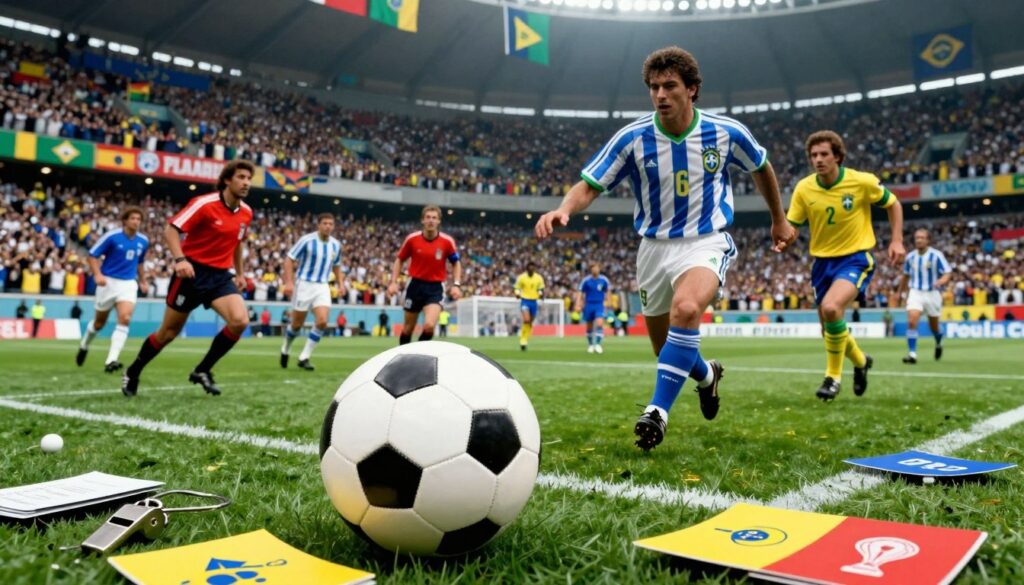
In a groundbreaking move, referees donned colorful shirts, ushering in a fresh era of match officiating. This change aimed to enhance visibility and add style to the officiating process during the tournament.
Referees were tasked with enforcing stricter rules to promote fair play. One notable regulation was the back-pass rule, which fundamentally altered how the game was played. This rule encouraged more dynamic and attacking football, making matches more exciting for fans.
A significant moment occurred when Italian goalkeeper Gianluca Pagliuca received a red card, becoming the first of his position to be sent off in a match. This incident underscored the importance of proper officiating in maintaining the integrity of the tournament.
Each referee faced the challenge of officiating under immense pressure, where every decision could influence the outcome of a match. The introduction of new card regulations helped curb aggressive play, ensuring that the competition remained a showcase of skill.
Fans and players alike observed how the referee influenced the flow of the game. Fair play became a central theme of the tournament, and this commitment to professional officiating elevated the status of the event.
Broadcast Breakthroughs: Transforming Media Coverage in the USA
The media landscape transformed dramatically during the iconic tournament, marking a new era for soccer coverage in the United States. For the first time, all 52 matches were broadcast in English without commercial interruption during live action. This innovation allowed American viewers to experience the flow of the game as it was intended, without the frequent breaks common in other sports.
The introduction of the FIFA anthem at the start of every match added a sense of ceremony and prestige to the tournament. Broadcasters worked diligently to optimize the time of each match for both local fans and international audiences in Europe. These broadcast breakthroughs were essential in building a new audience for soccer in the United States during the tournament.
Furthermore, the quality of the coverage helped to demystify the sport for new fans, explaining the rules and tactics of the game. Every match was presented with high production values, reflecting the importance of the event on the global stage. The legacy of this media transformation continues to influence how soccer is presented to American audiences today.
Economic Impact: Record Attendance and Financial Success
The economic landscape of the United States transformed dramatically during the soccer tournament, highlighting its potential for financial success. The event was a resounding achievement, marking the most profitable tournament in history at that time.
Record attendance figures played a crucial role in this success. Millions of fans flocked to stadiums, spending money on tickets, travel, and local services. This influx significantly boosted local economies across host cities.
Moreover, the tournament set financial milestones that future hosts would consider when planning their own events. By organizing the tournament with a budget of only $500 million, the United States demonstrated that success did not require excessive spending on infrastructure.
The economic legacy of the soccer tournament provided a blueprint for sustainable event management. It proved that such events could generate interest and growth in soccer within the country.
“The financial success of the tournament was a key factor in the long-term growth of soccer in the United States.”
Long-term Impact: Transformation of Soccer in America
The hosting of a prestigious soccer tournament in the United States paved the way for profound changes in the sport’s popularity. The event was a catalyst for the birth of Major League Soccer (MLS), which began operations in 1996, just two years after the tournament.
This transformation was a direct result of the commitment made to FIFA during the bidding process. As soccer gained traction, cultural shifts in U.S. sports became evident. The sport began to find its place alongside established leagues like the NFL and MLB.
Over the years, the impact of the tournament has grown. The United States now boasts a thriving professional soccer landscape. The tournament proved that there was a massive, untapped audience for the sport in the country.
Today, the legacy of the 1994 tournament is visible in the success of MLS and the increasing popularity of soccer among American youth. Every year, the influence of the tournament continues to shape the development of soccer talent across the United States.
The long-term impact of the event has been profound, changing the way Americans perceive and participate in the sport.
| Aspect | Impact |
|---|---|
| MLS Formation | Founded in 1993, began in 1996 |
| Popularity | Increased significantly |
| Cultural Shift | Soccer gains foothold in U.S. sports |
Records and Controversies: Moments That Made History
The tournament in the United States was marked by unforgettable records and controversies that captivated fans around the globe. The abrupt exit of Diego Maradona after a failed drug test remains one of the most shocking moments in the history of the event.
Young talent also made headlines, with 17-year-old Rigobert Song becoming the youngest player to be sent off in a world cup match. These moments of drama added to the complexity of the tournament, showing that even the greatest players are subject to the rules.
Every record set during the tournament serves as a reminder of the high stakes involved in the competition. Controversies were handled by officials to ensure that the integrity of the tournament was maintained throughout the matches.
Fans continue to discuss these historical moments, which have become an integral part of the lore of the fifa world. The balance of triumph and controversy is what makes this tournament such a fascinating subject for football fans.
Conclusion
This historic tournament not only brought soccer to the forefront in the United States but also created unforgettable memories for fans worldwide. By breaking attendance records and fostering the growth of Major League Soccer, the event left a lasting legacy in American sports history.
Brazil’s fourth title victory remains a defining moment, showcasing the skill and passion that characterize the tournament. The innovations introduced, such as the three-point system, have permanently improved the quality of the game.
We hope this guide has provided a comprehensive look at the matches, players, and cultural impact of this unforgettable event. The United States proved its capability as a host, setting a high standard for all future editions of the world cup.
FAQ
What year did the tournament take place?
Which country won the championship?
Where were the matches played?
How many teams participated in the tournament?
What was the attendance like during the matches?
Were there any notable performances by players?
What innovations were introduced during the tournament?
How did the tournament impact soccer in the U.S.?
What was the significance of the penalty shootout in the final?
How did the bid process work for hosting rights?
Explore More World Cup History
← 1990 FIFA World Cup | 1998 FIFA World Cup → | Ronaldo R9 at the World Cup | Brazil at the World Cup | Most Dramatic Penalty Shootouts