
The summer of June 1998 marked a pivotal moment in sports history. The tournament, hosted by France, was the 16th edition of the men’s football championship. It brought together 32 nations, all competing for glory in a newly expanded format. The atmosphere was electric, with fans uniting to celebrate their teams.
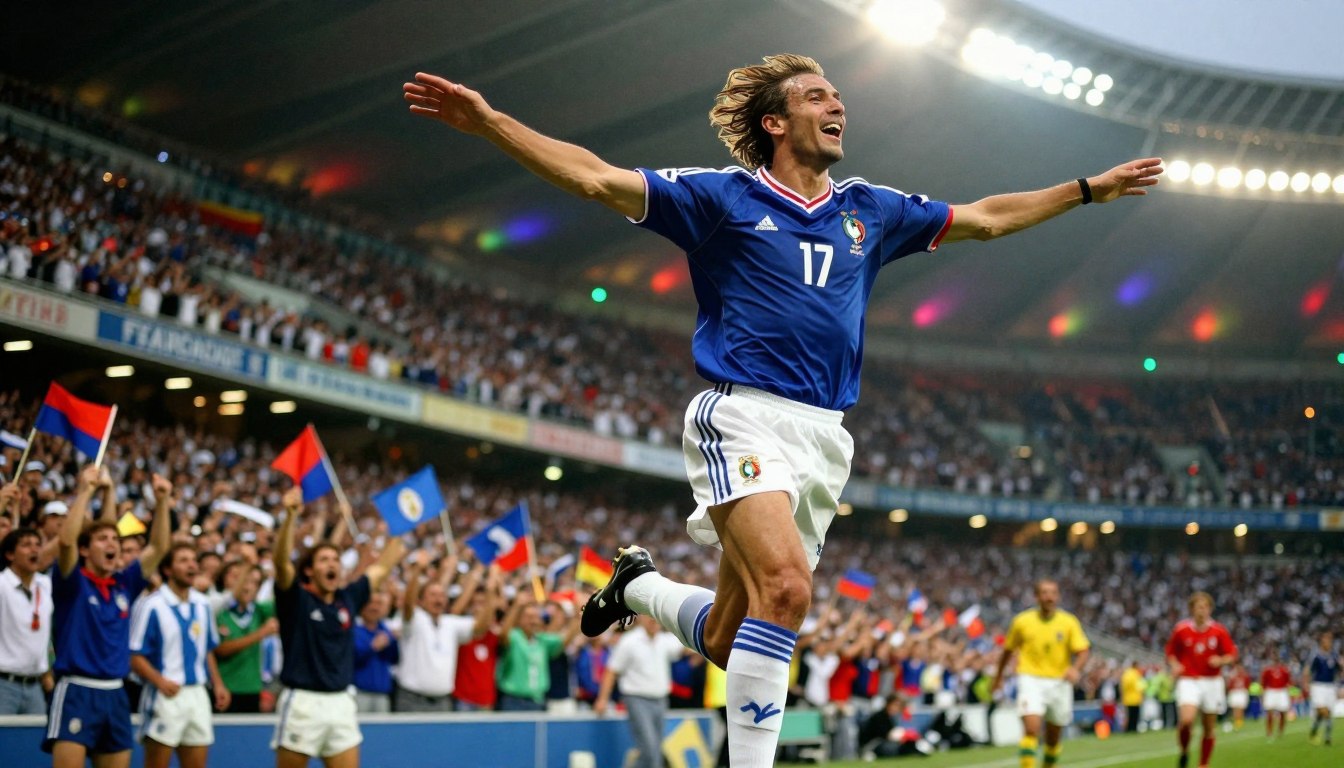
France emerged victorious, securing their first title by defeating Brazil 3-0 in a stunning final at the Stade de France in Saint-Denis. This victory was not just about the trophy; it was a celebration of national pride and unity. The host nation captivated the world, showcasing talent and passion that transcended the sport.
One of the standout stars was Zinedine Zidane, who became a national hero by scoring two crucial headers in the final. His performance not only defined the match but also marked the beginning of his legendary career. The tournament remains a defining moment for football, remembered for its dramatic matches and unexpected results.
Key Takeaways
- The tournament was held in France, marking its first hosting since 1938.
- 32 nations competed, making it a memorable event for fans worldwide.
- Zinedine Zidane’s two goals in the final were pivotal for France’s victory.
- The celebrations united the country beyond just football.
- This championship is a significant moment in the history of international football.
Overview of the 1998 FIFA World Cup Tournament
During the summer of 1998, football fans were treated to an unforgettable tournament. Spanning 32 days, this event became the longest of its kind until the upcoming expansion in 2026. The excitement was palpable as 32 teams from five confederations showcased their skills.
Held between 10 June 1998 and 12 July 1998, the tournament was a display of top-tier talent. Matches took place across 10 vibrant host cities, ensuring that the thrill of the competition was felt nationwide.
Throughout the tournament, a total of 171 goals were scored in 64 matches, averaging an impressive 2.67 goals per match. This made the event not only memorable but also a high-scoring spectacle that delighted fans.
- The tournament featured a significant expansion from the previous 24-team format.
- Every match contributed to an atmosphere that defined the late nineties in sports.
- This event set a new standard for future international football competitions.
Historical Context and Host Selection
The selection of the host for the 1998 event was a significant moment in football history. On 2 July 1992, the FIFA executive committee gathered in Zürich, Switzerland, to make this crucial decision. France was chosen as the host country, winning against Morocco by a narrow margin of 12 votes to 7.
However, this decision was not without controversy. Investigations later revealed that the selection process was tainted by bribery. Chuck Blazer admitted to facilitating payments during the bidding process, which cast a shadow over the tournament.
Despite these issues, the tournament proceeded as planned. France prepared extensively from June 1998 through July 1998, eager to welcome fans from around the globe. This historical context adds complexity to the 1998 event, making it a topic of interest for sports historians.
Qualification Journeys and Unexpected Debuts
In the lead-up to the tournament, the qualification process unveiled thrilling surprises. A total of 174 teams from six confederations competed fiercely for a coveted spot. This intense regional play concluded in November 1997, setting the stage for an exciting event.
Four nations made their debut in the tournament: Croatia, Jamaica, Japan, and South Africa. Their participation brought fresh energy and enthusiasm to the competition. Each team added unique flair, making the matches even more captivating.
While many established teams secured their spots, the qualification phase had its share of surprises. The Czech Republic was the highest-ranked team that failed to qualify, leaving fans in disbelief. Conversely, Nigeria entered the tournament as the lowest-ranked team, proving that rankings do not always dictate success during the intense matches of June 1998.
The tournament structure allowed for diverse representation, showcasing teams from various continents competing for the title through July 1998. These qualification stories highlighted the global reach of the event, making it a memorable chapter in football history.
Expansion of the Tournament: From 24 to 32 Teams
The expansion of the tournament in 1998 reshaped the landscape of international football. This edition introduced a major format change, expanding the number of participating teams from 24 to 32 for the first time. This significant adjustment was made to accommodate the growing popularity of the sport.
To manage this increase, the tournament was organized into eight groups, each containing four teams. This structure ensured a fair and competitive group stage for all participants. By the time the tournament began in June 1998, the new format was ready to test the endurance and tactical depth of the teams.
The top two teams from each group advanced to the knockout stage, maintaining high stakes through July 1998. This reform was essential for managing the 64 matches played, providing a clear path for teams to reach the final.
Stadiums and Venues: The Heart of the Tournament
In 1998, the heart of the tournament was undoubtedly the impressive stadiums across France. The centerpiece was the newly constructed Stade de France in Saint-Denis, built at a cost of ₣2.67 billion. This venue hosted both the opening match and the thrilling final, making it a symbol of national pride.
Other iconic venues, such as the Stade Vélodrome in Marseille and the Stade Félix-Bollaert in Lens, were upgraded to meet the demands of the expanded tournament. These improvements ensured that fans enjoyed a world-class experience.
Construction on the national stadium began in December 1995 and wrapped up in November 1997, just in time for the kickoff in June 1998. These infrastructure investments not only served the tournament but also left a lasting legacy for future sporting events through July 1998.
The 1998 FIFA tournament utilized 10 different cities, spreading the passion for football across the nation. Each stadium was carefully selected to provide a vibrant atmosphere for the millions of fans who traveled to watch the matches.
- The centerpiece of the tournament was the newly constructed Stade de France.
- Regional venues like the Stade Vélodrome and Stade Félix-Bollaert were upgraded for the event.
- Infrastructure investments created modern facilities for future events.
- The tournament spanned 10 cities, enhancing the national celebration of football.
- Each stadium contributed to a world-class experience for fans.
FIFA World Cup Draw: Seeding, Pots, and Controversies
On December 4, 1997, the stage was set for the tournament during the draw held at Stade Vélodrome. This event was not just a formality; it involved football legends like Franz Beckenbauer and George Weah, adding to the excitement.
FIFA employed a complex seeding process based on results from the last three tournaments and recent world rankings. Teams were allocated into four pots to create balanced groups. However, this process wasn’t without its controversies.
“The draw was fixed,” admitted Michel Platini in 2018, revealing that the arrangement aimed to keep France and Brazil apart until the final.
This manipulation raised questions about the integrity of the event. Despite these issues, the draw set the stage for matches that would captivate the world from June 1998 to July 1998.
The FIFA World Cup draw remains a fascinating case study in how tournament organizers navigate the complexities of international football logistics.
Thrilling Group Stage Matches and Standout Performances
In June 1998, the group stage delivered a series of electrifying encounters that set the tone for the tournament. The excitement kicked off with France defeating South Africa 3-0 in their opening match on 12 June 1998. This victory not only energized the home crowd but also established France as a strong contender.
Meanwhile, teams like Saudi Arabia faced tough competition. The group stage matches tested the resolve of every nation participating in the tournament. By the end of the group stage in late June 1998, the top two teams from each of the eight groups had secured their spots in the knockout rounds.
The 1998 FIFA tournament saw high-scoring games and tactical battles that kept fans engaged throughout the initial phase. As the tournament progressed toward July 1998, the group stage results determined which nations would continue their quest for the coveted trophy.
Standout performances during these early matches established the favorites and provided the narrative for the remainder of the 1998 FIFA World Cup.
Knockout Rounds: Drama and Tension
As the tournament progressed, the knockout rounds revealed the true essence of competition. Each match became a battle for survival, heightening the stakes for every team involved. The excitement reached new heights as fans witnessed thrilling performances.
Round of 16 Highlights
In the Round of 16, France faced Paraguay in a tense match that ended with a dramatic golden goal, securing a 1-0 victory. This narrow escape set the tone for their upcoming challenges.
Quarterfinal and Semifinal Clashes
Brazil showcased their dominance by defeating Chile 4-1, while they edged past Denmark in a nail-biting 3-2 clash. France, on the other hand, overcame Italy in a tense penalty shootout. The semifinals featured a classic encounter where France triumphed over Croatia, thanks to Lilian Thuram’s two goals, sealing a 2-1 victory.
These knockout matches, played through early July 1998, highlighted the high stakes and pressure inherent in the tournament. Every game was a testament to the players’ determination to advance toward the ultimate goal of winning.
The Final Showdown: Brazil vs France
On a historic evening in July 1998, two football giants clashed for glory. The final match took place on 12 July at the iconic Stade de France, where France faced Brazil in front of 80,000 enthusiastic spectators.
France delivered a stunning performance, led by the legendary Zinedine Zidane. He scored two crucial headers in the first half, giving France a commanding lead over the defending champions. Despite the pre-match mystery surrounding Ronaldo’s fitness, Brazil struggled to penetrate the French defense throughout the match.
Match Overview and Tactical Breakdowns
Emmanuel Petit sealed the victory with a late goal, ensuring a 3-0 triumph for France. This final remains one of the most discussed matches in history, particularly for the tactical discipline displayed by the French squad.
Key Moments and Game-Changing Plays
- The final was a showcase of strategy and skill from both teams.
- Zinedine Zidane’s two headers set the tone early in the match.
- Brazil’s inability to adapt led to their downfall.
- Emmanuel Petit’s late goal capped off a historic victory.
- The atmosphere at the Stade de France was electric, marking a memorable end to the tournament.
France’s Triumph: A Nation United in Celebration
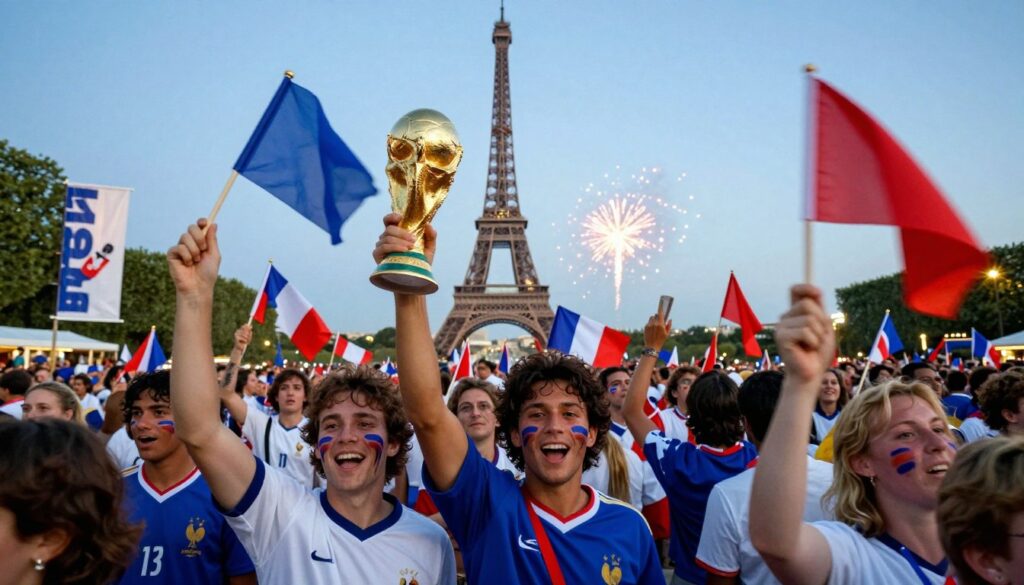
In the wake of a historic victory, France found itself united in joy and celebration. Following the remarkable achievement of winning the championship, hundreds of thousands of supporters gathered in Paris to revel in this momentous occasion.
The atmosphere was electric as the team paraded through the Champs-Élysées, marking a significant place in the nation’s cultural history. The national pride was palpable, as fans from all walks of life came together to celebrate this historic win.
This victory served as a unifying moment for the country, showcasing the power of football to inspire collective happiness. The joy felt in July 1998 was the culmination of weeks of anticipation that began when the tournament kicked off in June 1998.
France’s triumph was not merely a sporting achievement; it became a social phenomenon that left a lasting impact on the collective memory of the French people. The celebrations were a testament to the power of football to create moments of pure, unadulterated happiness.
Zinedine Zidane: The Maestro’s Impact on the Tournament
Zinedine Zidane’s influence during the tournament was nothing short of remarkable. He emerged as the defining player of the 1998 FIFA World Cup, despite facing a suspension early in the tournament. After receiving a red card against Saudi Arabia, many wondered if he could return to form.
However, Zidane proved his critics wrong. He scored two iconic headers in the final against Brazil, showcasing his ability to perform under immense pressure. His remarkable talent and determination shone brightly throughout the tournament.
Even after his suspension in June 1998, Zidane led his team to glory by July 1998. His legacy from the 1998 FIFA World Cup established him as one of the greatest midfielders to ever play the game. Fans and critics alike continue to analyze his impact, noting how his vision and skill elevated the entire French squad.
His contribution to the World Cup remains a cornerstone of his career, symbolizing the peak of his influence on international football.
Innovations and Rule Changes: Golden Goals and Substitutions
The 1998 tournament introduced groundbreaking innovations that changed the game. This edition was particularly notable for implementing the golden goal rule. This rule famously decided the knockout match between France and Paraguay, adding a thrilling twist to the competition.
Technological upgrades were also a key feature. Fourth officials began using electronic boards for the first time to manage substitutions during matches. These changes were part of a broader effort to modernize the tournament and improve the flow of the game for players and spectators.
By the time the tournament concluded in July 1998, these innovations had become an accepted part of the competition standards. The introduction of these rules in June 1998 reflected FIFA’s commitment to evolving the sport and addressing the needs of the modern game.
These advancements ensured that the 1998 tournament remained at the forefront of footballing innovation and professional standards.
| Innovation | Description | Impact |
|---|---|---|
| Golden Goal Rule | First team to score in extra time wins. | Increased excitement and urgency in knockout matches. |
| Electronic Boards | Fourth officials used electronic boards for substitutions. | Improved clarity and communication during matches. |
| Modernized Gameplay | Rules adapted for a faster-paced game. | Enhanced viewer engagement and player performance. |
Tactical Analysis: Formation, Strategy, and Execution
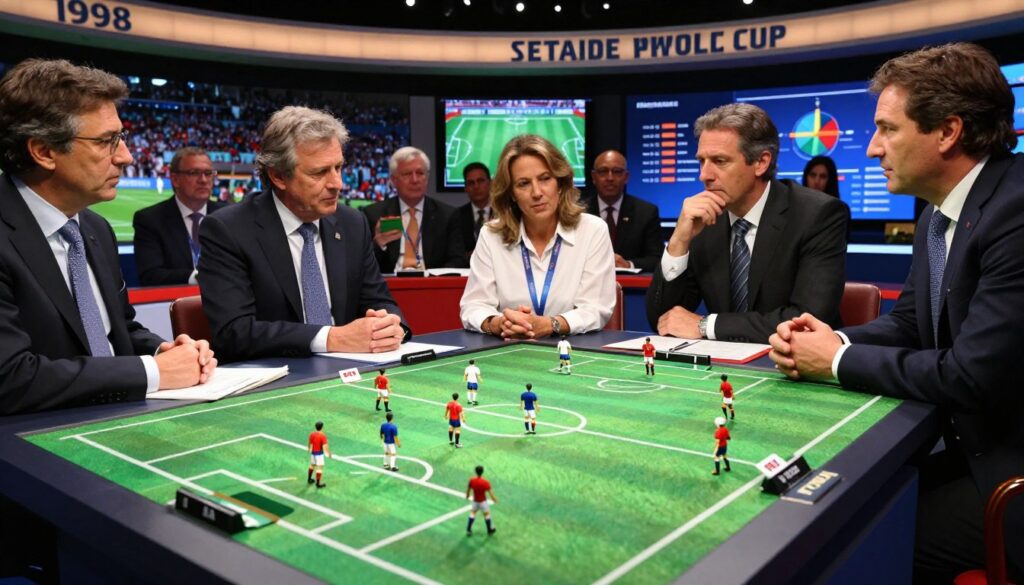
The tactical landscape of the tournament revealed fascinating strategies employed by the competing teams. Teams had to balance offensive flair with defensive stability to succeed. Notably, France utilized a disciplined defensive structure, conceding very few goals throughout the tournament.
In contrast, Brazil relied heavily on the attacking talents of players like Ronaldo, Rivaldo, and Bebeto. This contrast in approaches created a dynamic atmosphere during matches.
Offensive and Defensive Approaches
Tactical analysis of the 1998 tournament reveals that teams prioritized defensive stability. France built their success on a solid backline, which proved essential in critical matches. The 32 teams participating employed various formations to counter the attacking threats posed by world-class strikers.
Coaches had to adapt their strategies quickly during the matches played in June 1998 to survive the intense competition of the group stage. By July 1998, the tactical evolution was evident, as teams became more cautious in the knockout rounds.
The contrast between Brazil’s offensive flair and France’s tactical discipline defined the final match and the overall narrative of the tournament. Understanding these tactical approaches provides deeper insight into why certain teams succeeded while others struggled.
| Team | Strategy | Key Players |
|---|---|---|
| France | Defensive Stability | Zinedine Zidane, Lilian Thuram |
| Brazil | Offensive Flair | Ronaldo, Rivaldo |
| Germany | Balanced Approach | Matthias Sammer, Oliver Bierhoff |
Tournament Statistics: Records, Goals, and Attendance
The tournament’s statistics reveal the remarkable achievements of teams and players alike. The event captured the attention of millions, resulting in impressive attendance figures and standout performances.
Total attendance reached a staggering 2,785,100, averaging 43,517 fans per match. This high turnout highlights the immense popularity of the championship across the globe.
Among the individual accolades, Davor Šuker emerged as the top scorer, netting 6 goals and earning the Golden Boot for his clinical finishing. Meanwhile, Fabien Barthez was recognized as the best goalkeeper, providing a secure last line of defense for the winning French team.
These statistics from June 1998 through July 1998 highlight the individual brilliance that complemented the collective effort of the 32 teams. The tournament also set several records, including the highest number of goals scored in a single edition at the time.
Every record and milestone achieved during the 1998 fifa world serves as a reminder of the high level of competition displayed.
| Statistic | Value | Significance |
|---|---|---|
| Total Attendance | 2,785,100 | Reflects global interest in the event |
| Top Scorer | Davor Šuker (6 goals) | Showcases individual talent |
| Best Goalkeeper | Fabien Barthez | Key to France’s defensive success |
In-depth Analysis: 1998 FIFA World Cup – Strategies and Impact
The 1998 tournament was a defining moment in international football, influencing future competitions. It set new standards for tactical play and team strategies that resonate even today. The competition showcased various formations and strategies that teams utilized to gain an edge over their opponents.
One of the most notable tactical battles was the semifinal clash between Brazil and the Netherlands. Brazil triumphed in a tense penalty shootout, demonstrating the importance of mental fortitude in high-pressure situations. Players like Patrick Kluivert were pivotal, showcasing their skills and tactical awareness throughout the matches.
Moreover, the success of the tournament encouraged further investment in football infrastructure and youth development programs across Europe. France’s victory not only led them to glory in the tournament but also to winning the UEFA Euro 2000, highlighting the long-term influence of their 1998 success.
From the opening matches in June to the final in July, the tournament reshaped the landscape of international football. This analysis confirms that the 1998 event was a turning point for the sport, setting new benchmarks for success and organization.
| Key Influence | Description | Impact |
|---|---|---|
| France’s Success | Victory in the tournament | Led to UEFA Euro 2000 win |
| Tactical Evolution | New strategies and formations | Enhanced competitive play |
| Infrastructure Investment | Focus on youth development | Long-term growth of football |
Conclusion
The unforgettable tournament of 1998 left an indelible mark on the history of football. This event showcased the global reach of the championship and the passion of fans worldwide. From the early days of the tournament to the thrilling final, teams like the United States and South Korea delivered legendary performances.
While we remember past winners like West Germany, the 1998 event firmly established France as a dominant force. Key players, including César Sampaio, demonstrated the skill required to win tournament glory. Looking back, it’s clear that the competition has evolved significantly since those days in June and July.
The legacy of the 1998 tournament continues to inspire future generations of players and fans. Ultimately, it stands as a testament to the enduring power of football to unite the world.
FAQ
What teams participated in the tournament?
Where was the tournament held?
Who won the tournament?
How many matches were played during the tournament?
What was the format of the tournament?
Who were some standout players?
What were some of the memorable matches?
What innovations were introduced during the tournament?
How did the tournament impact football in France?
What were the attendance figures like?
Explore More World Cup History
← 1994 FIFA World Cup | 2002 FIFA World Cup → | Zidane’s World Cup: Glory to Infamy | France at the World Cup | Complete World Cup History