
Zinedine Zidane is a name that resonates deeply in the world of football. Born on June 23, 1972, in La Castellane, Marseille, he became a symbol of excellence in the sport. Over his illustrious career, he earned 108 caps for the French national team, scoring an impressive 31 goals. His journey is not just about statistics; it is about moments that define a player’s legacy.
This guide explores the legendary career of Zidane, highlighting his rise from humble beginnings to global stardom. We will delve into the defining moments of his journey, including his triumph in 1998 and the dramatic events of 2006. Through this exploration, readers will discover how his unique vision, passing, and ball control shaped the history of football.
Join us as we analyze the tactical influence of this iconic player and understand how a single individual can elevate an entire national team. The narrative of Zidane’s career is a testament to the power of passion and skill in the beautiful game.
Key Takeaways
- Discover the journey of a football legend from Marseille to international acclaim.
- Learn about Zidane’s defining moments in major tournaments.
- Understand how his skills shaped the history of the sport.
- Explore the dramatic events that marked the end of his career.
- Gain insights into the tactical influence of a singular player.
Introduction to Zidane’s World Cup Journey
The legacy of this iconic player is woven with moments of brilliance and heartache on the pitch. Throughout his career, he established himself as a world-class player, earning the FIFA World Player of the Year award three times. His achievements are not just numbers; they tell a story of passion and dedication to the game.
Winning the prestigious 1998 Ballon d’Or solidified his status as a central figure in the history of modern football. To truly appreciate his impact, one must examine the tactical insights behind his play. His ability to control the tempo of every major final was remarkable.
Moreover, his knack for creating space where none existed made him the most influential player of his generation. This section sets the stage for a deeper dive into the strategic brilliance that defined his approach to the beautiful game.
Early Beginnings and Rise to Stardom
From the local pitches of La Castellane, a star began to rise in the world of football. Born in a neighborhood filled with passion for the game, Zinedine Zidane honed his skills playing with friends on the streets. His early influences were notable players from Marseille, like Enzo Francescoli and Jean-Pierre Papin, who inspired him to dream big.
At the age of ten, he joined the junior team of US Saint-Henri. This marked the beginning of his formal football education. After spending four years at Cannes, he made his professional debut on May 18, 1989, against Nantes. This was a pivotal moment in his journey.
His breakthrough came at Bordeaux, where he became a key player in Ligue 1. This success ultimately led to his transfer to Italian giants Juventus. These formative years laid the technical foundation that would later define his performance on the world stage.
Defining Moments in the World Cup
Moments in the World Cup can define a player’s career, creating lasting memories for fans. For France, the 1998 tournament was a moment of pure joy. The team triumphed over Brazil with a stunning 3-0 victory at the Stade de France. This match not only secured the trophy but also transformed the midfielder into a national hero.
During the final, he scored two remarkable headers, solidifying his place in football history. His image was even projected onto the Arc de Triomphe, a testament to his impact on the nation.
However, the 2006 tournament told a different story. The final against Italy ended in controversy when the player was sent off in a dramatic moment. Despite this, his exceptional performance throughout the tournament earned him the Golden Ball, recognizing him as the best player of the event.
These contrasting experiences shaped his legacy, showcasing how he could reach incredible heights and face the depths of despair.
| Year | Event | Outcome |
|---|---|---|
| 1998 | Final vs. Brazil | Victory (3-0) |
| 2006 | Final vs. Italy | Red Card |
| 2006 | Awarded Golden Ball | Best Player |
Zinedine Zidane World Cup
Analyzing key moments in the tournament reveals a player who could command the field with authority. The performances of this football legend during major competitions were nothing short of extraordinary.
His inclusion in the 1998 All-Star team highlighted his pivotal role as the primary playmaker for the French national team. Zidane’s ability to dictate the flow of the game was crucial in securing the championship.
During the 2006 tournament, his tactical discipline and vision earned him the prestigious Golden Ball, despite the final’s unfortunate outcome. This accolade recognized him as the best player of the tournament.
Moreover, he utilized his physical presence and technical skill to dominate opponents in high-stakes matches. This analysis offers aspiring strategists a glimpse into how a world-class player manages pressure effectively.
Club Career Highlights Impacting International Form
The club career of this football icon played a crucial role in shaping his international success. His time at Juventus and Real Madrid was pivotal in developing his skills and tactical understanding.
Success with Juventus
At Juventus, Zidane won two Serie A titles between 1996 and 2001. Playing alongside Alessandro Del Piero helped him refine his tactical discipline and defensive resilience. This period was crucial in preparing him for the intensity of international competitions.
The Real Madrid Galactico Era
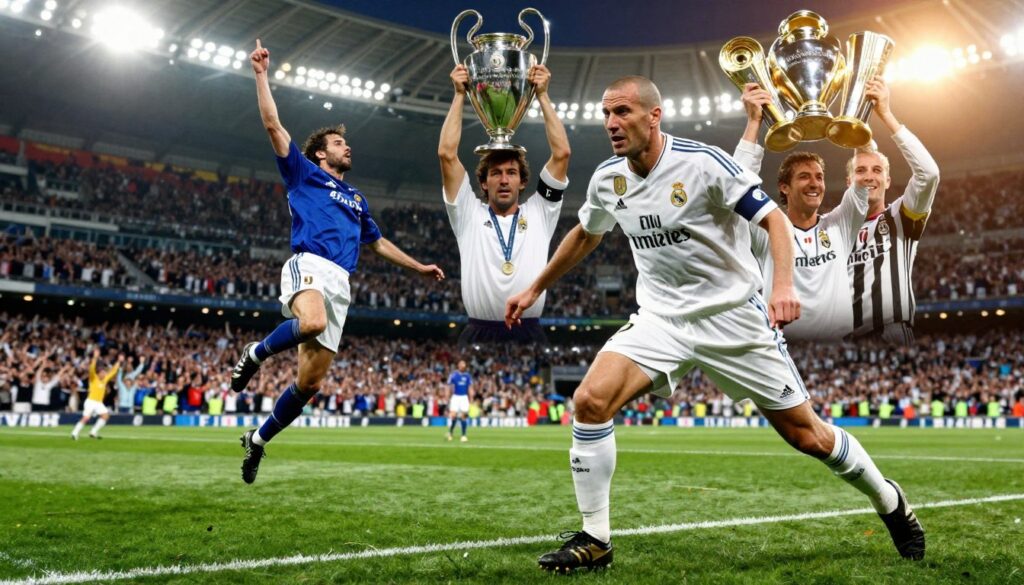
His move to Real Madrid for a world-record fee of 77.5 million euros marked the start of the famous Galactico era. During the 2002 Champions League final, he scored a legendary left-foot volley, a moment etched in football history.
These club experiences were vital for his confidence. By mastering the Champions League, he was well-prepared to lead his country in the world stage, facing elite-level competition with poise.
Evolution of Playing Style Over the Years
The progression of a player’s style in football highlights the intricacies of their development on the field. Zinedine Zidane transitioned from a raw talent at Cannes to a sophisticated playmaker at Juventus. His style evolved over time, becoming a blend of physical strength and the grace of a dancer.
This unique combination made him a challenging opponent to defend against. His ability to create space where none existed became his trademark, allowing him to control the tempo of any match. Observers often described his playing style as balletic and expressive, especially during his peak years.
As he faced the physical demands of the World Cup, his playing style matured. This evolution enabled him to remain effective, showcasing his technical growth throughout his long career.
| Aspect | Early Career | Peak Performance | Legacy |
|---|---|---|---|
| Technique | Raw Talent | Sophisticated Playmaker | Influential Style |
| Physicality | Developing Strength | Balanced Grace | Dynamic Presence |
| Game Control | Emerging Skill | Masterful Control | Timeless Influence |
Strategic Analysis of Extra Time Performances
In high-stakes matches, the ability to perform under pressure is vital. During extra time, Zinedine Zidane showcased remarkable composure, making him a key player in crucial moments. His presence on the field often calmed teammates, allowing them to focus and execute their strategies effectively.
One of the most memorable instances occurred in the 2006 final. After a tense 1-1 draw, the match went to penalties. Zidane’s successful penalty kick early in the game set the tone for the French team. This moment demonstrated his ability to handle pressure and inspire confidence in his teammates.
As we analyze these critical moments, it’s clear that preparation for penalties is essential. The French team worked diligently on their penalty strategies, understanding that such moments could determine their fate in the tournament. Managing the physical toll of extra time also played a significant role, as Zidane maintained peak fitness throughout his career.
This section offers insights into how elite players approach the final minutes of a game, especially when the outcome hangs in the balance.
| Match | Outcome | Key Moment |
|---|---|---|
| 2006 Final | Draw (1-1) | Zidane’s Penalty Kick |
| Quarterfinals | Victory | Crucial Goal |
| Semifinals | Victory | Assist in Extra Time |
Managing Pressure in World Cup Finals
In the realm of football, few players have mastered the art of pressure quite like this remarkable athlete. Managing pressure in a World Cup final requires a unique mental strength that he displayed throughout his international career.
As a player, he understood that every final is a test of character as much as it is a test of skill. This was especially evident during the 1998 final, held in his home country. The expectations of an entire nation rested on his shoulders.
Even in the 2006 final, his ability to score early showed that he was prepared for the intensity of the grand stage. This section offers valuable lessons on how to maintain focus and composure when the stakes of a cup final are at their highest.
- Pressure management is essential for success in finals.
- Every World Cup final tests both character and skill.
- Handling national expectations can define a player’s legacy.
- Scoring early can set the tone for the entire match.
- Staying composed is crucial when stakes are high.
How to Analyze Zidane’s Team Influence
Understanding the impact of a player like Zidane requires a close examination of his role within the team. He was not just a standout player; he was the heartbeat of the French national team.
His collaboration with star teammates, such as Thierry Henry and Patrick Vieira, allowed the team to execute complex attacking patterns during major tournaments. As the primary playmaker, Zidane linked the defense to the attack, ensuring fluid transitions.
Moreover, he ensured that every player understood their role in the overall tactical setup. His leadership style helped maintain team cohesion, even when facing difficult opponents in the tournament.
This section provides a framework for evaluating how a single player can enhance the performance of their entire team.
Tactical Lessons from the 1998 World Cup Final
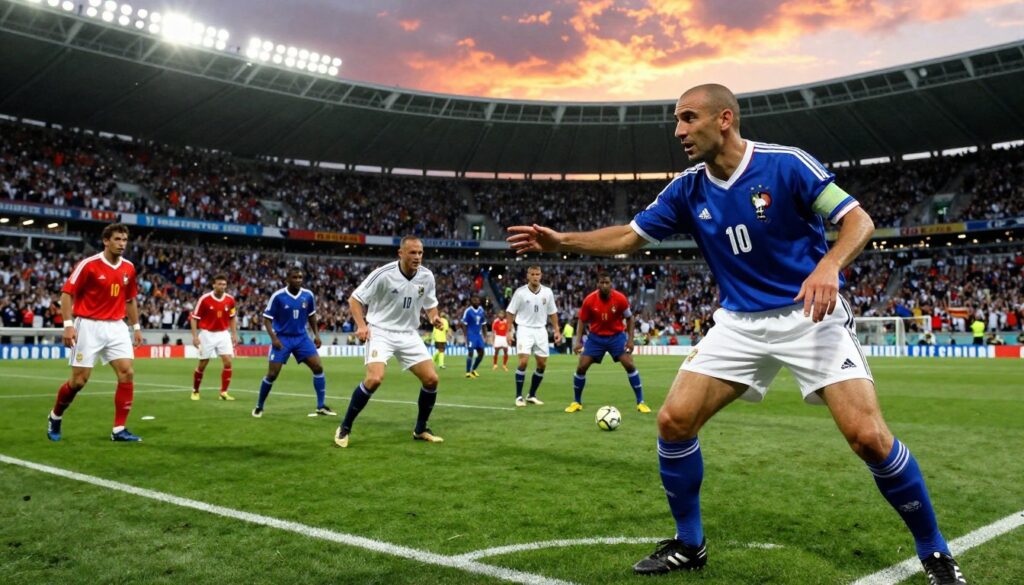
The 1998 final stands as a prime example of tactical excellence in football. This match showcased how strategic planning can lead to victory on the grandest stage. The French team, led by their star player, executed their game plan flawlessly against Brazil.
One of the highlights was the first goal, scored by a header from a corner kick. This moment demonstrated the importance of set-piece execution. It was a turning point that set the tone for the rest of the match.
Set-Piece Mastery and Creative Playmaking
Throughout the game, the player’s creative playmaking abilities allowed the French team to dominate. His movement off the ball created numerous opportunities for his teammates, leading to additional goals. These tactical lessons are crucial for any aspiring player or coach.
- The final was a masterclass in set-piece execution.
- Creative playmaking proved essential for the team’s success.
- Movement off the ball created scoring chances.
- Understanding set-pieces is vital for winning finals.
- Exploiting defensive weaknesses can change the game’s outcome.
| Goal | Type | Significance |
|---|---|---|
| First Goal | Header from Corner | Set the Tone |
| Second Goal | Header | Secured Victory |
| Overall Strategy | Creative Playmaking | Dominated Opponent |
The Famous Red Card: Understanding the Zidane Head-Butt Incident
In the annals of football history, few moments spark as much debate as the infamous incident involving this player. The red card issued during the 2006 final remains one of the most discussed moments in football. This incident not only altered the course of the match but also impacted the legacy of the player involved.
Understanding the Zidane head-butt requires looking at the context of the match and the verbal exchange with Marco Materazzi. In the 109th minute, the tension escalated, leading to a confrontation that would be remembered for years to come.
The French team was forced to finish the game without their star player, a significant blow during such a critical moment. The Zidane headbutt serves as a reminder of the intense emotions that can surface during a high-stakes final.
This section provides a balanced view of the events, focusing on the facts surrounding the confrontation between the two players.
| Minute | Incident | Impact |
|---|---|---|
| 109th | Zidane Head-Butt | Red Card Issued |
| Match Status | Extra Time | Team at Disadvantage |
| Outcome | Match Result | Loss for France |
Legacy of Zidane’s World Cup Career in French Football
The legacy left by this football icon in France is a testament to his remarkable achievements on the global stage. He is remembered as a national hero, especially for his pivotal role in the 1998 victory.
His impact extends beyond just winning; he inspired a new generation of players in French football. As a player, he set a standard for excellence that continues to influence the development of young talent in the country.
Moreover, his performances in multiple tournaments cemented his place in the history of the sport. Zidane’s career helped elevate the profile of French football, making it a dominant force internationally.
This section reflects on how his contributions will be remembered by fans and future players for many years to come.
| Aspect | Impact | Legacy |
|---|---|---|
| 1998 Victory | National Pride | Hero Status |
| Inspiration | New Talent Development | Enduring Influence |
| International Profile | Dominance in Football | Lasting Legacy |
Comparative Insights: Zidane and Contemporary Legends
When comparing iconic players, we uncover the diverse roles that contribute to a team’s success. Zinedine Zidane and Thierry Henry are two of the most celebrated figures in football history. Both played crucial roles in the French national team’s triumphs during the World Cup.
While Henry was known for his speed and finishing, Zidane was the engine that drove the team’s creative efforts. His vision and passing ability allowed teammates to shine, showcasing their skills effectively.
Both players are often regarded as some of the one best of their generation. Their achievements at both club and international levels solidify their status in football lore.
Analyzing their complementary skills reveals how they helped the French national team compete at the highest level for over a decade. This comparative study provides a deeper understanding of what makes a player a true legend in the history of football.
How to Guide for Aspiring Football Strategists
This section serves as a practical guide for those looking to enhance their understanding of football strategy. By examining the career of a legendary player, aspiring strategists can gain valuable insights into effective gameplay.
From 1989 to 2006, the player showcased tactical brilliance that is still studied today. His ability to read the game and make quick decisions set him apart. Here’s how you can apply these lessons to your own game:
- Study his positioning on the pitch to learn how to control time and space during matches.
- Analyze team dynamics, focusing on communication and trust among teammates.
- Implement lessons on resilience and creativity to build a winning team.
- Understand the importance of preparation and strategy in high-pressure situations.
- Embrace the tactical depth required to succeed at the highest level.
By following these steps, the next generation of football minds can develop a strategic approach that leads to success on the field.
Lessons Learned from Infamy to Professional Success
In the world of football, even the most celebrated players can encounter moments that challenge their legacy. The career of Zinedine Zidane is a prime example of this duality. His infamous head-butt incident in 2006 is a reminder that success can be overshadowed by moments of controversy.
Years later, Zidane and Marco Materazzi met in a Milan parking lot to shake hands, showcasing the importance of sportsmanship. This reconciliation illustrates that moving forward after conflict is vital in sports and life.
Moreover, professional success is not solely about winning; it also involves how a player navigates challenges over time. The lessons learned from Zidane’s journey are crucial for any athlete aspiring to maintain their integrity while competing at the highest level.
By reflecting on his experiences, we gain a better understanding of the human side of professional football and its many complexities.
- Even the most successful player can face moments of infamy.
- Reconciliation demonstrates the importance of sportsmanship.
- Professional success includes handling challenges over time.
- Lessons are vital for athletes maintaining integrity.
- Reflecting on journeys reveals the complexities of football.
Conclusion
This journey through the career of this remarkable player highlights the highs and lows of football, offering valuable lessons for aspiring athletes. His legacy is a blend of stunning goals and a controversial red card, painting a complete picture of a world-class player.
We have explored how his tactical influence and mental strength propelled his team to success in the final matches of major tournaments. Aspiring players can learn much from his ability to manage pressure and work seamlessly with teammates during crucial games.
Ultimately, his passion for the sport and enduring impact on professional football define his legacy. As fans and future players reflect on his career, the lessons learned will continue to resonate for years to come.
FAQ
What was Zidane’s most memorable moment in the World Cup?
How did the infamous head-butt incident affect his legacy?
What tactical insights can be learned from Zidane’s playing style?
How did his club career influence his performance in international tournaments?
What role did teamwork play in his World Cup successes?
What lessons can aspiring football strategists learn from Zidane’s career?
Related Articles
1998 FIFA World Cup | 2006 FIFA World Cup | France at the World Cup | 10 Greatest Goals in World Cup History | Most Dramatic Penalty Shootouts