
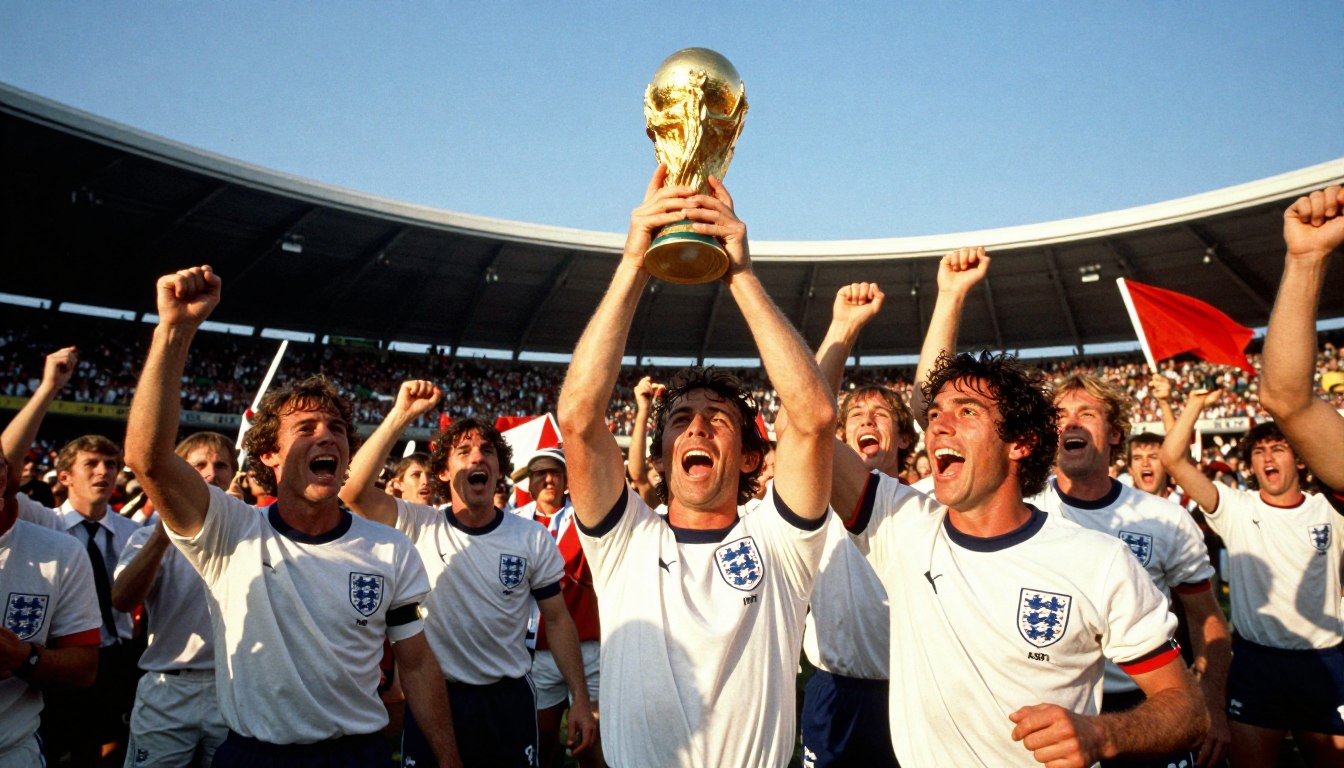

The 1966 FIFA World Cup stands as a monumental chapter in football history. It marks the only occasion that England has secured the prestigious trophy on home soil. From July 11 to July 30, 1966, this tournament captivated fans worldwide as sixteen national teams battled for glory.
Throughout the competition, England displayed remarkable skill and tactical discipline. Their journey culminated in a thrilling final where they triumphed over West Germany with a score of 4-2. This match remains a topic of discussion among fans and historians alike.
One of the highlights of this unforgettable event was Geoff Hurst’s extraordinary achievement. He became the first player to score a hat-trick in a final, etching his name into the record books forever.
This ultimate guide delves into the legacy of the tournament, exploring the matches, controversies, and cultural impact that defined this iconic era of football.
Key Takeaways
- The 1966 tournament was a landmark event for England.
- Sixteen teams competed across eight English cities.
- England’s victory was marked by a historic final match.
- Geoff Hurst’s hat-trick set a World Cup final record.
- The event influenced future sporting broadcasts and organization.
Introduction to the 1966 FIFA World Cup
In the summer of 1966, a historic tournament unfolded in England. This edition marked the eighth occurrence of the prestigious event, featuring 16 teams from four different confederations. Each team aimed to showcase their talent and compete for glory on the global stage.
Throughout the tournament, a total of 89 goals were scored across 32 matches, averaging 2.78 goals per match. This statistic highlights the tactical nature of football during that era. The event attracted an impressive 1,563,135 spectators, averaging 48,848 fans per match across various venues.
Every group stage match was crucial, as teams battled for advancement to the knockout rounds. This format tested both physical endurance and mental fortitude, making the tournament unforgettable. As the first FIFA tournament held in the English-speaking world, it required extensive infrastructure and planning across eight cities.
The legacy of the 1966 FIFA event remains significant, influencing the sport and its future tournaments.
Historical Context and South American Dominance
With the 1966 tournament on the horizon, expectations soared among players and fans alike. Before this edition, South American nations had already won four of the seven previous tournaments. This success established their reputation for technical brilliance and dominance in the sport.
The global football landscape in the 1960s was evolving. European teams began to adopt more rigid, defensive structures to counter the flair of South American squads. Expectations were particularly high for Brazil, entering as two-time defending champions, having won in 1958 and 1962.
However, the tournament faced political tension. An African boycott emerged due to FIFA’s decision to deny direct qualification spots to African nations during the qualifying process. This context illustrates how the FIFA event was perceived, with South American teams often viewed as primary challengers to European supremacy.
| Year | Champion | Runner-Up | Goals Scored |
|---|---|---|---|
| 1950 | Uruguay | Brazil | 18 |
| 1954 | West Germany | Hungary | 26 |
| 1958 | Brazil | Sweden | 32 |
| 1962 | Brazil | Czechoslovakia | 26 |
| 1966 | England | West Germany | 89 |
The 1966 tournament served as a battleground for different philosophies, where the physical style of European football clashed with the artistry of the South American game. This context helps explain why England’s eventual victory was so significant, breaking the cycle of South American and previous European winners.
England as Host: Setting the Stage
The selection of England as the host for this prestigious tournament set the stage for a memorable event. Chosen in Rome on August 22, 1960, England beat out strong bids from West Germany and Spain. This decision sparked excitement among fans and players alike.
The tournament took place across eight venues, with Wembley Stadium serving as the centerpiece. This iconic stadium could hold an impressive 98,600 spectators for the final match, creating an electric atmosphere.
Preparation for the tournament involved significant investment. The estimated costs for stadium construction were around £9.2 million in today’s currency. A major crisis occurred when the Jules Rimet trophy was stolen before the tournament. Thankfully, it was recovered by a dog named Pickles in a London garden.
As the original trophy was returned, meticulous planning continued. The FA even commissioned a replica, just in case. The 1966 FIFA event required careful organization to manage the influx of international teams and thousands of traveling fans.
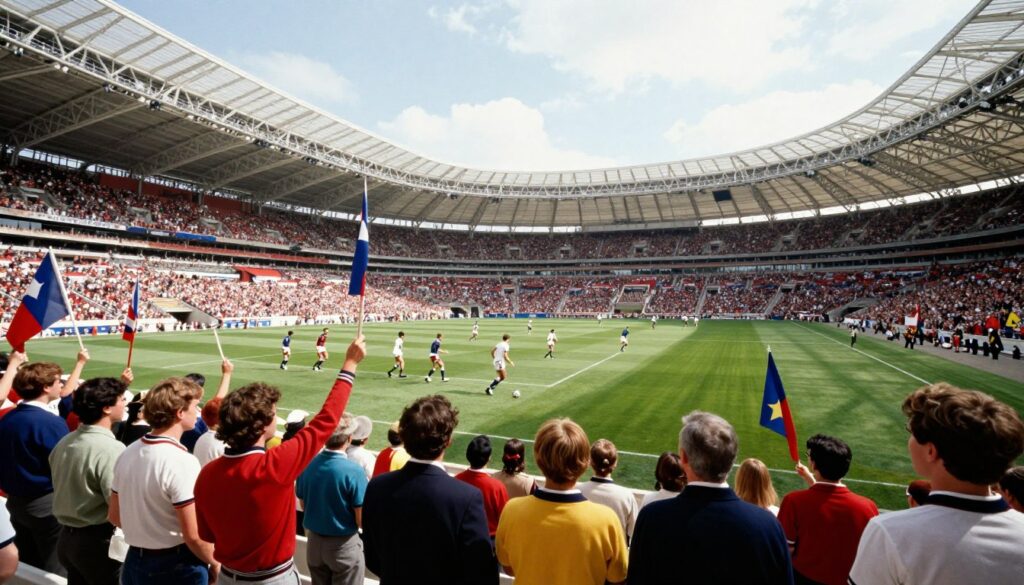
Through venues like Goodison Park and Old Trafford, the tournament reached fans across the entire country. England’s successful hosting proved that a single nation could manage a large-scale FIFA event, paving the way for future tournaments.
Route to Glory: England’s Journey Through the Tournament
England’s path to victory in the tournament was paved with challenges and triumphs. Their journey began with a surprising 0-0 draw against Uruguay, marking a unique start for a winning team. However, the group stage quickly showcased their strength.
Finishing at the top of their group, England scored four goals and conceded none. This disciplined approach under coach Alf Ramsey set the tone for the matches ahead. In the knockout rounds, England faced Argentina in a contentious quarter-final. A controversial red card for Argentina’s captain, Antonio Rattín, added to the drama.
The semi-final against Portugal was a defining moment. Bobby Charlton’s two goals led England to a 2-1 victory, securing their place in the final. Throughout the tournament, the tactical evolution of teams was evident, with England’s “wingless wonders” formation proving challenging for opponents.
- England’s disciplined defense kept them from conceding until the semi-final.
- Strategic substitutions played a key role in their success.
- Controversial refereeing decisions sparked debates, particularly in the quarter-final.
- Winning the tournament made England the third host nation to achieve this feat.
- The journey highlighted the team’s resilience under pressure from home crowds.
The Iconic Final Match
On July 30, 1966, the stage was set for an unforgettable showdown at Wembley Stadium. This thrilling final match saw England face off against West Germany in front of 96,924 eager spectators. The atmosphere was electric, as fans anticipated a historic clash.
Helmut Haller opened the scoring for West Germany in the 12th minute, sending shockwaves through the crowd. However, England’s Geoff Hurst quickly equalized with a powerful header, leveling the match. As the game progressed, tension mounted, leading to a dramatic moment when Wolfgang Weber scored a late equalizer for West Germany in the 89th minute, forcing the match into extra time.
In the 101st minute, a controversial moment occurred when Hurst scored a goal that hit the crossbar and bounced on the line. After consulting the linesman, the referee awarded the goal, which became known as the “Wembley Goal.” Hurst completed his hat-trick with another goal in the final minutes, securing a 4-2 victory for England.
This match not only defined the tournament but also became the most-watched television event in UK history, captivating 32.3 million viewers. The tactical battle between Alf Ramsey and Helmut Schön pushed both teams to their limits, creating an iconic moment in football history.
1966 FIFA World Cup: In-Depth Tournament Analysis
The tournament in 1966 showcased a pivotal shift in football dynamics. Teams increasingly prioritized defensive strategies, often sacrificing attacking flair for tactical organization. This change was evident in the way matches unfolded, as teams aimed to minimize risks.
West Germany’s journey through the tournament was particularly noteworthy. They reached the final by overcoming the Soviet Union 2-1 in a fiercely contested semi-final. Their resilience highlighted the competitive nature of the event.
The structure of the tournament, which featured both group stages and knockout rounds, ensured that only the most consistent teams advanced. This format allowed for thrilling matches, but also raised concerns about officiating standards.
Refereeing decisions became a major talking point during the tournament. Several high-profile dismissals led to calls for standardized disciplinary procedures. As the event unfolded, it became clear that clearer rules were necessary to enhance the flow of matches.
Ultimately, the 1966 tournament served as a catalyst for change in international football. It forced FIFA to modernize the laws of the game, paving the way for future tournaments.
Officiating, Controversies, and Rule Changes
Refereeing controversies during the tournament left a lasting impact on future competitions. The 1966 world cup was marred by officiating issues, especially in the quarter-final match between England and Argentina. Here, Antonio Rattín was controversially sent off by the referee, igniting heated debates.
West Germany also faced scrutiny during the tournament. Their quarter-final victory over Uruguay was criticized after two Uruguayan players were dismissed by the referee. These incidents underscored the need for improved officiating standards.
As a result, FIFA recognized that the lack of a formal card system made it challenging for referees to control matches effectively. The controversies, including the African boycott, highlighted the growing political influence of the tournament on international relations.
These officiating issues directly contributed to the introduction of the yellow and red card system for future tournaments. The 1966 fifa world served as a catalyst for reform, proving that existing laws were insufficient for the modern game.
Additionally, the tournament saw the first use of substitutions in later years, although none were allowed during the final match itself. The analysis shows that the referee’s role became more professionalized after the tournament, with new training programs implemented by FIFA.
Ultimately, the fifa world cup history is defined by these moments of controversy, which helped improve the integrity and fairness of the sport for all teams.
Cultural Impact and Legacy of England’s Triumph
The triumph of England in the tournament reshaped the cultural landscape of the nation. This victory turned the 1966 team into national heroes, inspiring the beloved “Three Lions” football anthem.
Iconic moments from the event, like Bobby Moore lifting the Jules Rimet trophy at Wembley Stadium, are celebrated images in British sporting history. The tournament’s influence is evident in how the final is referenced in media, advertising, and popular music worldwide.
Moreover, the event transformed the perception of football in the United Kingdom, embedding it as a core part of national identity. The tournament became a cultural phenomenon, with the final match being the most-watched television event in British history.
- The legacy is preserved in the National Football Museum, showcasing artifacts from the final.
- The tournament’s impact extended beyond the pitch, influencing how major sporting events are broadcast globally.
- The victory represents a unique moment of unity and pride for the nation.
- This tournament set the standard for how a host nation can leverage a sporting win for cultural gain.
- It remains a touchstone for football fans, proving a single tournament can leave a lasting mark on a country’s culture.
British Diplomacy and International Reactions
In the wake of England’s victory, international relations faced new challenges. Following the tournament, British diplomats in South America reported widespread hostility and protests, particularly in Uruguay and Argentina. These reactions were largely centered around the officiating during the matches.
The British government had to manage the diplomatic fallout. Confidential reports from the Foreign Office indicated a negative perception of England’s win in the region. Tensions escalated after the contentious match between England and Argentina, which led to accusations of bias against South American teams by the tournament organizers.
This situation transformed the 1966 event into a matter of state. British representatives in 18 countries received instructions on how to handle football-related protests. The analysis shows that the tournament’s impact on diplomacy was significant enough to delay the release of government documents for several years.
Moreover, the legacy of the tournament is intertwined with the political climate of the 1960s. Football often served as a proxy for national pride, complicating international relations. The history of the event illustrates how sports can influence global perceptions of a host nation.
Memorable Figures: Heroes and Legends of 1966
The unforgettable figures from the 1966 tournament continue to inspire football fans today. Among them, Bobby Moore stands out as a legendary captain who led England to victory. His leadership and skill on the pitch were crucial in securing the coveted Jules Rimet trophy.
Geoff Hurst made history with his remarkable hat-trick in the final, solidifying his status as one of the greatest players in the tournament’s history. His performance at Wembley Stadium remains a defining moment in football.
Other notable figures included Eusébio, the Portuguese striker who was the tournament’s top scorer with nine goals, and Franz Beckenbauer from West Germany, who showcased incredible talent throughout the matches.
The tournament also featured legendary goalkeepers like Gordon Banks, whose vital saves were essential to England’s defensive success. The 1966 event united the best players of the era, creating a legacy that continues to inspire modern football stars.
As part of the 1966 FIFA celebration, many heroes were honored with statues and medals, ensuring their contributions to the sport are never forgotten. The tournament’s success was a collective effort, with managers like Alf Ramsey playing a pivotal role in tactical preparation.
Conclusion
The triumph of England in this unforgettable tournament reveals its lasting significance. This event remains a defining moment in sporting history, marking the nation’s only major international title.
Geoff Hurst’s hat-trick in the final, which went extra time, is a feat that has stood the test of time. It remains a central part of the tournament’s legacy.
The recovery of the Jules Rimet trophy by Pickles the dog is just one of the many stories that make this tournament unique. Over the years, it has been analyzed for its tactical innovations and officiating controversies.
England’s victory continues to be celebrated, serving as a reminder of the power of football to unite a nation. As we look back at this event, we recognize the contributions of the players, managers, and officials who shaped this unforgettable moment.
The legacy of the 1966 tournament is secure, ensuring that the achievements of its heroes will be remembered for many years to come.
FAQ
What was the significance of the 1966 tournament?
Who was the standout player of the final match?
Where did the final match take place?
What was the outcome of the final match?
Were there any controversial moments during the tournament?
How did England perform in the group stages?
What impact did the tournament have on football culture?
How did international teams react to England’s win?
Explore More World Cup History
← 1958 FIFA World Cup | 1970 FIFA World Cup → | Complete World Cup History | All World Cup Winners | Every World Cup Final