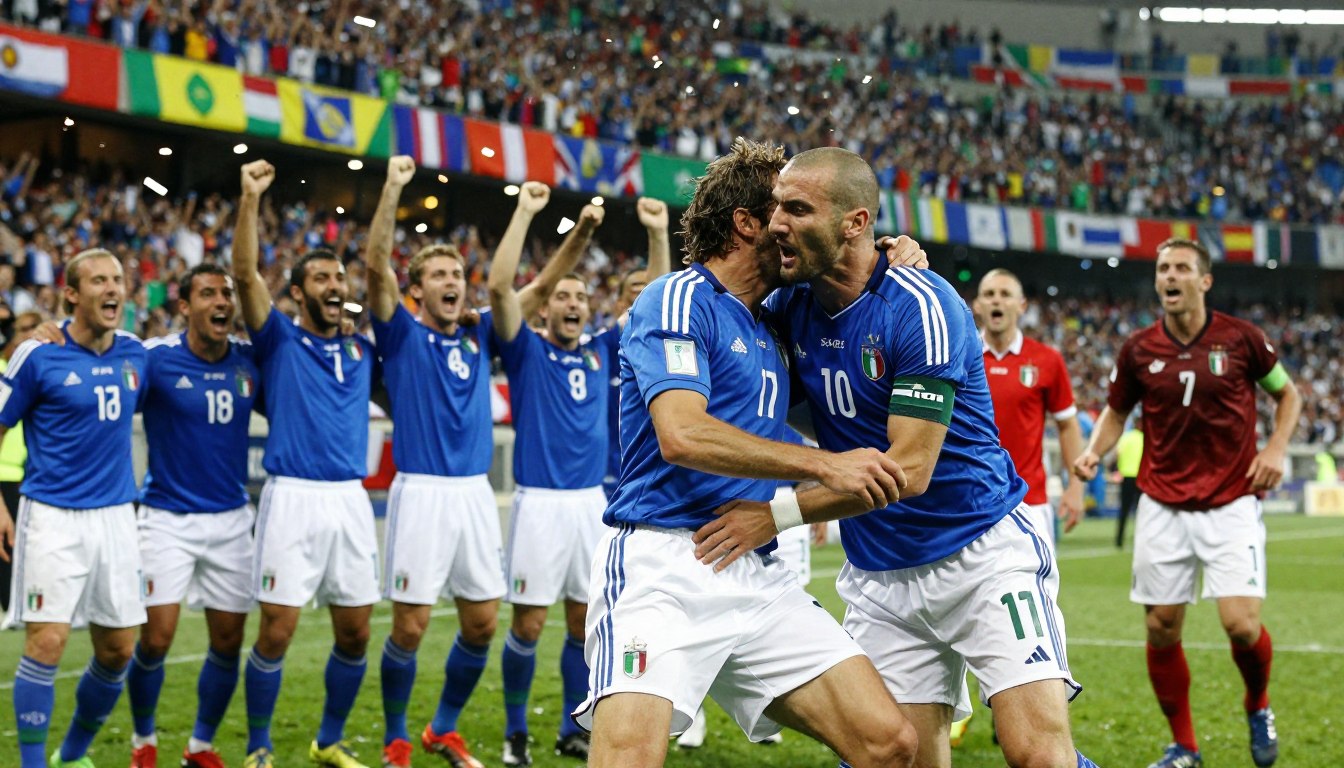

The 2006 FIFA World Cup marked a significant chapter in the history of international football. This prestigious tournament, held in Germany, was the 18th edition of its kind. From June 9 to July 9, 2006, fans from around the globe witnessed thrilling matches and unforgettable moments.
Italy emerged victorious, claiming their fourth title after a nail-biting final against France. The match ended in a dramatic penalty shoot-out, showcasing the intensity and passion that defines this sport. Zinedine Zidane, despite his controversial red card, was honored with the Golden Ball for his outstanding performance throughout the tournament.
This event captivated billions, with an estimated 26.29 billion views, making it one of the most-watched in television history. Join us as we explore the tactical brilliance, the shocking headbutt incident, and the lasting cultural impact of this unforgettable tournament.
Key Takeaways
- The tournament featured 32 teams competing in 64 matches to determine the champion.
- Italy’s victory was sealed with a 5-3 penalty shoot-out against France.
- Zidane’s red card overshadowed his award as the tournament’s best player.
- The final match attracted an audience of 715.1 million viewers.
- This World Cup remains a defining moment for football fans worldwide.
Tournament Overview and Historical Context
The 2006 tournament stands out as a defining moment in the saga of international football. This edition was the 18th iteration of the quadrennial championship, captivating billions of fans around the globe. It was also a significant occasion for Germany, as it hosted the event for the second time, marking its first as a unified nation.
Held from June 9 to July 9, 2006, the tournament showcased a month of intense competition. A total of 32 national teams participated, all vying for the coveted title. Among the players, Miroslav Klose emerged as a standout, finishing as the top scorer with five goals.
Historically, this event was the 10th time the competition took place in Europe, emphasizing the continent’s rich football heritage. Each match played contributed to the sport’s legacy, setting the stage for a dramatic final that would be remembered for years to come.
| Aspect | Details |
|---|---|
| Edition | 18th FIFA World Cup |
| Host Country | Germany |
| Duration | June 9 – July 9, 2006 |
| Participating Teams | 32 |
| Top Scorer | Miroslav Klose (5 goals) |
Host Selection and Controversies
The process of selecting the host for the 2006 tournament was fraught with controversy. The voting took place in July 2000 in Zürich, Switzerland. Germany emerged victorious, narrowly defeating South Africa with a final tally of 12 votes to 11.
However, this decision was not without its challenges. Oceania delegate Charlie Dempsey abstained from voting, citing immense pressure. Allegations soon surfaced, including claims from the German magazine Der Spiegel that a slush fund had been used to influence the votes of four Asian delegates.
These events raised serious questions about the integrity of the selection process. Political intrigue also played a role, with reports indicating that German businesses and politicians had vested interests in Asian countries whose delegates were crucial in the voting.
- The selection of the host for the 2006 world cup germany was contentious.
- Germany secured the tournament by a narrow margin.
- Bribery allegations surfaced, casting a shadow over the decision.
- Dempsey’s abstention highlighted the pressure surrounding the vote.
- Political maneuvering added complexity to the selection process.
“The selection process for the tournament was marred by allegations and intense scrutiny.”
Qualification Process and Team Debuts
The qualification journey for the 2006 tournament was a remarkable showcase of global talent. A total of 198 teams attempted to qualify, highlighting the extensive reach of this prestigious event.
Among the competitors, eight nations, including Angola, Ghana, and the Ivory Coast, qualified for the finals for the first time in their respective football histories. This marked a significant milestone for these countries, showcasing their growth in the sport.
Additionally, Australia made a triumphant return to the tournament, qualifying for the first time since 1974. The qualification campaign was rigorous, with 31 teams joining the host nation to compete in the final tournament structure.
Serbia and Montenegro also made their mark by competing as a single team, a unique instance of multiple sovereign nations represented by one squad. This diverse representation ensured that all six confederations were present at the finals, a feat not seen since the 1982 tournament.
“The qualification process illustrated the depth of talent and passion for football around the world.”
2006 FIFA World Cup: Format and Structure
The structure of the tournament was meticulously designed to create an exciting and competitive atmosphere. A total of 32 teams participated, each eager to claim the coveted title. The format included a group stage followed by a knockout phase, ensuring that only the best teams advanced.
During the group stage, teams were divided into groups, competing fiercely for a spot in the elimination rounds. Each match was critical, as every point mattered in the race to advance. In total, 64 matches were played, with each goal scored heightening the thrill of the event.
This well-organized structure allowed for high-stakes encounters, culminating in a final that would define the tournament’s legacy. Players faced the challenge of maintaining peak physical condition, as the demanding schedule required exceptional performance in every match.
Additionally, the format provided opportunities for surprises, enabling underdog teams to challenge established football powers on the global stage.
| Aspect | Details |
|---|---|
| Participating Teams | 32 |
| Match Format | Group stage followed by knockout |
| Total Matches | 64 |
| Importance of Matches | Critical for advancement |
| Player Performance | High physical demands |
Group Stage and Seeding Details
The allocation of teams into groups marked a significant milestone in the tournament’s journey. The group stage draw, held in Leipzig on December 9, 2005, was crucial for all 32 participating nations. This event determined how teams would compete in the early rounds of the tournament.
Germany, as the host nation, was pre-assigned to Group A. Meanwhile, defending champions Brazil were allocated to Group F to ensure a balanced competition. Special pots were utilized to maintain fairness, preventing too many European teams from being grouped together.
Serbia and Montenegro were placed in a special pot due to being the lowest-ranked qualified team from Europe at that time. Each match in the group stage was vital, as teams aimed to secure enough points to progress to the knockout phase.
The seeding process was designed to prevent top-tier teams from clashing too early, ensuring that the tournament’s intensity built up to its peak in the later rounds.
| Aspect | Details |
|---|---|
| Group Stage Draw Date | December 9, 2005 |
| Host Nation Group | Germany (Group A) |
| Defending Champion Group | Brazil (Group F) |
| Special Pot Team | Serbia and Montenegro |
| Purpose of Seeding | Maintain competitive balance |
Memorable Matches and Shock Moments
The 2006 tournament showcased not only talent but also the unpredictability that defines the sport. Fans were treated to a series of matches that left lasting impressions.
One of the standout moments occurred when France eliminated the defending champions, Brazil, in the quarter-finals. This match was a true testament to the spirit of competition.
Italy’s journey was equally thrilling. In the round of 16, they faced Australia and secured a dramatic 1-0 victory thanks to a controversial penalty converted by Francesco Totti.
The semi-final against Germany was a classic, with Italy scoring two late goals in extra time to clinch a 2-0 win. Each knockout match was filled with tension, showcasing the players’ skills and determination.
These defining encounters not only highlighted the tactical brilliance of the teams but also created moments that fans still discuss passionately today.
The Italian Campaign: Road to Glory
The path to glory for Italy in the tournament was filled with tactical brilliance and resilience. Under the guidance of manager Marcello Lippi, the team executed their strategies flawlessly, despite facing the shadow of domestic scandals.
Italy finished at the top of Group E, securing key victories against Ghana and the Czech Republic. These wins built essential momentum for the tournament. A dominant 3-0 victory over Ukraine in the quarter-finals showcased the squad’s defensive strength and clinical finishing.
Even with the controversy surrounding Juventus and other clubs, the players maintained high morale. They focused on their goal of winning the title, proving their resilience in every match. The road to glory was challenging, but Italy’s ability to perform under pressure demonstrated they were the best in the world at that time.
France’s Performance and Zidane’s Final Display
The road taken by France to the final match was filled with intense competition and memorable moments. Under the leadership of Zinedine Zidane, the team showcased remarkable skill throughout the tournament.
France faced tough opponents, defeating Spain, Brazil, and Portugal on their way to the final. Zidane scored a crucial penalty in the semi-final against Portugal, demonstrating his importance to the squad.
However, the final match became infamous due to the headbutt incident in the 110th minute, resulting in Zidane’s red card. This moment overshadowed the match, yet his overall performance earned him the Golden Ball as the best player of the tournament.
Despite the controversy, the French squad displayed great character. They fought hard but ultimately lost in the penalty shoot-out, finishing as runners-up. Zidane’s final display remains one of the most discussed moments in the history of the tournament.
| Aspect | Details |
|---|---|
| Key Opponents | Spain, Brazil, Portugal |
| Zidane’s Key Moment | Penalty in semi-final |
| Final Incident | Headbutt in 110th minute |
| Award Received | Golden Ball |
| Final Result | Runners-up |
An In-Depth Look at the Final Match
The climax of the tournament unfolded on July 9, 2006, at Berlin’s Olympiastadion. This final match was a tense affair that ended in a 1-1 draw after extra time. Zinedine Zidane opened the scoring with a penalty, but Marco Materazzi equalized for Italy with a header from an Andrea Pirlo corner.
The match reached a critical turning point when Zidane was sent off, forcing France to finish the game with ten players. The atmosphere was electric as both teams battled for the ultimate prize in world football.
Match Summary and Critical Turning Points
- The final showcased the drama and skill that define the tournament.
- Zidane’s penalty was a highlight, demonstrating his prowess.
- Materazzi’s equalizer shifted the momentum towards Italy.
The Tension of a Penalty Shoot-Out
The tension of the penalty shoot-out was palpable. Italy proved their composure by scoring all five of their penalties. Fabio Grosso netted the decisive goal, securing the title for Italy. This final match remains a highlight of the tournament, etched in the memories of fans around the world.
Stadiums, Venues, and Matchday Atmosphere
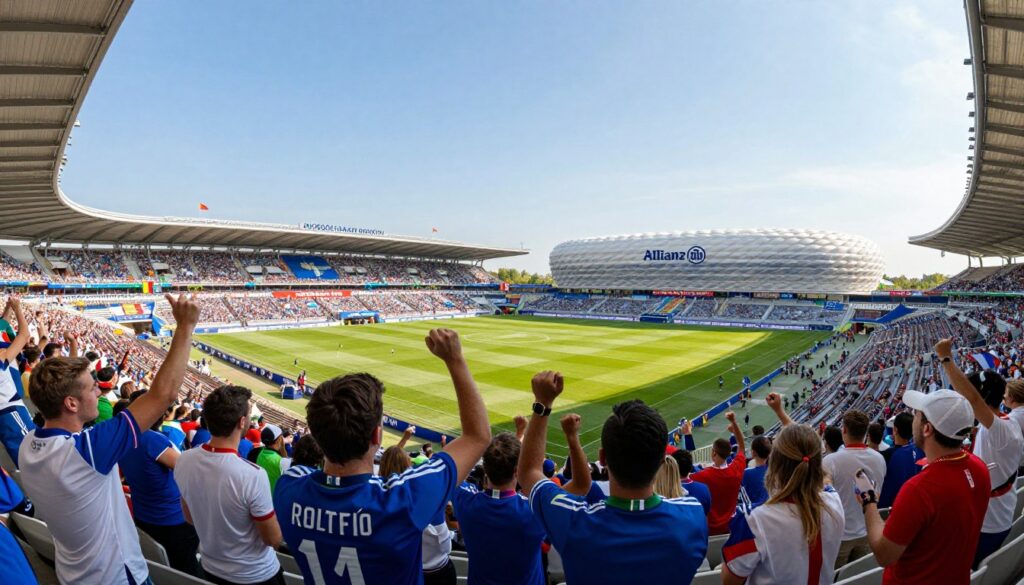
The venues for the tournament created an unforgettable backdrop for every match. Across Germany, twelve iconic stadiums hosted the excitement of the competition. Each venue offered a unique atmosphere, enriching the experience for fans and players alike.
Berlin’s Olympiastadion was the centerpiece, showcasing the final match and several key games. This historic site was filled with passionate supporters, celebrating the spirit of football. FIFA regulations played a crucial role, ensuring that stadiums were referred to by neutral names, thus maintaining the integrity of the event.
Fans from all corners of the globe traveled to these venues, contributing to a vibrant matchday atmosphere. The infrastructure of stadiums like the Allianz Arena and Signal Iduna Park ensured that players performed on world-class stages. The success of the tournament was greatly enhanced by these excellent facilities, which provided a seamless experience for both teams and spectators.
| Stadium | Location | Key Matches |
|---|---|---|
| Olympiastadion | Berlin | Final Match |
| Allianz Arena | Munich | Group Stage Matches |
| Signal Iduna Park | Dortmund | Quarter-Final Matches |
| Commerzbank-Arena | Frankfurt | Group Stage Matches |
| Mercedes-Benz Arena | Stuttgart | Round of 16 Matches |
Team Base Camps and Preparation Insights
In the lead-up to the tournament, teams established vital bases for their campaigns. Every squad in the 2006 tournament utilized dedicated base camps to prepare for the intensity of the matches ahead.
Italy chose Duisburg as their base, while France set up in Aerzen. These locations provided essential facilities for training and recovery, crucial for optimal player performance.
Strategic planning was key during this time. Managers worked diligently to refine tactics before each match. The distribution of camps across Germany allowed teams to experience various regions while maintaining focus on their ultimate goal.
This level of preparation proved vital for success as teams navigated the challenges of a month-long tournament.
Officiating the Game: Referees and Match Officials
The officiating during the tournament showcased the skill and expertise required to manage high-stakes matches. Referees like Horacio Elizondo from Argentina took charge of the final, demonstrating the level of experience necessary for such a critical role.
Match officials faced significant challenges, as every decision could impact the outcome of a game and the tournament as a whole. The use of a fourth official, such as Luis Medina Cantalejo in the final, proved essential for maintaining order and verifying key incidents.
Referees from all six confederations were represented, ensuring a diverse and fair approach to officiating throughout the tournament. The pressure on match officials was immense, especially during the knockout stages where every goal and foul was scrutinized by millions.
Their role was fundamental to the integrity of the tournament, as they ensured that the rules of football were upheld in every match.
Technological and Sponsorship Influences
The intersection of technology and sponsorship significantly shaped the tournament’s experience. The official match ball, the Adidas Teamgeist, was a testament to this influence. It was specifically designed to enhance player performance and improve gameplay.
Moreover, the final match featured the +Teamgeist Berlin, highlighting the importance of corporate partners in the tournament. This ball was crafted to ensure optimal performance during the most critical moments of the event.
The Role of Adidas and the Official Match Ball
- Technology and sponsorship played a major role in the 2006 tournament, with Adidas providing the official match ball.
- The final match ball was specifically designed for the occasion, showcasing the influence of corporate partners.
Media Coverage and Global Viewership Impact
Media coverage during the tournament was unprecedented. An astounding 715.1 million people watched the final match alone. This global reach amplified the tournament’s success, drawing fans from every corner of the world.
Sponsorship deals were crucial, funding the infrastructure needed to host such a massive event in Germany. The combination of technology and media coverage ensured that the tournament remained a central focus of global sports for the entire month.
Legacy and Impact on Modern Football
The 2006 competition transformed the landscape of football, setting new standards for future tournaments. This event left a lasting legacy, influencing tactical strategies and the global appeal of the sport for years to come.
Italy’s victory propelled them to the top of the FIFA World Rankings in February 2007, a testament to their performance during the tournament. The event also set a high standard for organization, which continues to be a benchmark for every subsequent tournament.
Long-lasting impressions on football history were made by the dramatic matches and the individual brilliance of players like Zinedine Zidane. The tournament’s impact on modern football is evident in how teams now prepare and strategize for such high-stakes international events.
As a defining moment in the sport, the 2006 tournament remains a subject of study and admiration for football fans and professionals alike.
| Aspect | Details |
|---|---|
| Legacy | Influenced tactical strategies |
| Rankings | Italy topped FIFA Rankings in February 2007 |
| Organization | Set a high standard for future tournaments |
| Impressions | Dramatic matches and player brilliance |
| Modern Impact | Changed team preparation and strategy |
Fan Celebrations and Cultural Impact
The aftermath of the tournament ignited a wave of celebration across Italy and beyond. Fans poured into the streets, with a staggering 500,000 people attending the victory parade in Rome. This event was not just a celebration of football; it was a powerful display of national pride.
National Pride and Celebratory Parades
The winning squad was honored with the Italian Order of Merit of Cavaliere Ufficiale, symbolizing their achievement and the joy they brought to their nation. Such recognition elevated the team’s status, uniting fans in a shared moment of glory.
Record-Breaking Viewership and Global Engagement
Global engagement was driven by record-breaking viewership numbers, showcasing the tournament’s reach. Millions tuned in to witness the matches, demonstrating the sport’s ability to connect people worldwide. The cultural impact extended beyond the pitch, as fans celebrated their teams with parades and festivities.
This level of engagement solidified the tournament’s place in history as a truly global event that brought people together through football. The memories of these celebrations continue to resonate with fans, marking the tournament as a special time in football history.
Conclusion
The tournament of 2006 stands as a remarkable milestone in the realm of international football. From the controversial host selection to the dramatic final match, every moment contributed to the event’s enduring legacy. Italy’s fourth title and the unforgettable headbutt by Zinedine Zidane are etched into the history of the world cup.
The tournament’s success was supported by the Fédération Internationale de Football Association and its rigorous standards for every match. As we look back, the archived original July and June reports confirm the massive scale and impact of this historic event.
This guide has explored the key aspects of the tournament, ensuring that the 2006 world cup is remembered for its contribution to football. We hope this overview provides a comprehensive look at the event, as retrieved May 2026, for all football enthusiasts.
FAQ
What was significant about the 2006 tournament?
How did Germany prepare to host the matches?
Which teams made their debut in this tournament?
What was the format of the matches?
Can you name some memorable matches from the event?
How did the Italian team perform throughout the tournament?
What role did Zidane play for France during the event?
What was the atmosphere like in the stadiums?
How did technology influence the tournament?
What lasting impact did the tournament have on football?
Explore More World Cup History
← 2002 FIFA World Cup | 2010 FIFA World Cup → | Zidane’s World Cup: Glory to Infamy | Most Dramatic Penalty Shootouts | Every World Cup Final